Your Child’s First Half-Day Nature Adventure
Keep the route short, the pace curious and the exit easy on a first outing.
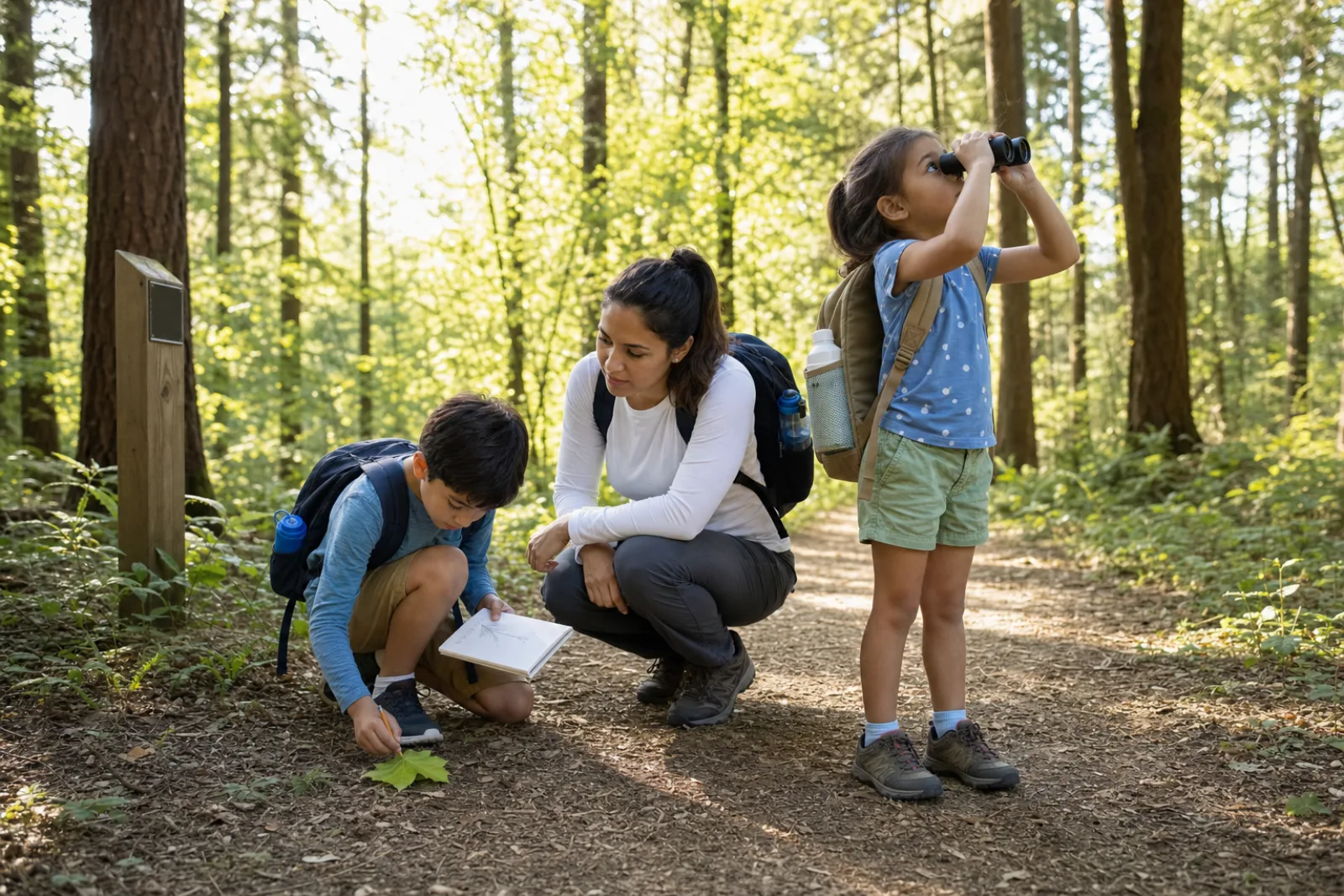
A child’s first nature outing should be easy to shorten and rich in small discoveries. Adults may remember a viewpoint or total distance, while children remember a beetle, a bridge, or eating a snack on a log. Design the half day around comfort, curiosity, and a clear return rather than an adult-sized achievement.
Pick a forgiving location
Choose a nearby park or campground path with a clear map, simple terrain, and an obvious turnaround. Research shade, toilets, water hazards, road crossings, and accessibility. An out-and-back route makes shortening the day straightforward. Avoid relying on a promotional description when current ranger or land-manager information is available.
Pack for a slower pace
Bring water, familiar snacks, sun and rain protection, extra clothing, hygiene supplies, and the family’s basic safety items. Young children may need more changes and pauses than expected. Keep medicine with a responsible adult. A small child’s backpack should hold only light, useful items and must not shift responsibility for essentials.
Turn observation into activity
Count colors, listen for three different sounds, draw a leaf without picking it, or invent a story about the next trail marker. Let the child revisit something interesting instead of hurrying forward. Avoid touching unknown plants, insects, or animals, and leave natural and cultural objects where they are found.
Keep boundaries explicit
Children remain within the agreed distance and sight of a responsible adult. Regroup at every junction. Explain what to do if separated: stop moving, stay in a visible safe place, and use the family’s practiced signal. Adults carry the navigation tools and know the route back without depending on a child’s memory.
Finish with energy remaining
Turn around before hunger, cold, heat, or fatigue controls the decision. Irritability, repeated trips, unusual quietness, or lost interest can be early signs that the outing has reached its useful limit. End with a familiar drink or snack, then ask what the child would like to notice next time.
Trail status, weather, smoke, water levels, wildlife activity, and facility access are live conditions. Check official park or land-manager notices and a current forecast on the day of the outing. Follow posted closures and supervision requirements, and seek appropriate professional advice for individual health or mobility needs.