Keep Wildlife Wild Around Family Camp
Manage food, distance and children’s behavior before an encounter occurs.
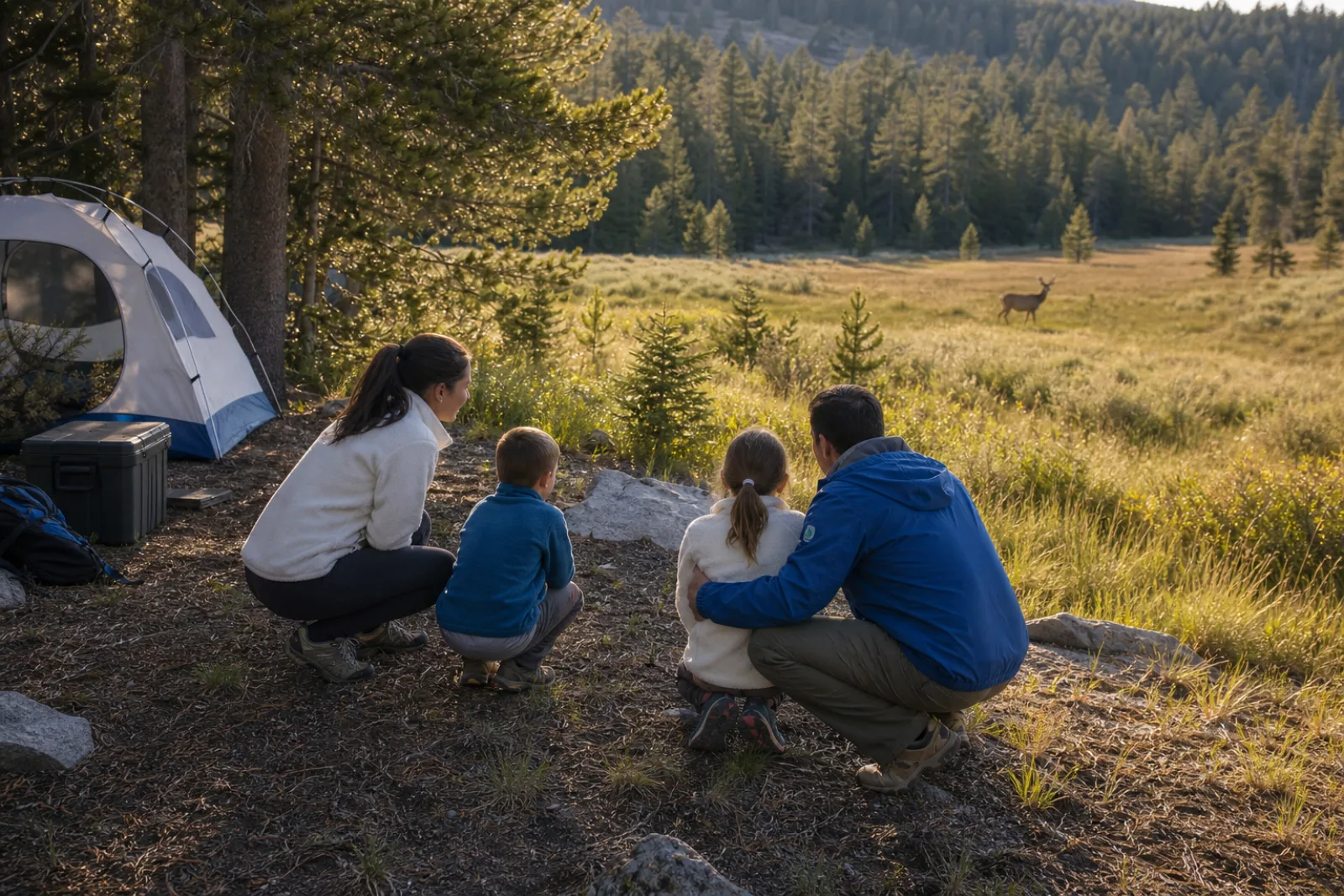
The safest wildlife encounter is usually the one that stays distant. Good food management, quiet observation and destination-specific research protect both families and animals. Children can enjoy seeing wildlife without approaching, feeding or turning the moment into a chase for a photograph.
Remove the invitation
Food is only part of the scent problem. Trash, cookware, coolers, toothpaste, lotions and empty packaging can attract animals. Store every scented item using the campground or land manager’s required method. Cook and clean away from sleeping areas where rules call for separation, and never keep snacks in a tent.
Observe behavior, not a fixed photo distance
Different species and parks require different minimum distances. Follow posted rules and use binoculars or a camera lens rather than moving closer. If an animal changes direction, stops feeding, raises its head repeatedly or otherwise reacts to the family, increase distance. Never position children between an adult animal and its young.
Make the family predictable
Keep children within reach or sight according to the setting, control pets and avoid headphones that block environmental sound. On trails where officials recommend it, talk normally or make noise to avoid surprising large animals. Dawn, dusk and dense vegetation can increase encounter likelihood for some species, so adjust the outing to current local guidance.
Learn the animals at this destination
Responses differ for bears, cougars, bison, moose, elk, snakes and smaller food-seeking animals. Before travel, read the managing agency’s current species guidance and ask staff about recent activity. Carry deterrents only where legal and appropriate, and learn their use through qualified instruction before relying on them.
Leave space and report concerns
Do not feed wildlife, collect young animals or approach an animal that appears injured. Pack out food scraps and follow Leave No Trace practices. Teach children that a quiet retreat is more responsible than getting a closer picture. If wildlife enters occupied sites, behaves aggressively or obtains human food, notify campground staff instead of attempting to manage it alone. Closures, food-storage orders and recommended encounter responses can change, so official local information always takes priority over general guidance.