Three Prep-Ahead Meal Patterns for Camp
Use one-pot pasta, grain bowls and filled wraps to simplify family meals outdoors.
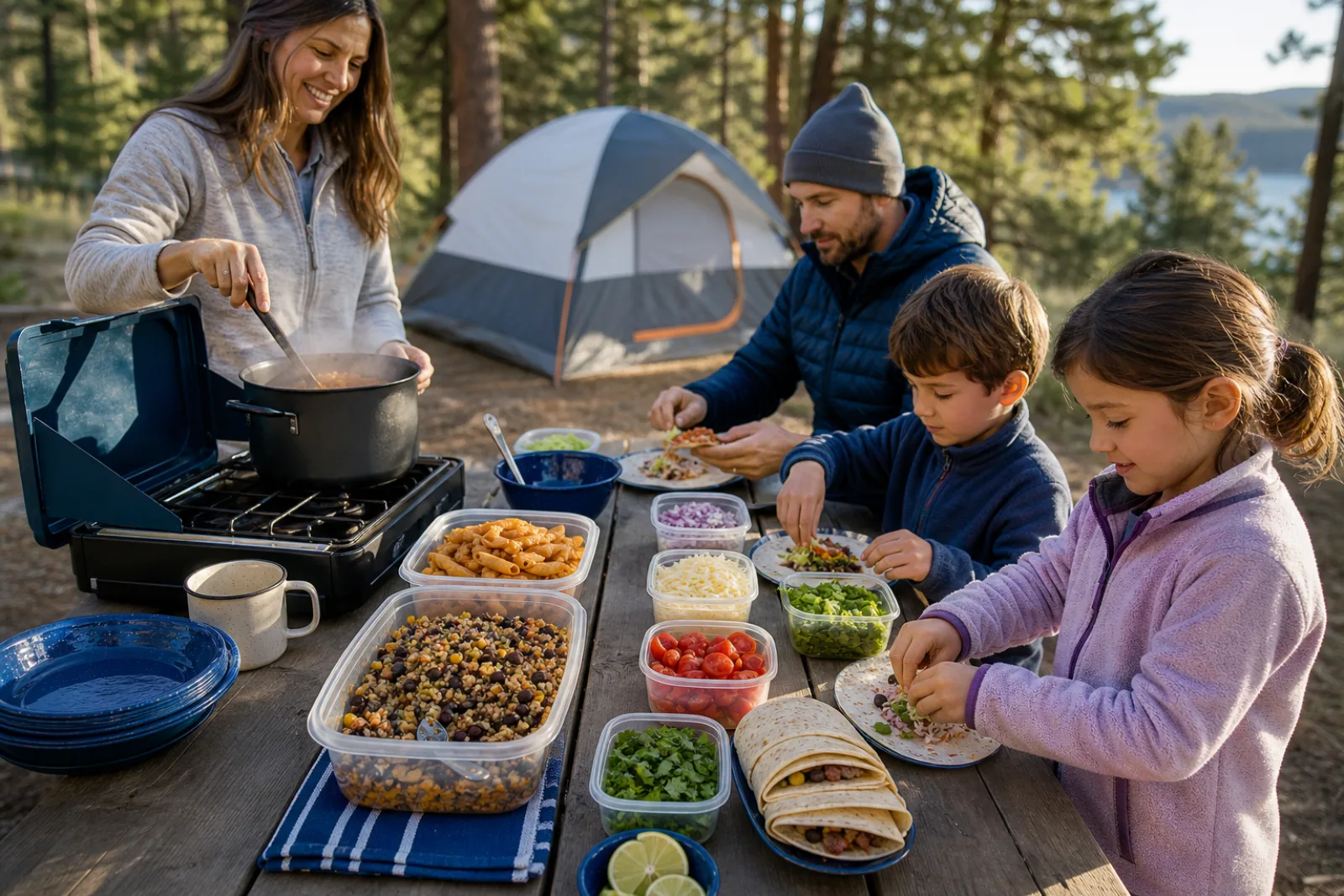
A useful camp menu is built around methods rather than complicated recipes. One-pot pasta, a quick grain bowl, and a filled wrap can cover several tastes while sharing ingredients and tools. Prepare the high-mess work at home, label each meal, and keep the campsite job focused on safe heating and assembly.
Plan one tool set
Choose meals that use the same pot, skillet, knife, board, and serving spoon. Confirm the stove or cooking method is permitted and practice with it outdoors before travel. Write the fuel, water, and cooking time beside each meal. A menu is not simple if it depends on equipment that is buried, prohibited, or unfamiliar.
Prepare a pasta base
Make a sauce at home or portion a shelf-stable version, then pack pasta and sturdy vegetables separately. At camp, boil only the water required, cook the pasta, and combine ingredients in the same pot. Add delicate greens at the end. Keep allergens labeled and avoid assuming every child can share the same sauce.
Build a flexible grain bowl
Use a quick-cooking grain with beans, corn, vegetables, nuts, or another familiar protein. Package dry seasoning separately so adults can adjust flavor after serving younger children. Measure water at home and write the ratio on the bag. Choose shelf-stable ingredients unless the family can maintain reliable refrigeration.
Assemble filled wraps
Tortillas can hold beans, cheese, cooked vegetables, or other prepared fillings with little cleanup. Assemble immediately before eating unless all ingredients can be kept safely cold. If warming a wrapped meal, use a pan or permitted grill and tongs rather than placing unknown packaging directly into a fire.
Protect the food routine
Wash hands before preparation, separate raw foods from ready-to-eat items, and keep cold food at a safe temperature. Use a thermometer where appropriate rather than judging doneness by appearance alone. Store food, rubbish, and scented supplies exactly as the campground or land manager requires.
Fire restrictions and stove rules can change even during a trip, so confirm current official guidance and keep a no-cook meal available. Follow current USDA food-safety temperatures, refrigeration limits, and allergen practices rather than relying on an older recipe page. When safe storage cannot be maintained, choose shelf-stable alternatives.