The Five-Minute Family Tent-Site Scan
Check overhead hazards, drainage, boundaries and nighttime routes before unpacking.
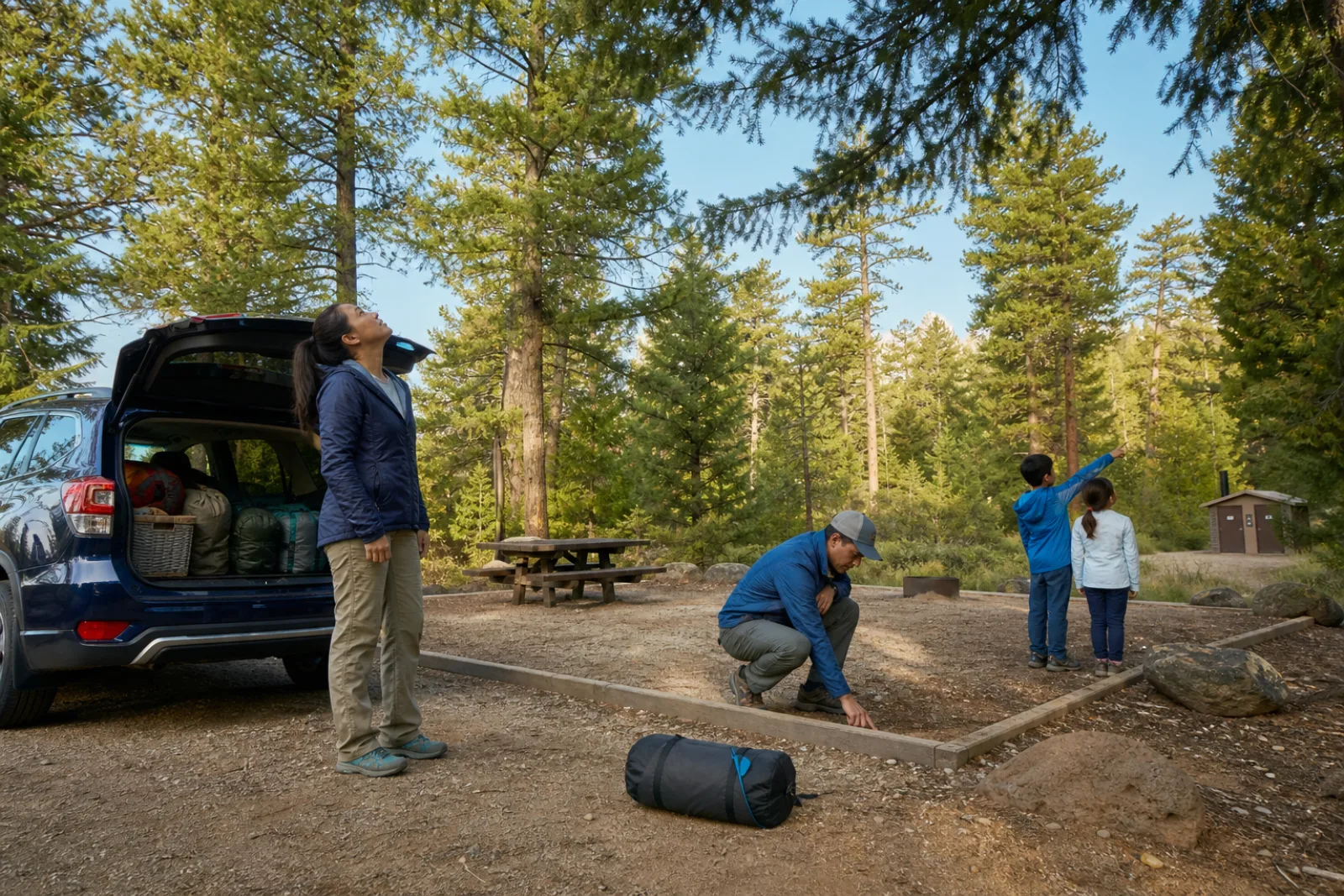
Before opening the tent bag, pause and look at the entire site. A five-minute scan can reveal drainage, damaged branches, traffic, insects, animal signs, and a difficult nighttime route. In a developed campground, stay inside the assigned pitch and ask staff about concerns rather than moving into an unapproved area.
Look above and beyond
Check overhead for dead limbs, damaged trees, loose material, and power lines. Look upslope for rockfall or runoff and downslope for water channels. Avoid isolated high points during storm risk. Campground staff or the land manager should assess uncertain tree or terrain hazards; a family should not attempt to remove branches or modify the site.
Read the ground
Use a level, durable tent pad or established surface that drains naturally. Avoid depressions, muddy channels, animal burrows, nests, ant mounds, and delicate vegetation. Do not dig trenches, clear living plants, or build a new platform. If the assigned pad is flooded or unsafe, request another option before setting up.
Map family boundaries
Point out the road, parking area, water, fire ring, neighboring sites, and places children may not enter. Decide where supervised play can happen without crossing the kitchen or vehicle path. Establish one meeting point and explain which adult is actively supervising during unloading and shelter setup.
Walk the nighttime route
Find the restroom, water point, and emergency information while it is light. Notice steps, roots, gates, and intersections. Place hands-free lights and footwear where adults can reach them from bed. Young children should make nighttime trips with an adult rather than following a route alone.
Plan food and scented storage
Identify the official food locker, vehicle method, or other required storage before opening coolers. Never store food or scented products in the sleeping tent. Wildlife rules vary substantially, including whether vehicles are acceptable, so use the current site-specific instruction rather than a general distance or hanging method.
Flood, lightning, wildfire, wildlife, and tree hazards depend on live local conditions. Review the official forecast and land-manager alerts before arrival, then follow staff instructions at the site. If the assigned pitch appears unsafe, keep the family away from the hazard and contact the campground rather than improvising an unauthorized campsite.