The Sleeping Pad Is Half the Warmth Plan
Balance ground insulation, cushioning, size and durability for each sleeper.
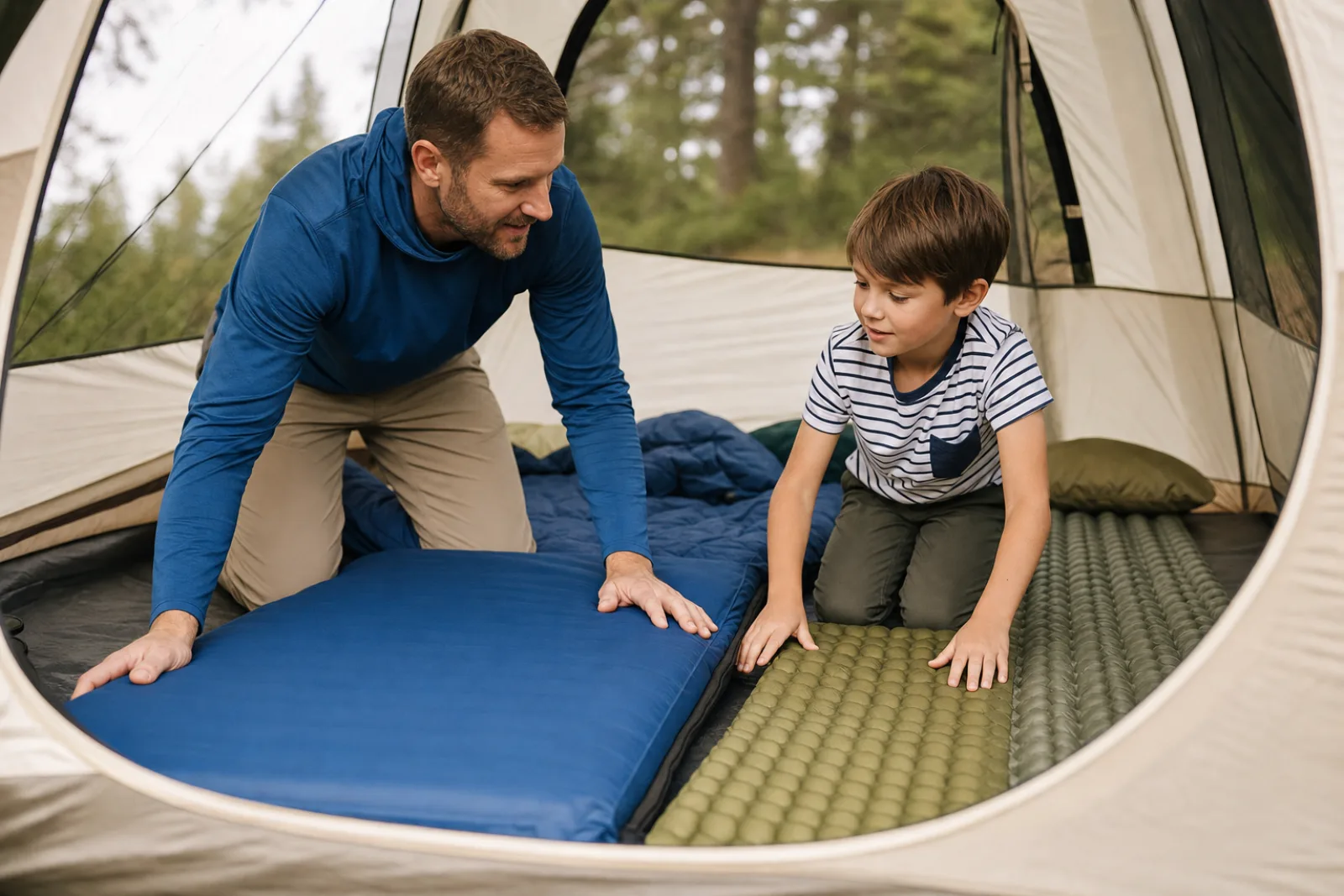
Families often focus on the sleeping bag and treat the pad as a mattress. A pad has two equally important jobs: cushioning the body and slowing heat loss into the ground. The right choice begins with conditions and sleep style, not maximum thickness.
Understand the three main formats
Air pads pack small and allow firmness adjustments, but a puncture can end their usefulness until repaired. Self-inflating pads combine air with foam, offering a stable feel and useful insulation at the cost of more bulk. Closed-cell foam pads are simple, durable and quick to deploy, though many sleepers find them less cushioned. Car campers can accept more size and weight than backpackers.
Use R-value as the warmth comparison
R-value describes resistance to heat loss through the pad; a higher number generally means more insulation. Match it to the coldest ground and season you reasonably expect, then consider the sleeping bag and clothing as one system. Two compatible pads can sometimes be layered to add insulation, but they must remain stable and fit safely inside the shelter.
Fit the person and the tent
Shoulders and hips need full support. A wider pad helps side sleepers and people who move, while a longer pad keeps legs off cold ground. Measure the tent floor before buying multiple wide pads; advertised tent capacity does not guarantee that every rectangular mattress will fit. For a child, avoid improvised gaps where small arms or legs can become trapped.
Test comfort without overinflating
Lie on the pad in a normal sleep position and adjust air until the hips are supported without creating a hard, bouncy surface. Test noise and movement transfer when pads sit side by side. Practice the valve and pump sack in daylight, and carry the correct patch materials. Keep sharp gear, shoes and pets’ claws away from inflatable surfaces.
Protect the margin
Inspect and inflate pads before each trip, then pack a backup plan appropriate to the weather. A thin foam pad can add resilience if an air pad fails. Check the current official overnight forecast and understand that campsite elevation may be colder than a nearby town. If the sleep system is not rated or proven for the expected low, change equipment, location or dates rather than relying on extra blankets alone.