A Safer Lantern for Shared Camp Light
Compare LED and fuel lanterns through heat, ventilation and runtime.
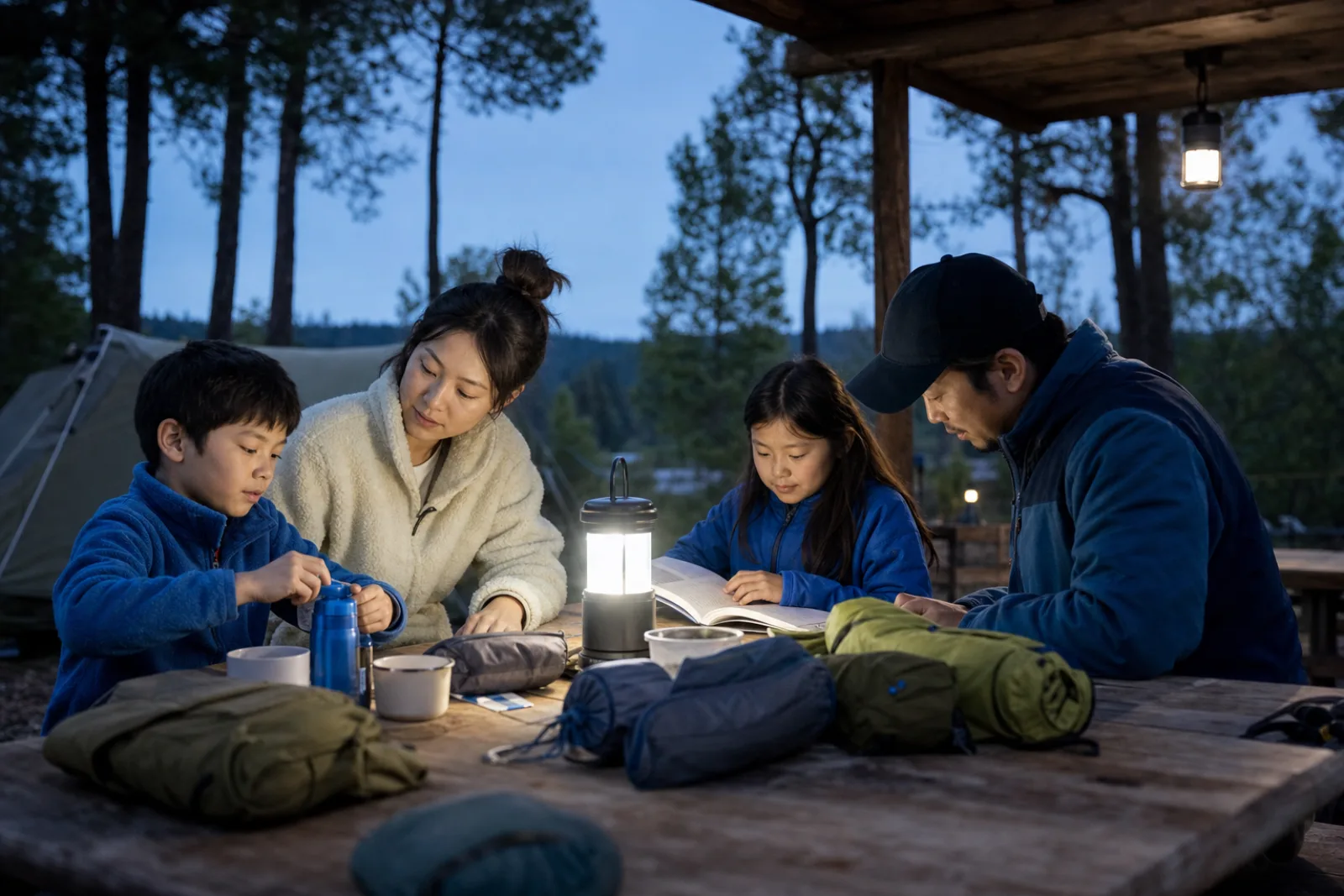
A lantern creates a shared pool of light for dinner, games and cleanup. For a family campsite, the first comparison is not simply brightness. Heat, exhaust, stability and ease of control determine where a lantern can be used safely.
Understand the main choices
LED lanterns are quiet, efficient and cool to the touch compared with flame-based models. They are available in compact sizes and work well for tents and tables when used as directed. Fuel lanterns can produce powerful light for a broad site, but they become hot, need ventilation and add fuel-handling risk. Candle lanterns provide a soft glow but still involve flame and hot surfaces.
Use the minimum useful brightness
More lumens create more light, but often shorten battery life or fuel duration. A dimmable lantern lets the family use a low setting for conversation and a brighter setting for cleanup. Diffused light is more comfortable than an exposed glare. Place the lantern so it illuminates the work surface rather than shining into neighboring sites or destroying everyone’s night vision.
Compare realistic runtime
Runtime varies dramatically between low and maximum settings. Plan from the setting used most often and carry only batteries approved by the manufacturer. Cold can reduce the performance of some battery types, so keep backups protected and dry. Rechargeable models need a reliable charging plan rather than an assumption that a campground outlet will be available.
Keep combustion outside
Never use a fuel-burning lantern in a tent, vehicle or other enclosed sleeping space. Combustion produces dangerous gases and consumes oxygen, even when a flame appears steady. Keep fuel and candle lanterns away from fabric, dry vegetation and children, and place them on stable surfaces where they cannot be knocked over. Allow hot parts to cool fully before storage.
Pair shared light with personal light
A lantern should not be the family’s only illumination. Each adult still needs a headlamp for bathroom walks, emergencies and tasks away from the table. Establish one storage place, test all lights before departure and respect campground darkness and quiet hours. Current fire restrictions may limit flame-based lighting as well as campfires, so confirm official local rules before packing a fuel or candle lantern.