Build, Watch and Fully Extinguish a Campfire
Put permission and a cold-out finish ahead of flames and tradition.
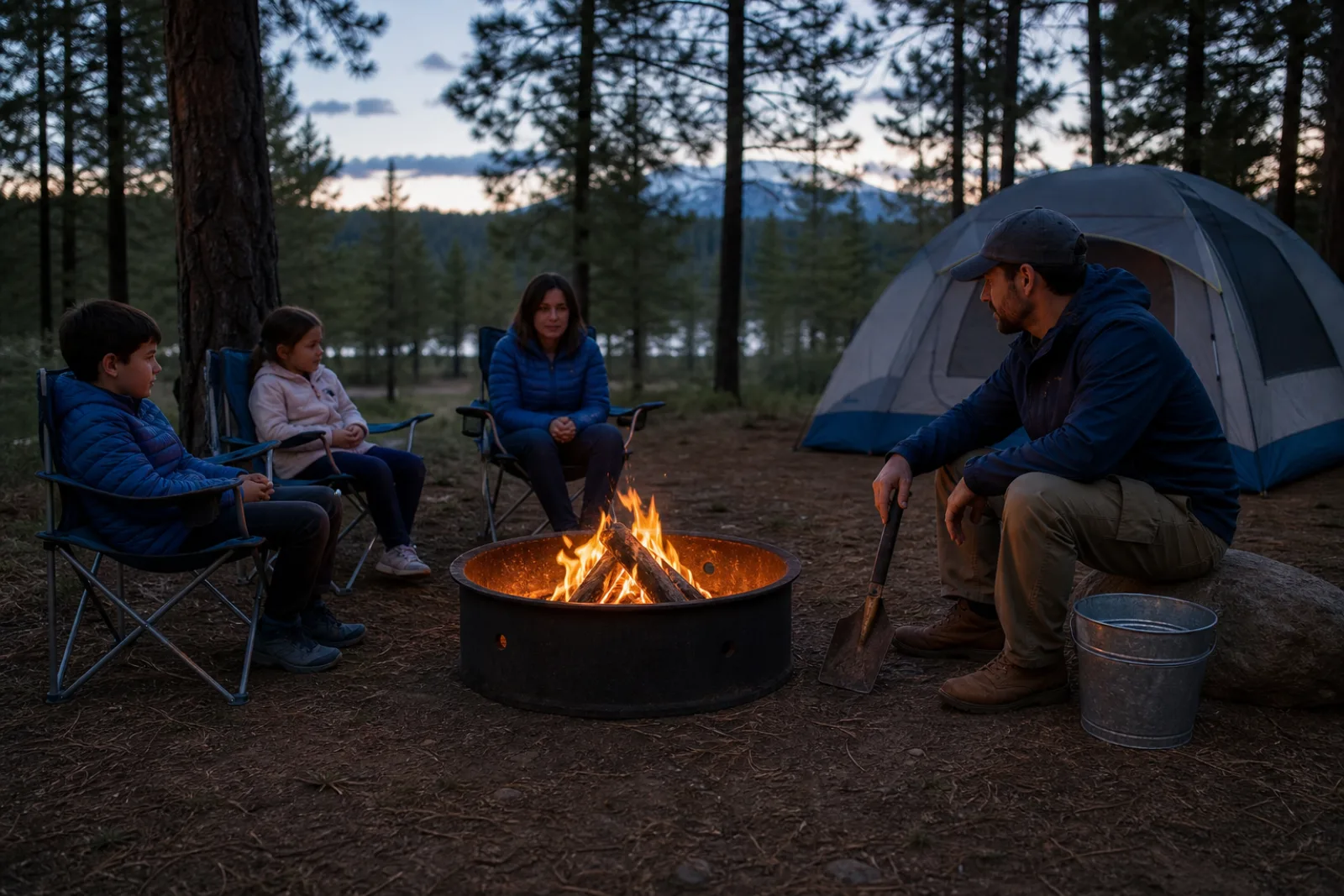
A campfire is optional. The family’s first responsibility is to know whether one is permitted and sensible under current conditions. When it is allowed, keep the fire small, supervised and timed so complete extinguishing happens well before everyone is tired.
Get permission before materials
Check current bans, campground rules and permit requirements with the managing agency or host. Use a provided fire ring, grill or fireplace. Skip the fire when wind, dry vegetation, overhead branches or local guidance makes it risky. A fire ring does not override an active restriction.
Use local, legal fuel
Purchase firewood near the destination or use only what the land manager permits. Transporting wood can spread insects and disease. Never cut live trees or strip standing dead wood that provides habitat. Gather three scales only where collection is legal: small tinder, finger-size kindling and larger firewood.
Build for control
Arrange a modest structure with space for oxygen rather than creating a large pile. Light tinder with an approved method and add larger pieces gradually. Keep a full water container and tool for stirring close by. Establish a child boundary well outside the ring; an adult remains responsible for ignition, fuel and every moment of supervision.
Manage the whole burn
Never leave flame or hot coals unattended, and do not burn plastic, foil, cans, aerosol containers or food waste. Stop adding wood early enough for fuel to become small embers. Watch wind direction and flying sparks. Clothing, chairs and cooking activity should remain outside the safety boundary, with clear walking space around the ring.
Make cold the definition of out
Pour water over all embers, stir the ash and wet it again. Continue until no hissing, glowing material or heat remains; follow the land manager’s exact procedure where it differs. Dirt can insulate a hot coal rather than extinguish it. Check the ring again before sleep or departure, and keep children away during the cooling check. Fire restrictions can change during a stay, so review official notices each day and accept a no-fire evening without improvising another flame source.