Protect a Family Campsite in Wet Weather
Keep sleep gear dry, manage wet transitions and avoid drainage hazards.
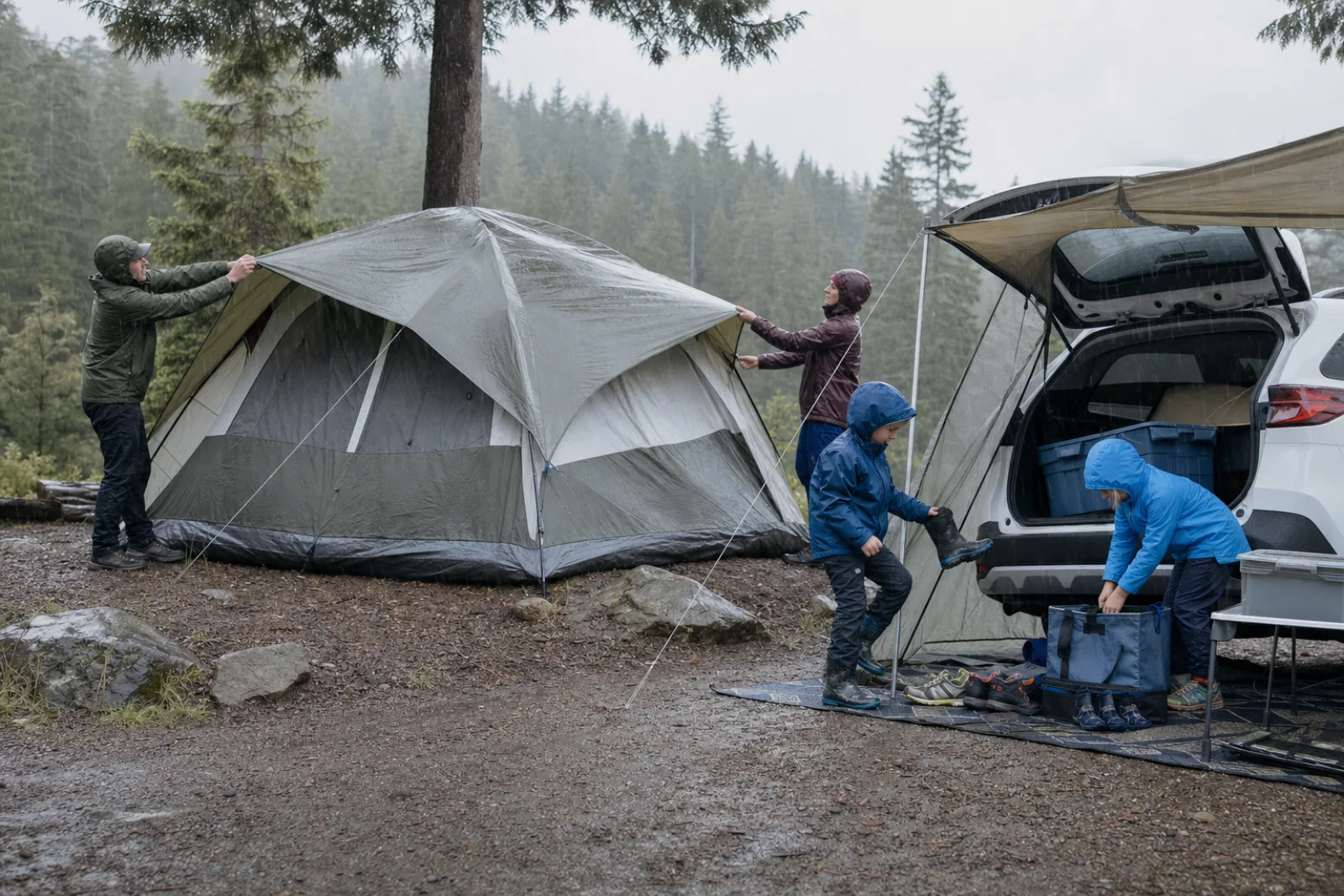
Rain does not automatically end a camping trip, but it changes the work. The family needs a site that drains, a shelter pitched as designed, a controlled place for wet items, and a decision point for worsening conditions. Protecting the sleep system matters more than keeping every shoe or chair perfectly dry.
Evaluate the site first
Use the assigned pad or an established durable area on higher, level ground. Avoid depressions, drainage channels, unstable slopes, stream edges, and trees with damaged overhead limbs. Do not dig trenches or reshape the site. If water is already flowing through the pitch or access road, ask the campground for guidance before unloading.
Pitch for ventilation and runoff
Install the full rainfly and tension it so wet fabric stays away from the inner tent where the design requires separation. Keep the footprint fully beneath the tent floor; exposed edges can collect water. Use every storm attachment specified by the manufacturer, while preserving ventilation to reduce condensation mistaken for a leak.
Build a wet-to-dry transition
Choose one sheltered spot for rainwear and muddy footwear. Store bedding and sleep clothing in sealed containers until the tent is secure. Give each person a dry bedtime layer that never becomes play clothing. A small towel and a dedicated wet bag keep moisture from spreading through the family’s clean equipment.
Simplify movement and meals
Keep paths clear of guylines and use hands-free lights after dark. Select a meal that requires little preparation and use only cooking equipment permitted for a safe outdoor location; never move a fuel-burning stove into a tent. Offer compact games or stories under approved shelter so children are not repeatedly crossing wet traffic areas.
Know when rain becomes a hazard
Persistent heavy rain, rising water, lightning, strong wind, slope movement, falling branches, or inaccessible roads require more than better clothing. Follow evacuation or shelter instructions immediately. Keep keys, footwear, lights, and essential medicine accessible so the family can leave without searching through packed equipment.
Check an official forecast, flood information, road notices, and campground alerts before departure and throughout the stay. Local staff and emergency authorities determine whether a site remains usable. General wet-weather techniques are not a reason to remain when warnings, closures, lightning, flooding, or damaged trees make the area unsafe.