Prepare a Family for a Longer Outdoor Day
Build a shared route, equipment and turnaround plan before leaving the campground.
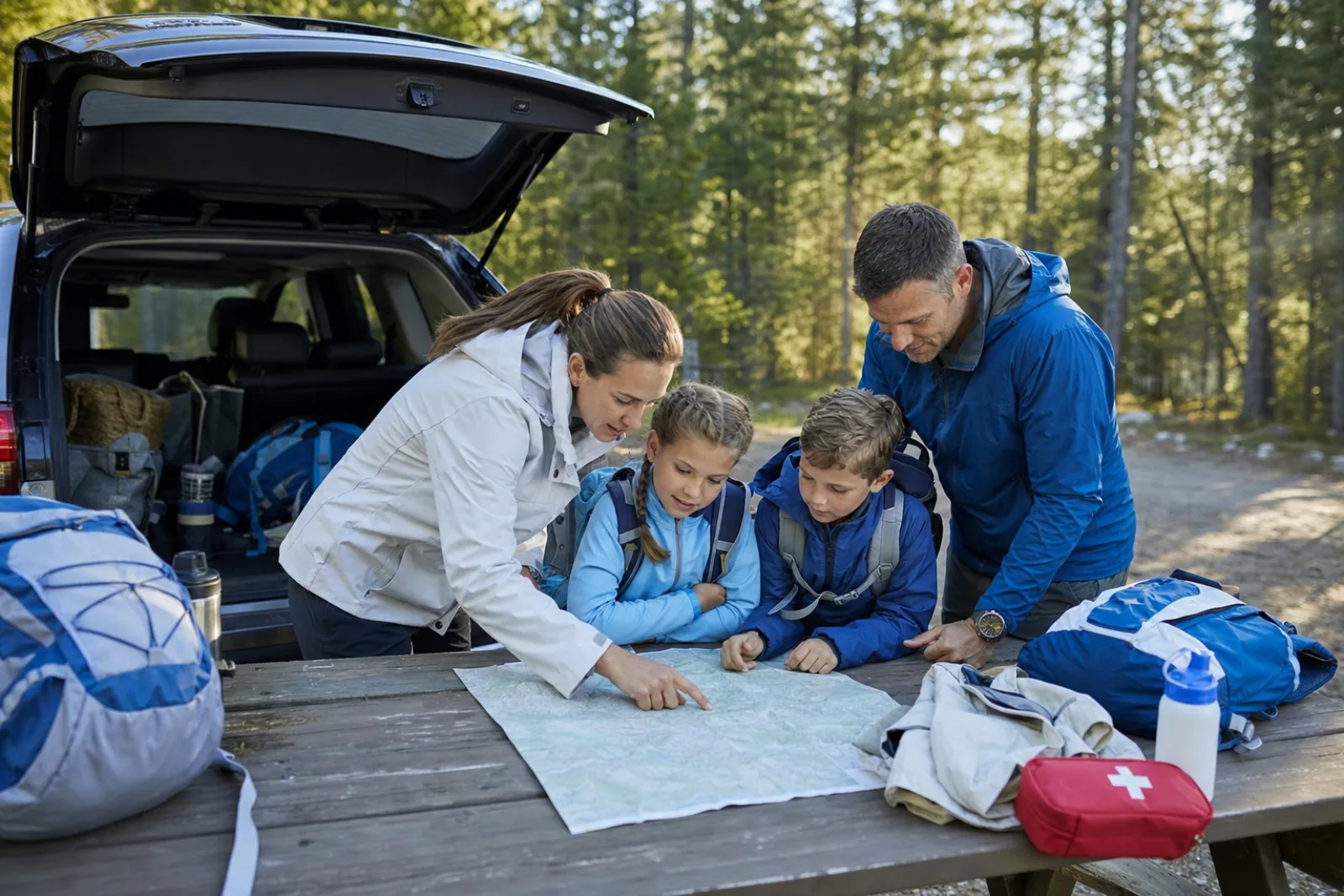
A longer hike or remote picnic asks more of a family than an afternoon around the campsite. The best preparation is not a heroic emergency plan. It is a collection of ordinary decisions made early: choose a suitable route, make expectations visible, carry dependable basics, keep the group together, and turn around before a small concern becomes difficult.
Match the route to the group
Research mileage, elevation, surface, shade, water exposure, and the easiest exit. Plan around the least experienced walker and leave generous time for stops. A route that adults describe as easy may feel very different to a young child. Build confidence on shorter outings before adding distance, altitude, or navigation complexity.
Share the route offline
Every adult should know the intended path, turnaround point, and meeting procedure. Download or print the map rather than depending on reception. Leave the itinerary and expected return time with someone at home. At the trailhead, compare the map with posted notices and make sure the route has not changed because of closures or damage.
Pack for delays, not drama
Carry water, food, weather layers, sun protection, lighting, navigation, and a family first-aid kit appropriate to the outing. Important personal medicine stays with a responsible adult. Check batteries and know how equipment works before departure. Training is more useful than carrying unfamiliar tools, so consider a recognized first-aid course for frequent remote trips.
Keep the group observable
Choose a lead adult and a final adult when the group is large enough. Children remain between them, and nobody passes a junction without regrouping. Pause for water and comfort checks before people are exhausted. A slower person sets the practical pace; separating the group to protect an ambitious schedule creates unnecessary risk.
Use a conservative turnaround
Dark clouds, smoke, heat, cold hands, repeated stumbling, worsening pain, or unusual quietness are reasons to reassess. Reaching a viewpoint is optional; returning together is the plan. Turn around while the route out is still straightforward, and treat the decision as good judgment rather than a failed adventure.
Trail conditions, weather, smoke, access roads, and emergency restrictions can change quickly. Check the responsible park, forest, or land agency and an official forecast on the day of the outing. This general preparation guide does not replace current ranger instructions, medical advice, or specialized training for remote travel.