A Practice-First Family Tent Setup
Rehearse parts, site choice, footprint and guylines before the weather turns.
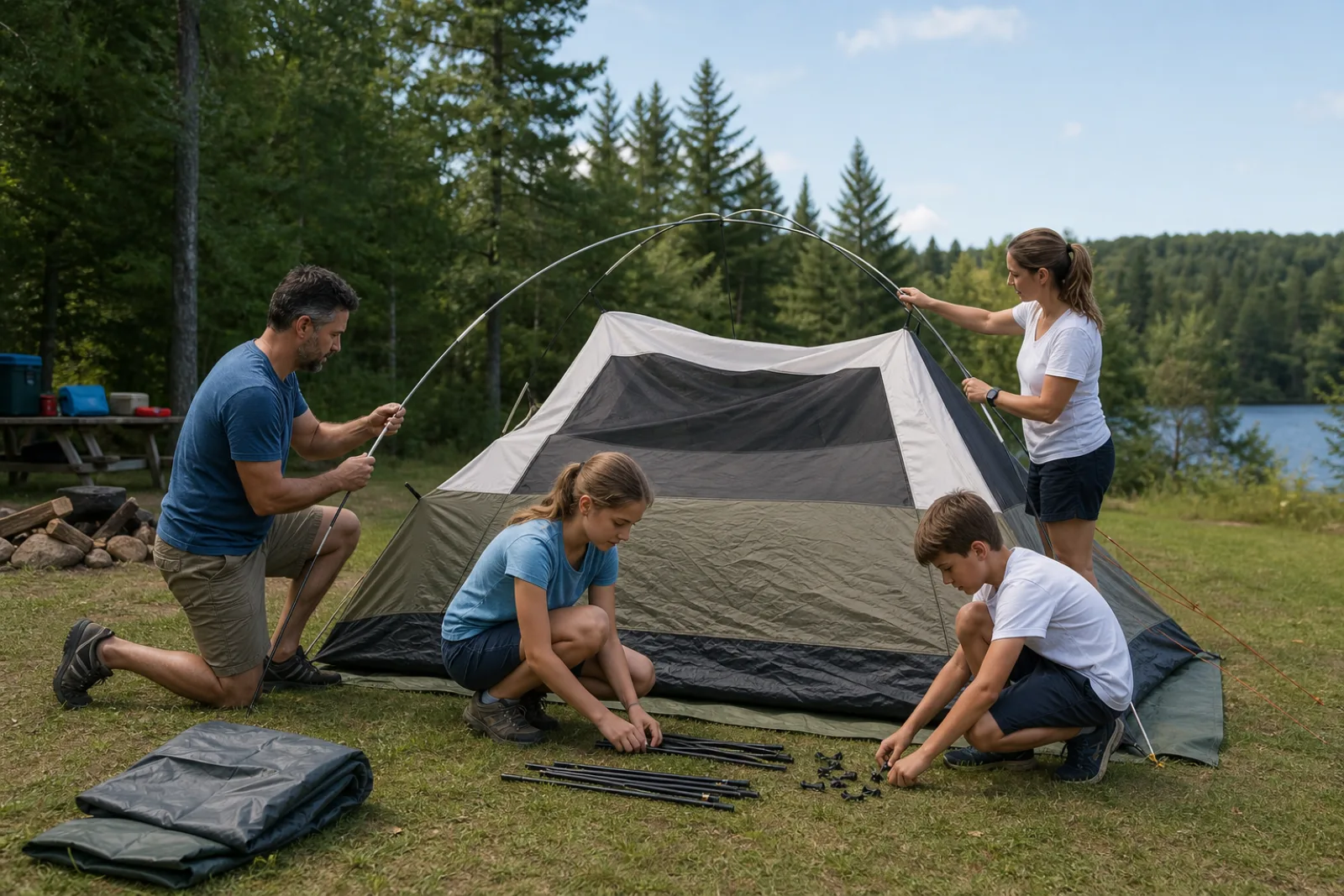
The least forgiving time to learn a tent is at dusk in wind or rain. A complete home rehearsal gives every family member a job, confirms every part is present and makes the real setup calm enough to pay attention to the campsite.
Inventory on a clear day
Unpack the tent, poles, stakes, rainfly, guylines and footprint. Read the manufacturer’s sequence and identify parts that look similar. Assemble the shelter fully, not just the pole frame. Check zippers, vents and repairs, then photograph the finished setup and packed arrangement for reference.
Give children bounded jobs
Young children can carry the empty bag, match color-coded pole ends or place stakes beside an adult. Older children can clip the canopy or help tension guylines after instruction. Adults control hammers, sharp stakes and decisions about weather exposure. Keep unused pieces in one visible container so nothing disappears into grass.
Choose durable, protected ground
Use the assigned tent pad or an existing durable site. Look up for damaged branches, then check the ground for depressions, drainage channels, roots, sharp objects and animal activity. Avoid altering vegetation or digging trenches. In undeveloped areas, follow current land-manager and Leave No Trace guidance, including required distance from water.
Keep water outside
A fitted footprint protects the floor, but it should not extend beyond the tent edge where it can collect rain. Orient doors and the strongest pole structure with expected wind and site access in mind. Install the rainfly with separation from the inner tent so ventilation can reduce condensation. Stake corners evenly without distorting the shape.
Finish with guylines and a check
Guylines add stability and keep wet fabric away from the sleeping area. Tension them securely, mark them for visibility and keep paths to the restroom clear. Recheck after temperature, rain or wind changes the fabric. Place the instructions and a small repair kit in the same known pocket. Before travel, confirm the official forecast and campground alerts; no pitching technique makes a tent a safe shelter from severe storms, flooding, falling trees or evacuation orders. If the assigned pad appears hazardous, pause and contact campground staff instead of reshaping the site.