Practice-First Tent Pitching for Families
Learn the model-specific sequence at home, then use a calm setup order at camp.
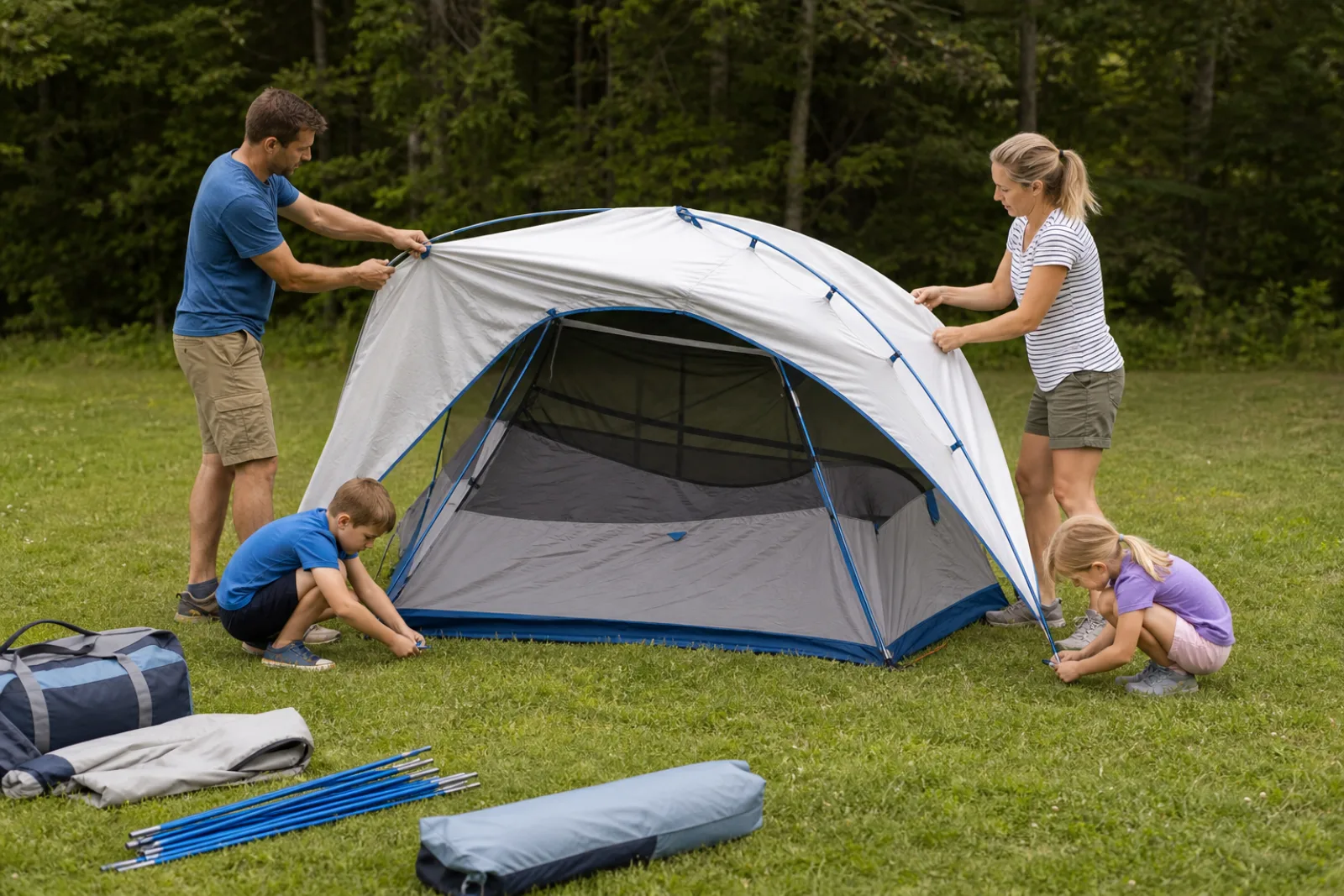
Tent designs vary too much for one universal sequence. The reliable approach is to learn the manufacturer’s method at home, label confusing parts, and repeat it until two adults can complete the shelter without a video connection. At camp, a practiced order leaves more attention available for children, weather, and the site itself.
Inventory every component
Open the package in daylight and identify the body, fly, footprint, poles or air tubes, stakes, guylines, repair parts, and instructions. Check for damage and confirm that poles connect smoothly. Store model-specific instructions offline. Do not substitute improvised hardware without understanding how it affects the shelter’s structure and warranty.
Practice the full sequence
Pitch the tent with the fly and all required anchors, not only the inner body. Notice which side contains the doors and how pole sections align. A second adult should practice each critical step. Time the process calmly, then rehearse packing it back into the bag while every piece is still accounted for.
Prepare the site before fabric
At camp, inspect the assigned pad for drainage, overhead hazards, sharp objects, insects, and boundaries. Place the footprint fully beneath the tent so it cannot collect rain. Orient doors and strong structural faces according to the tent instructions and expected wind, without blocking paths or extending into another site.
Protect children during setup
Name the supervising adult and create a visible place for children away from moving poles, mallets, guylines, vehicles, and the cooking area. Children can carry empty bags or match color-coded clips when closely guided. Adults handle tensioned poles, stakes, and any task where a sudden release could injure someone.
Finish with a structural check
Attach the fly correctly, tension guylines, close unused openings, and confirm stakes are visible or guarded from foot traffic. Keep required ventilation open. Move sleeping gear in only after the shelter is secure and dry. Before bedtime, repeat the check if wind, rain, or soil conditions have changed.
Always follow the current instructions and weather limits for the exact tent model. Campground stake rules, pitch boundaries, and weather advisories can change. Check the official forecast and site instructions before setup, and move to approved shelter or leave when wind, lightning, flooding, or other conditions exceed the equipment and family’s experience.