Pack a Family Camp Kit in Use Order
Load by arrival sequence so shelter, dry clothing and a simple meal stay reachable.
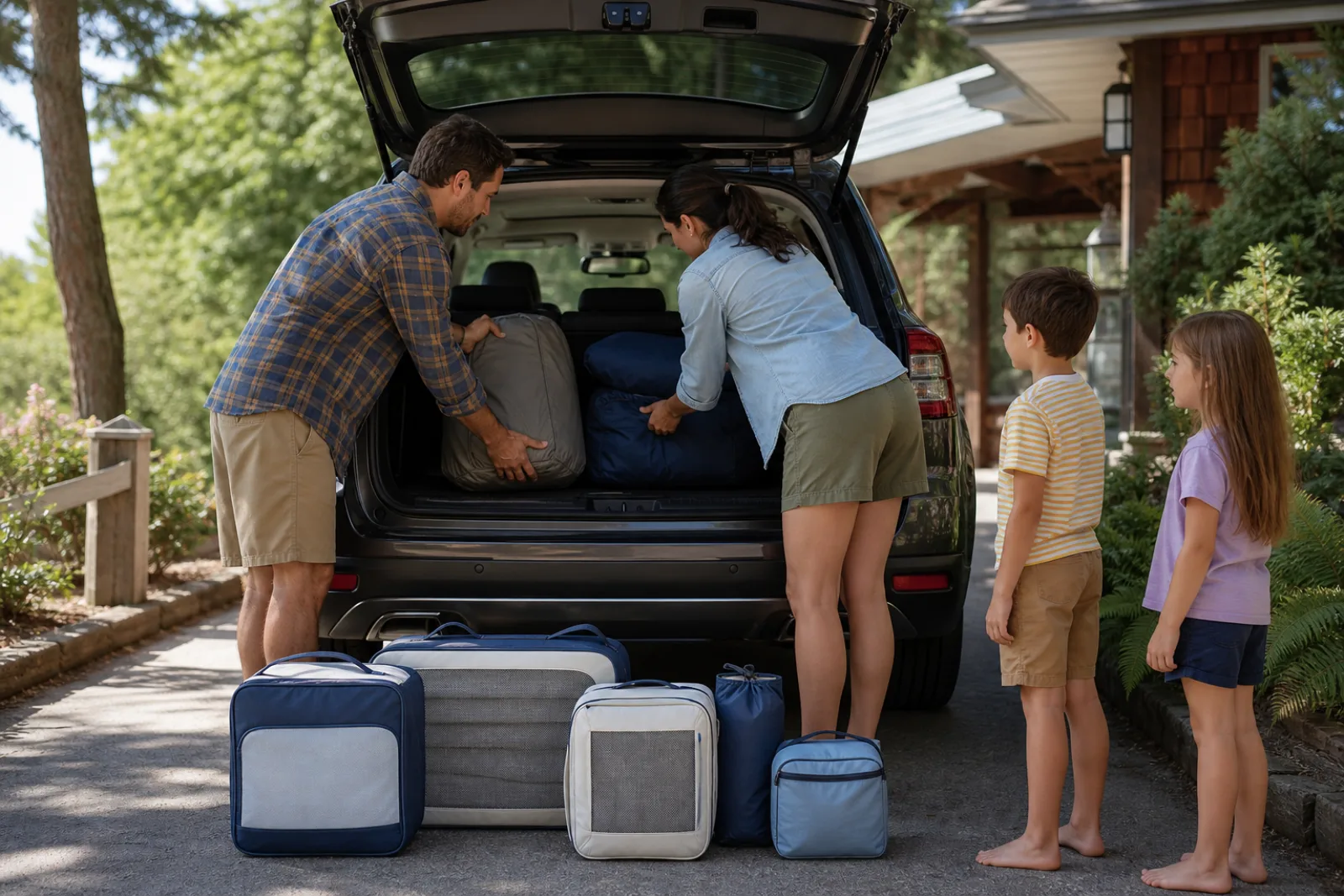
A long checklist does not guarantee a smooth arrival. The useful question is whether the family can reach shelter, weather layers, lights, water, and the first meal without unloading everything. Pack by function, verify items only after they enter the vehicle, and load in reverse order of use.
Build a trip-specific list
Start with shelter, sleep, clothing, water, food, hygiene, lighting, safety, and required personal items. Adjust for lodging, nights, child ages, activities, forecast, and confirmed facilities. A reference list is not an instruction to bring every possible object. Record quantities and name the adult responsible for shared essentials.
Create labeled modules
Use containers or bags for sleep, clothing, kitchen, hygiene, play, and wet returns. Keep labels visible when loaded and avoid containers too heavy for safe handling. Children may pack a small personal bag, but an adult checks weather clothing, sleep gear, medication, and anything necessary for safety.
Protect the critical dry layer
Seal sleeping insulation and one complete change of clothing separately from equipment used during arrival. Keep rainwear accessible from the vehicle door. If a container leaks, the entire family should not lose dry bedtime gear. Inspect water vessels, fuel, toiletries, and food packaging before they share cargo space.
Load for the first hour
Place optional recreation deepest. Load the next morning’s equipment before the arrival kit. Shelter, stakes, lights, weather layers, water, a simple meal, and children’s comfort items go in last so they come out first. Do not bury the first-aid kit, emergency information, vehicle equipment, or required food-storage supplies.
Close the loop after travel
Carry separate bags for rubbish, wet textiles, and items needing repair. At home, dry shelter and insulation completely, clean cooking equipment, recharge lights, and replenish consumables. Update the master list while memories are specific. Removing unused extras is as valuable as adding the item that was genuinely missed.
Check the campground’s current amenities, water status, food-storage rules, fire restrictions, access road, and official forecast before final packing. Product instructions and local regulations determine how fuel, batteries, food, and safety equipment travel. When live conditions change, revise the load rather than trusting a saved checklist unchanged.