Organize a Family Campsite Into Simple Zones
Give sleep, clothing, food and wet gear clear homes without spreading across the site.
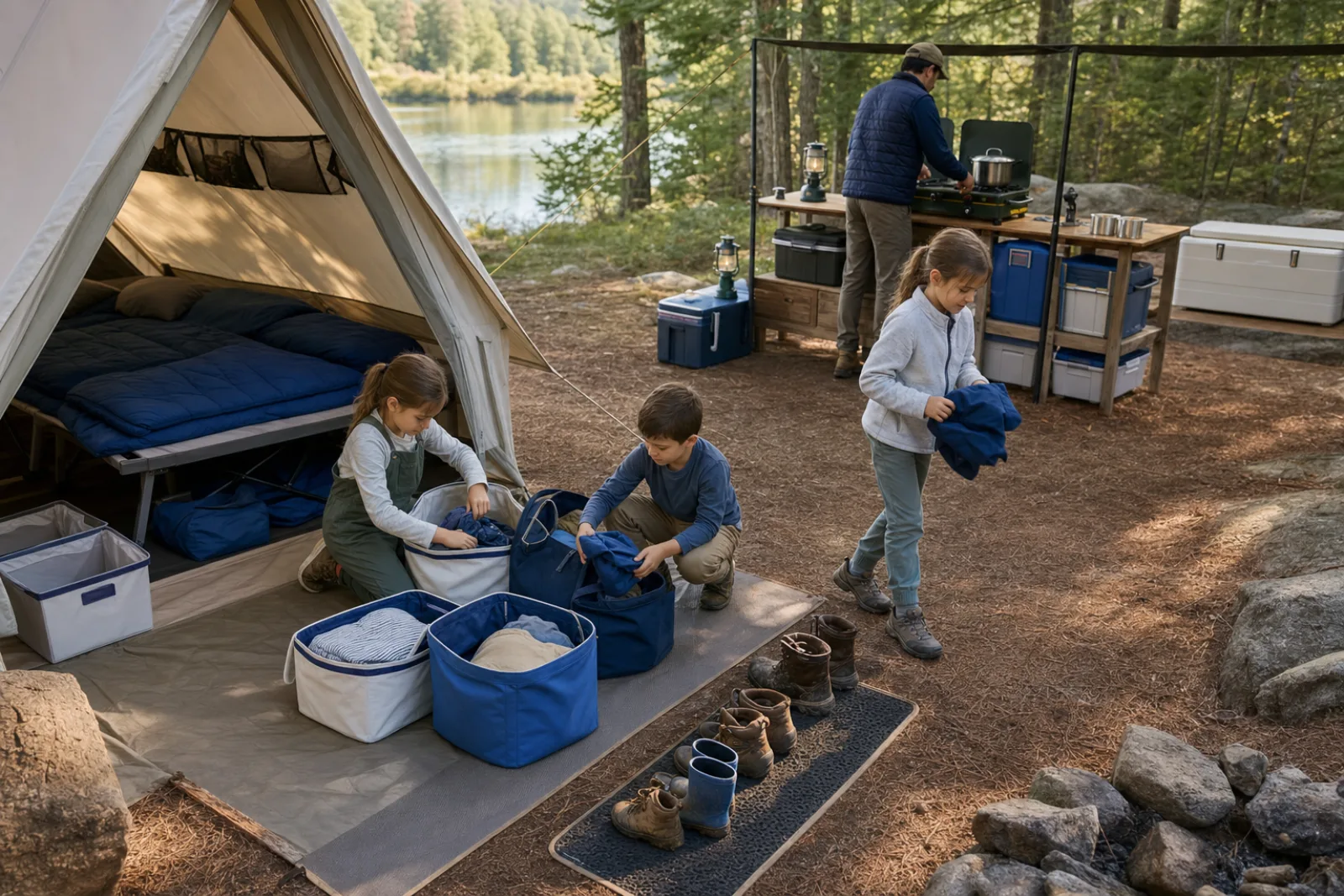
Campsite organization is less about clever products than giving ordinary things a dependable home. A sleep zone stays dry, a clothing zone separates clean from wet, a kitchen zone remains under adult control, and a departure zone catches items that must return to the car. Clear zones reduce searching and make child boundaries easier to explain.
Keep sleep equipment protected
Move pads, bags, pillows, and bedtime clothing into the shelter only after it is secure and dry. Use breathable organization inside the tent while keeping exits clear. Store one dry pair of socks with each sleep kit. Food, scented toiletries, wet shoes, and fuel never belong in the sleeping zone.
Divide clothing by purpose
Use labeled soft bags for each person or for categories such as daytime, sleep, and wet gear. Labels should make sense to every adult and older child. Keep the next layer reachable without emptying the vehicle. A dedicated wet bag prevents damp clothing from migrating into clean bedding and dry insulation.
Make the kitchen adult-led
Place the stove or permitted cooking device outdoors on a stable surface, with fuel, sharp tools, hot cookware, and raw food controlled by adults. Establish separate handwashing and rubbish points. Keep the path between cooler, table, and stove clear, and secure food immediately after use according to wildlife rules.
Create a transition near the door
Choose a place for footwear, rainwear, lights, and the items needed for restroom trips. Avoid piles that block the tent entrance or become tripping hazards. Put each headlamp in the same pocket after use. Children learn the routine faster when every frequently used item returns to one visible place.
Reset before night and departure
Before dark, store loose items that wind or rain could move and close food storage. Before leaving, walk through every zone in the same order, separating rubbish, wet equipment, repairs, and ready-to-store gear. Dry the tent fully at home and update labels when the system did not match how the family actually behaved.
Food storage, washing, waste, fire, and quiet-hour rules vary by campground and can change with wildlife or weather conditions. Confirm the current official instructions rather than copying a zone layout from another site. Never reorganize a campsite in a way that blocks emergency access, damages vegetation, or expands beyond the assigned boundary.