Make a Rainy Camping Day Work
Protect dry sleep gear, simplify movement and know when weather changes the plan.
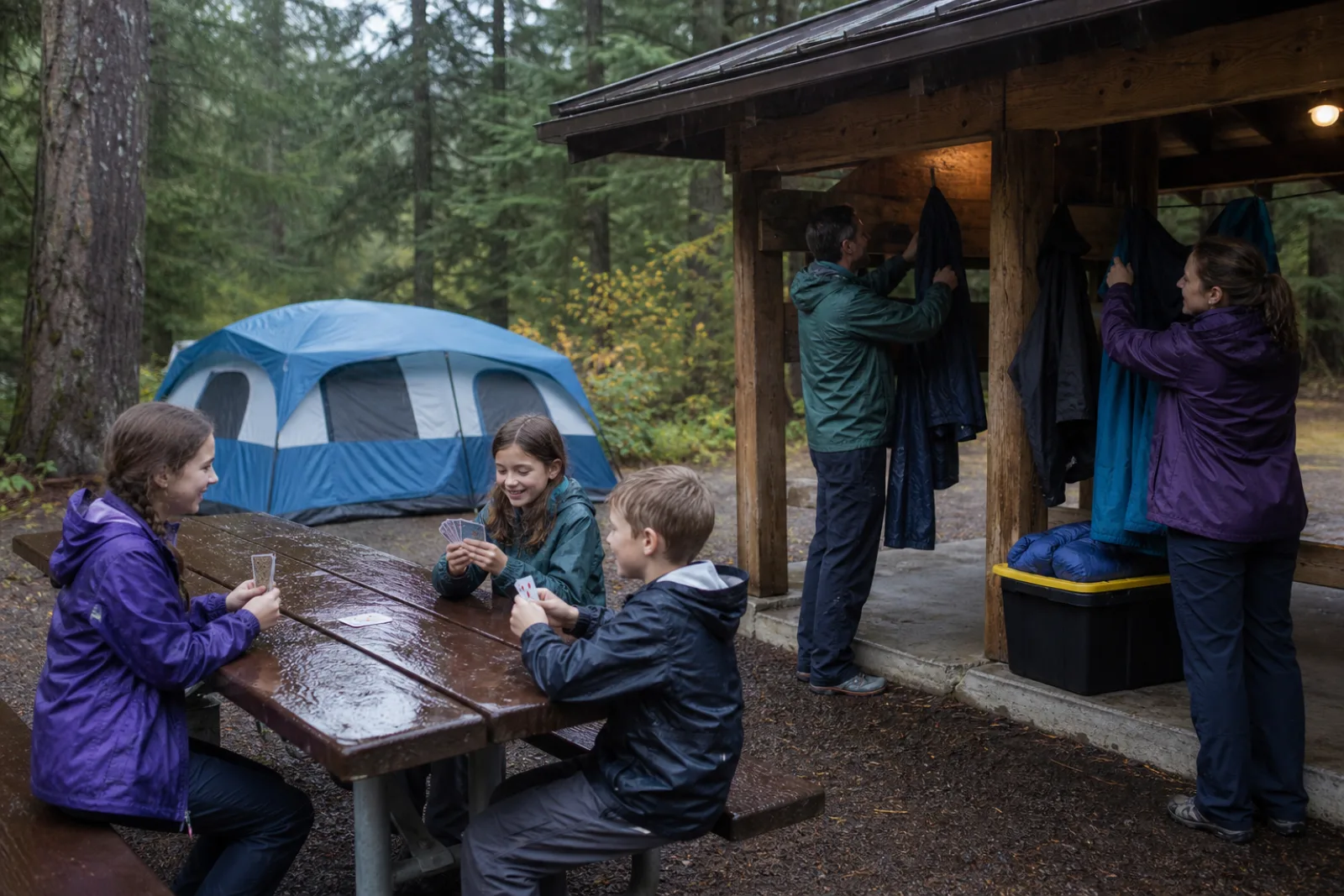
Protect dry sleep gear, simplify movement and know when weather changes the plan. Make a Rainy Camping Day Work is easiest to put into practice when the family begins with separate wet and dry zones and makes each later choice fit the actual campsite, season, group, and length of stay. Use these ideas as a planning framework rather than a rigid schedule or universal shopping list. The right version is the one that protects comfort and safety without adding work the group does not need.
Separate wet and dry zones
Keep one protected container for sleep clothing and bedding, and another for wet outerwear. Set a clear place for shoes before anyone enters the tent. A small towel and rubbish bags help contain moisture, but ventilation is still necessary to reduce condensation.
Choose sheltered activities
Cards, drawing, storytelling, trivia, and compact board games can turn waiting time into family time. Match games to the children’s ages and the available dry space. Avoid blocking exits, damaging shared facilities, or creating noise that affects neighboring campers.
Move carefully around camp
Rain can make roots, steps, decks, and tent lines harder to see. Use lights after dark, keep routes clear, and escort young children. Do not allow play in drainage channels, floodwater, or fast-moving water, even when it appears shallow.
Protect food and cooking
Keep food covered and at safe temperatures. Cook only in a permitted, well-ventilated location and never move a grill or stove into a tent. If the weather prevents safe cooking, use a no-cook meal or approved indoor facility rather than improvising.
Know when to stop
Rain alone may be manageable, but lightning, strong wind, flooding, falling branches, or official warnings require a different response. Check authoritative forecasts and campground instructions, identify suitable shelter, and be prepared to leave when staff or emergency officials advise it.
Make know when to stop part of the family’s final review, and keep essential information and equipment where the responsible adult can reach them. Before departure, check the specific campground’s official page and the appropriate local authorities for current facilities, closures, fire restrictions, water status, weather, and activity rules. Those current instructions always take priority over the general approach in Make a Rainy Camping Day Work.