Leave No Trace Habits a Family Can Share
Turn low-impact camping into simple jobs that children and adults can practice together.
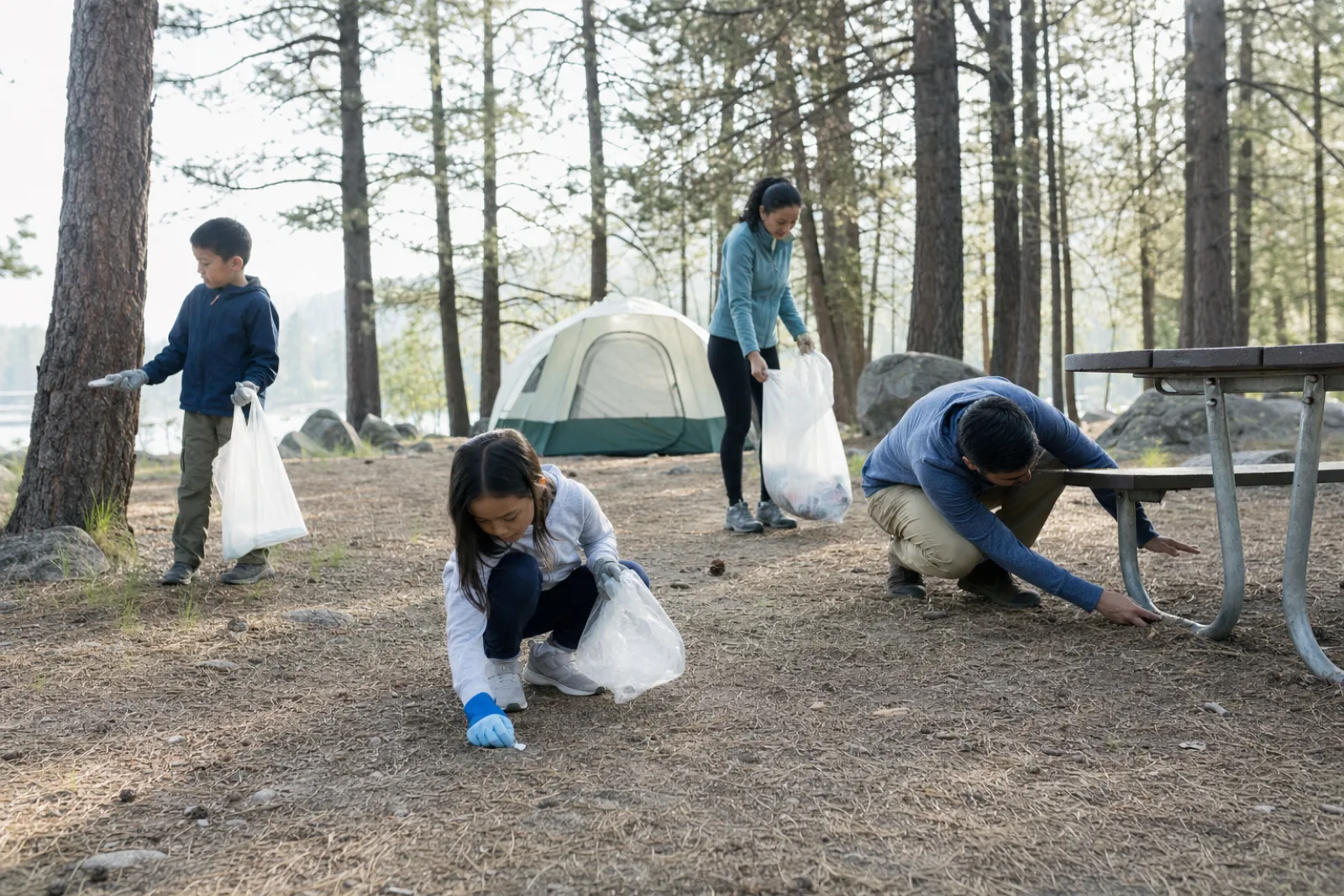
Responsible camping becomes easier when it is treated as a family routine instead of a lecture delivered at the trailhead. Children can understand concrete actions: stay on the durable path, leave interesting objects where they are, keep food contained, lower voices near other camps, and complete one careful sweep before leaving.
Plan for the place
Read the land manager’s current rules before packing. Learn whether the site supplies water, accepts rubbish, permits fires, allows pets, or requires a particular method for storing food. Busy dates and severe weather can increase impact, so a quieter destination or different weekend may be the more responsible choice. Pack containers for every item that must leave with you.
Use durable spaces
Choose established roads, paths, tent pads, and gathering areas wherever they exist. Keep chairs, games, and kitchen activity inside the site rather than gradually spreading into vegetation. If a child notices flowers, nests, tracks, or unusual rocks, encourage looking, drawing, or photographing instead of collecting. Natural and cultural objects belong in their original place.
Manage food and waste
Crumbs, wash water, wrappers, and tiny scraps all count as waste. Create one visible rubbish station and inspect the ground after every meal. Keep food and scented products secured according to local wildlife rules. Use campsite sinks or approved disposal methods; requirements for dishwater and human waste vary, so never assume a technique is acceptable everywhere.
Respect wildlife and neighbors
Observe animals from a distance and never offer food, even when an animal appears comfortable near people. Keep children and pets from chasing wildlife. Follow quiet hours, use headphones sparingly, and walk on shared routes rather than cutting through another campsite. A calm voice and a compact nighttime setup protect both wildlife behavior and other families’ rest.
Make departure a team check
Give each person a final job: collect micro-litter, check beneath the picnic table, count tent parts, or inspect the fire area with an adult. Restore moved campsite items without digging, trenching, or building structures. The goal is not to erase an established site, but to leave it clean, intact, and ready for the next visitor.
Leave No Trace guidance is a foundation, while disposal, fire, food-storage, pet, and access rules remain location-specific. Review the current instructions from the campground or public land manager immediately before travel. If local guidance is more restrictive than a general camping article, the official local direction takes priority.