A Kid-Paced Hike From the Campground
Plan a short trail outing around curiosity, comfort and clear safety rules.
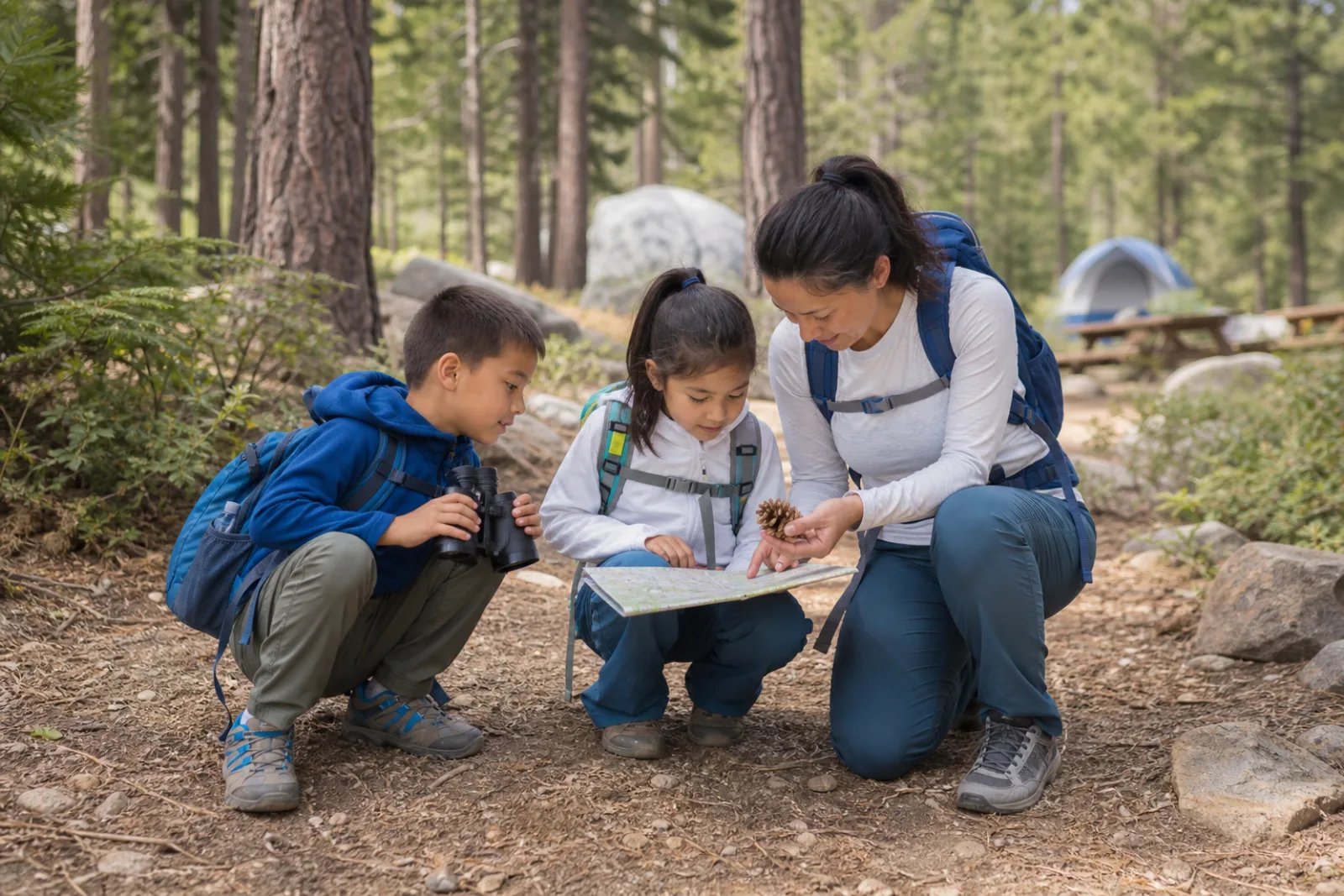
A family hike succeeds when children finish with energy and a story to tell. Distance is only one measure. Warmth, snacks, interesting stops and the freedom to notice small things usually matter more than reaching a viewpoint on schedule.
Pick a route for the youngest walker
Choose a short trail with an obvious turnaround point and minimal exposure to traffic, steep drops or fast water. Read current trail descriptions and ask a ranger about closures, wildlife and surface conditions. A loop near the campground can feel adventurous while keeping the exit simple. Calculate the return based on the slowest child, not the adult pace shown in a guidebook.
Protect the basics first
Children become uncomfortable faster than many adults expect. Carry water, familiar snacks, sun protection, rain layers and dry socks. Bring the family’s essential safety supplies even on a short walk. For a child riding in a carrier, follow the carrier manufacturer’s fit, age and weight guidance; practice adjustments at home and monitor temperature because a passenger is not producing the same heat as the person walking.
Make the trail the destination
Create small goals: a bridge, a mossy log, a bird call or the next trail marker. Count colors, look for animal tracks or photograph shapes without collecting natural objects. Allow time for a toddler to inspect one patch of ground. Older children can help select the route, carry a light personal item and read a simple map.
Teach rules before feet start moving
Young walkers stay within sight of a responsible adult. More experienced children may go a short distance ahead only when the family has agreed on fixed waiting points, and no child passes a junction alone. Give each school-age child a whistle and teach the lost-person response: stop, stay put and signal in groups of three. Adults should know what the whistle sounds like before leaving camp.
Turn around while it is still fun
Watch for cold hands, unusual quietness, stumbling, headache, irritability or fading interest. Those signals matter more than the remaining mileage. Weather can shift quickly, so check an official forecast and current park alerts before starting, then turn back early if skies, heat or smoke worsen. End with food and water at camp, and ask each child what they would repeat or change next time.