Help Kids Build a Nature Reset Routine
Use curiosity, sensory attention and unhurried camp time to reconnect as a family.
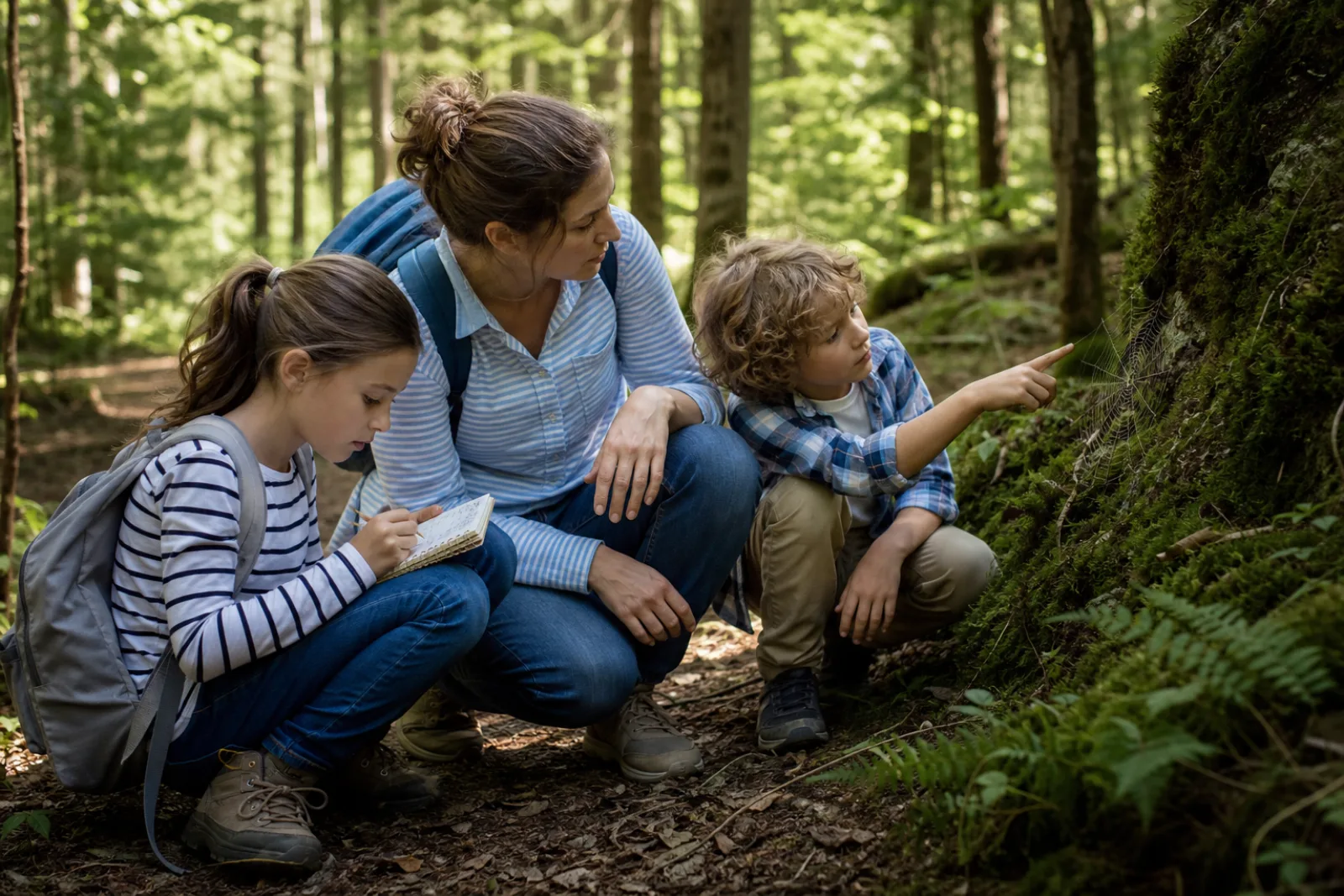
Outdoor time does not need to compete with screens through bigger thrills or a packed schedule. A family campsite already offers different textures, sounds, light, and questions. The useful goal is to make noticing those details a repeatable habit while accepting that children may still complain, get bored, or need familiar comforts along the way.
Begin with a small invitation
Choose one approachable experience: a short campground loop, ten minutes beside a tree, or breakfast outdoors. Tell children what will happen and when they can stop. A modest invitation creates less resistance than presenting the weekend as a lesson about what they should enjoy. Let interest grow from direct experience rather than a long explanation.
Follow the senses
Ask what feels rough or smooth, which sound is closest, how the air smells after rain, or where sunlight changes color. Children can draw, describe, or photograph observations without collecting natural objects. Avoid tasting plants, touching wildlife, or handling unknown insects. Sensory attention should remain inside the family’s safe movement boundary.
Let questions lead
A fallen tree, spiderweb, feather, or animal track can begin a conversation without requiring an adult to know every answer. Admit uncertainty and record questions to research later. Encourage imaginative stories while separating them from factual claims. This balance keeps wonder alive and teaches that careful observation is more valuable than inventing certainty.
Give quiet time some structure
Start with a short screen-free period rather than demanding an entire weekend without devices. Put phones away except for navigation, communication, or a chosen photograph, then agree on a shared activity. Cards, sketchbooks, binoculars, and simple field guides can support attention without filling every pause. Adults should model the same boundary they ask children to follow.
Expect imperfect outings
Rain, forgotten socks, low energy, arguments, and changed plans are part of family travel. Respond by shortening the walk, eating, adding a layer, or returning to camp rather than forcing a meaningful moment. Before leaving, ask each child for one detail they noticed and one thing they would change. Repetition, not perfection, builds confidence outdoors.
Choose activities for each child’s age, ability, and current condition, and maintain active adult supervision around roads, water, fire, heights, and wildlife. Check official weather, trail, smoke, closure, and campground information before every outing. Local instructions and changing conditions always take priority over a general family nature routine.