A First Geocache Hunt With Kids
Turn a nearby cache into a supervised lesson in navigation and care.
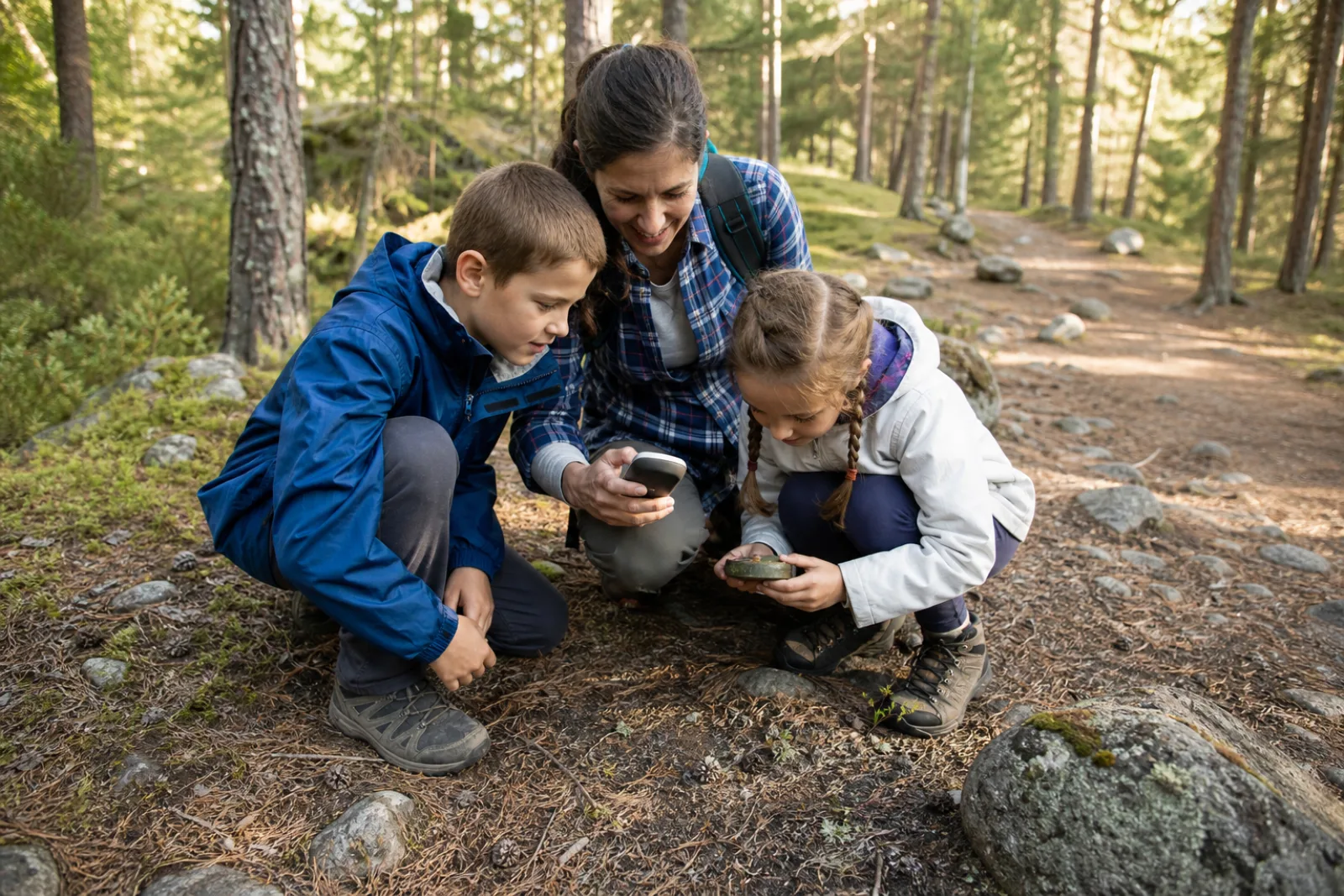
Geocaching combines a walk, observation and a hidden container into one family activity. The screen provides a direction, but the real skill is learning to read terrain, stay aware and leave a place exactly as it was found.
Select a genuinely easy cache
Use a current geocaching listing and begin with low difficulty and terrain ratings near the campground or on a familiar public trail. Read recent logs for access problems, damaged containers or closures. A regular-size cache is easier for children to spot and may contain trade items. Confirm that the listing remains active before promising a treasure.
Pack it like a short hike
Bring water, snacks, weather layers, a small first-aid kit, a pen and a flashlight for viewing dark spaces without reaching blindly. Pack a few inexpensive, family-safe trade items with no food, liquids or sharp edges. Follow all park rules and never bring trade objects that could be hazardous to a later child.
Let the device guide, not lead
Show children the map and compass views, then ask what landmarks they notice. The map may show proximity without showing a safe route, so adults choose paths and crossings. Everyone periodically looks up from the screen. Once within the device’s normal accuracy range, put it away and use eyes rather than trampling a widening search area.
Find, trade and replace carefully
Do not move rocks, enter closed areas, damage vegetation or reach into a hole that has not been inspected. When the cache is found, sign the log. If taking an item, leave one of equal or greater value. Close the container securely and return it to the precise location and orientation described, without adding markers that reveal it.
Finish with stewardship
Practice Cache In, Trash Out by collecting safe litter without disturbing natural objects. Log the visit afterward and report a wet, missing or damaged cache to its owner rather than repairing it in an unauthorized way. App features, cache status and land access can change, so use current listings and official land-manager notices on the day of the activity.