Five Low-Equipment Games for Family Camp
Use words, observation and simple movement for flexible campsite play.
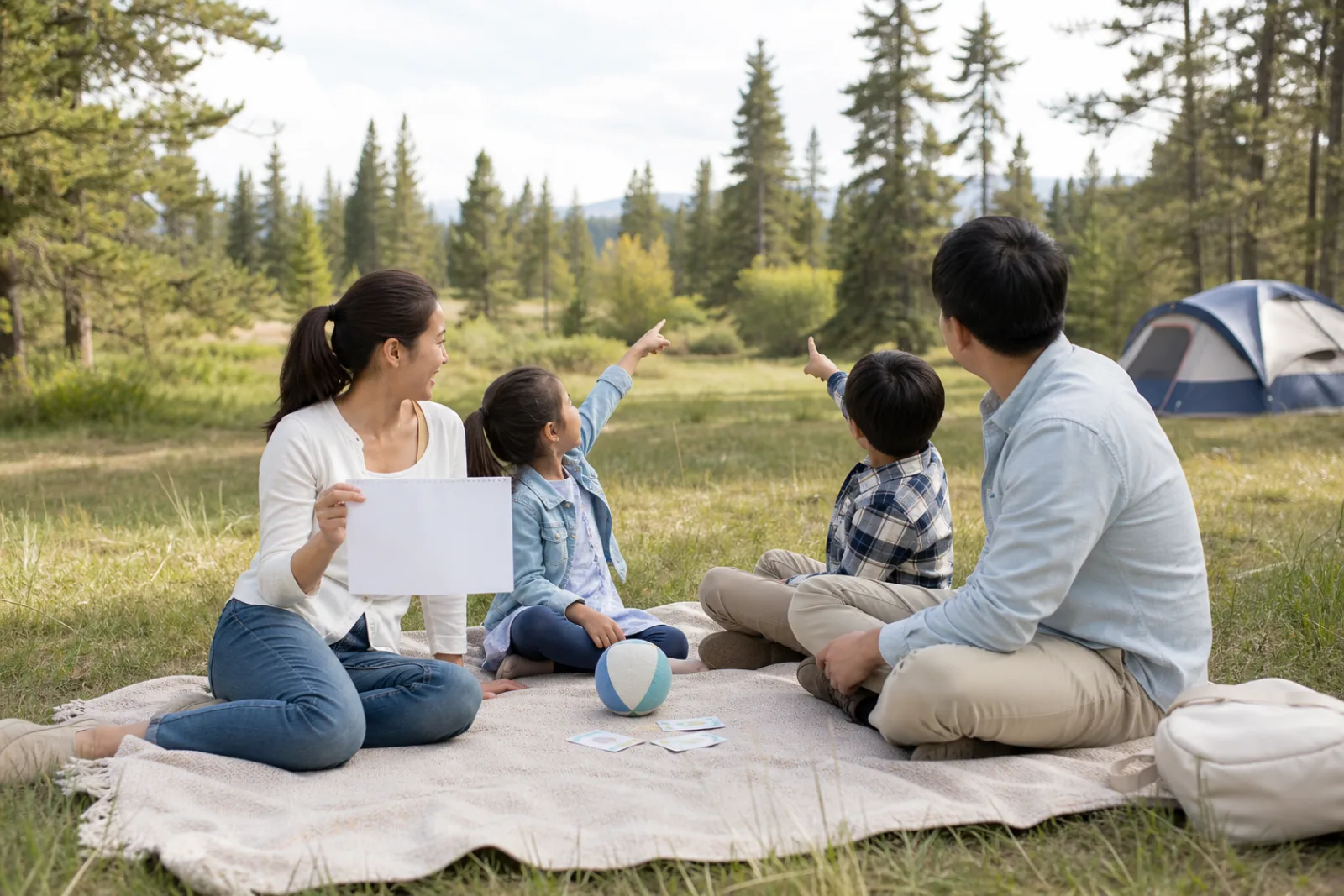
Good campsite games are easy to stop, adapt, and move when the space changes. They do not require a trunk full of equipment or permission to collect natural objects. Begin by naming the play boundary, checking hazards, and matching movement to the youngest child. Then let the group choose a game for its current energy.
Play a last-letter chain
Choose a category such as animals, foods, or places. Each player says a word beginning with the final letter of the previous answer. Younger children can use any related word or receive a hint. The game works in a vehicle, under shelter, or during meal preparation, and it can end cleanly after any round.
Run a look-only scavenger hunt
Create a list of colors, shapes, sounds, and signs rather than objects to collect. Children point, draw, or photograph what they find while leaving plants, rocks, feathers, and cultural items in place. Set a small visible search area and require an adult escort anywhere near roads, water, animals, or neighboring sites.
Make a quiet observation round
Everyone watches one small area for a minute, then shares a detail others may have missed. Repeat with sound, texture seen from a distance, or movement in the sky. This works well before bedtime because it rewards stillness. Do not approach wildlife or touch unknown species to improve the observation.
Build a seated story game
The first player chooses a character, the next adds a destination, and each person contributes one sentence. Give young children two choices when they feel stuck. A drawing pad can preserve favorite characters. Keep the story suitable for the group and avoid loud performance after quiet hours begin.
Use a safe movement circuit
In a clear daylight area, mark stations with belongings already at camp: walk around a chair, balance along an imaginary line, toss a soft item into a container, and return. An adult inspects the ground and supervises. Avoid running near fire, guylines, vehicles, steep ground, water, or other campers.
Campground boundaries, quiet hours, shared-space rules, wildlife activity, and weather can alter where games are appropriate. Check posted information and ask staff or the host when uncertain. Stop outdoor play for lightning, smoke, unsafe heat, strong wind, poor visibility, or any instruction from local authorities.