Your First Family Camping Trip
A practical first-trip plan from choosing a forgiving campsite to settling in before dark.
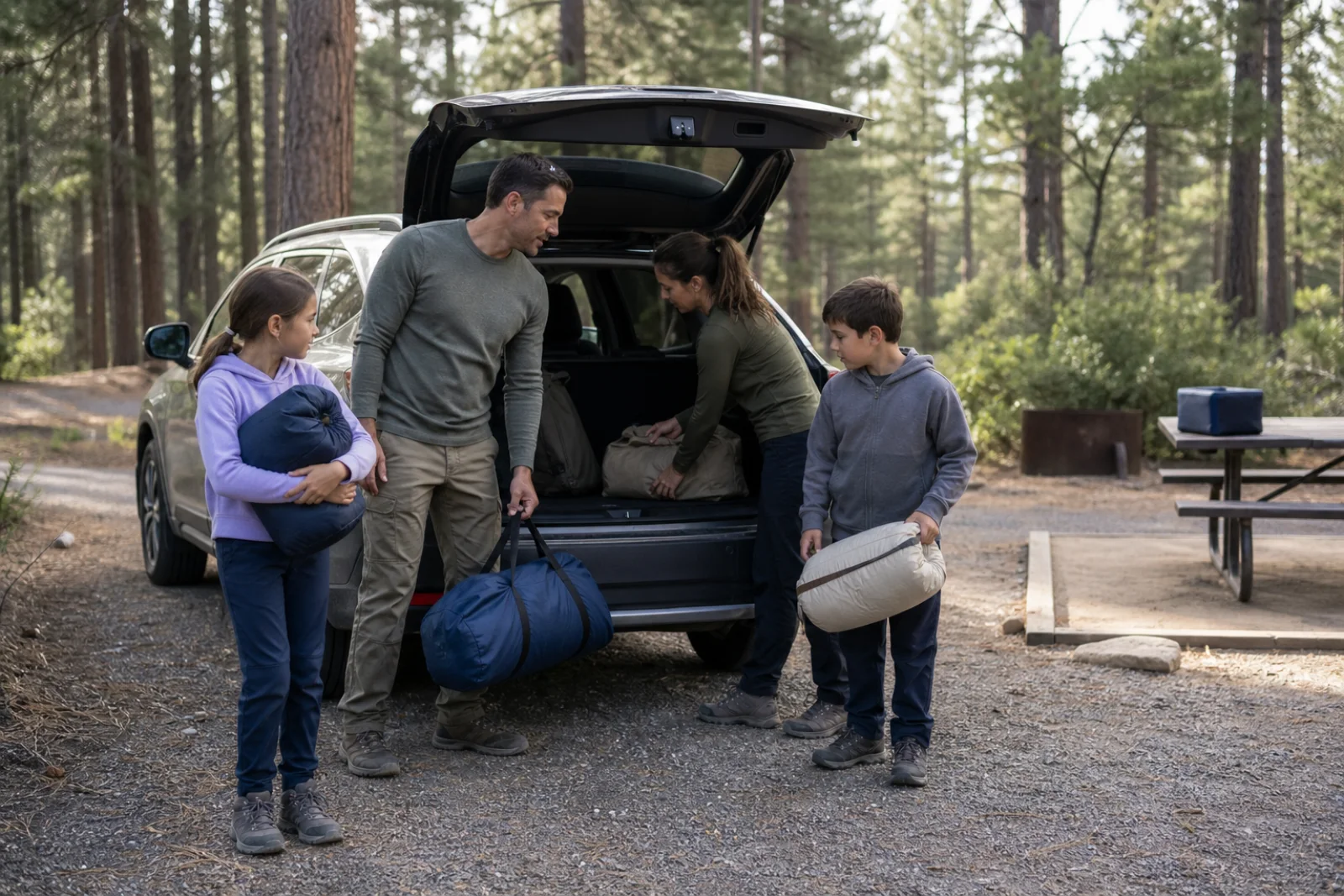
A first family camping trip works best when it is designed as a small, manageable weekend—not a test of how much gear you own or how far into the wilderness you can travel. Choose conditions that give the family time to learn, keep the essential routines simple and make changing the plan an acceptable outcome.
This plan is for a first car-camping trip at a developed campground. Backcountry travel, dispersed camping and remote sites require different preparation, navigation and emergency planning.
Define a small first win
One or two nights close to home is enough for a first trip. A shorter drive leaves more energy for setup, and a nearby campground gives you more options if weather, sleep or comfort changes. The useful measure of success is straightforward: everyone stayed adequately warm and dry, ate, slept and learned enough to make the next trip easier.
Set only one or two optional goals. A short trail, a ranger program or an hour beside the water can be enjoyable, but none of them should compete with getting the campsite working. Leave unstructured time in the plan and expect ordinary family tasks to take longer outdoors.
Before booking, agree on what would make the family postpone, change accommodation or return home. That decision is easier to make calmly at the kitchen table than after a long drive.
Choose a campground that removes uncertainty
For a first trip, reliable information and usable facilities are more valuable than a dramatic view. Start with official campground listings and look at the exact site, not only the park or campground overview.
- Confirm the toilet type and its distance from the site.
- Treat water as drinkable only when the current official listing identifies it as potable.
- Look for a defined, reasonably level tent area and practical vehicle access.
- Check whether a host, staffed entrance or nearby town is available.
- Review current rules for food storage, pets, quiet hours, generators and fires.
Consider the abilities of every family member. A steep walk from the parking space, an exposed site or a campsite beside deep water may add more supervision and physical work than the first weekend needs. If a map or listing is unclear, contact the operator before reserving.
Read the reservation as part of the plan
The reservation page contains details that affect what fits and when the day can begin. Check the maximum tent and vehicle sizes, occupancy limits, parking arrangements, check-in time and any gate closure. Confirm whether the price includes every vehicle and whether the booked surface accepts the stakes or shelter you plan to use.
Also read the cancellation policy and current alerts. A fire ring does not mean a fire will be permitted during your stay, and a water icon does not confirm that every tap is operating. Save the campground contact and reservation details somewhere available without a mobile signal.
Borrow, rent or test before buying
The first trip should teach you what your family values before you build a large equipment collection. Borrowing or renting a tent, pads and sleeping bags can be a sensible way to begin. A cabin or pre-pitched shelter can also introduce campground routines while reducing the number of new systems the adults must learn at once.
When choosing a tent, compare usable floor space and setup effort rather than relying only on the advertised person count. Lay out the pads your family will actually use. Check whether the adults can arrange children, the doorway and essential nighttime items without blocking the exit.
Whatever the source of the equipment, inspect it early enough to replace a missing or damaged part.
Practice the complete sleep setup at home
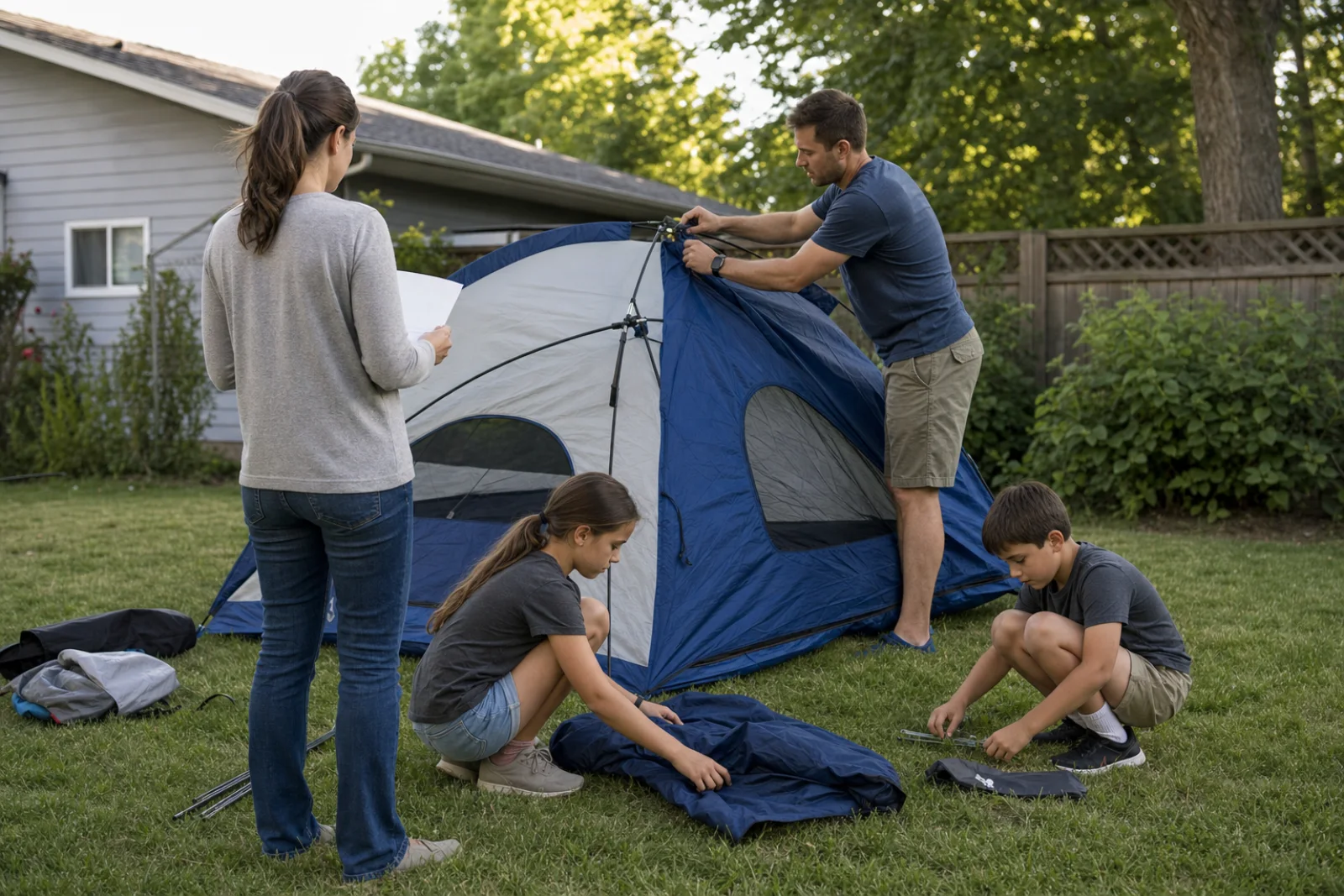
Pitch the tent from its packed state and install the footprint and rainfly. Count the poles and stakes, learn how the doors and vents operate, then take the structure down and pack it again. Inflate the sleeping pads and place every sleeping bag inside so you can see whether the planned arrangement really fits.
Practice the small nighttime actions too: finding shoes, reaching a headlamp and opening the tent door without stepping on another person. Keep fuel-burning stoves, lanterns and heaters out of the tent, garage and other enclosed spaces; use equipment only as its instructions and local rules allow.
Pack by system and by access
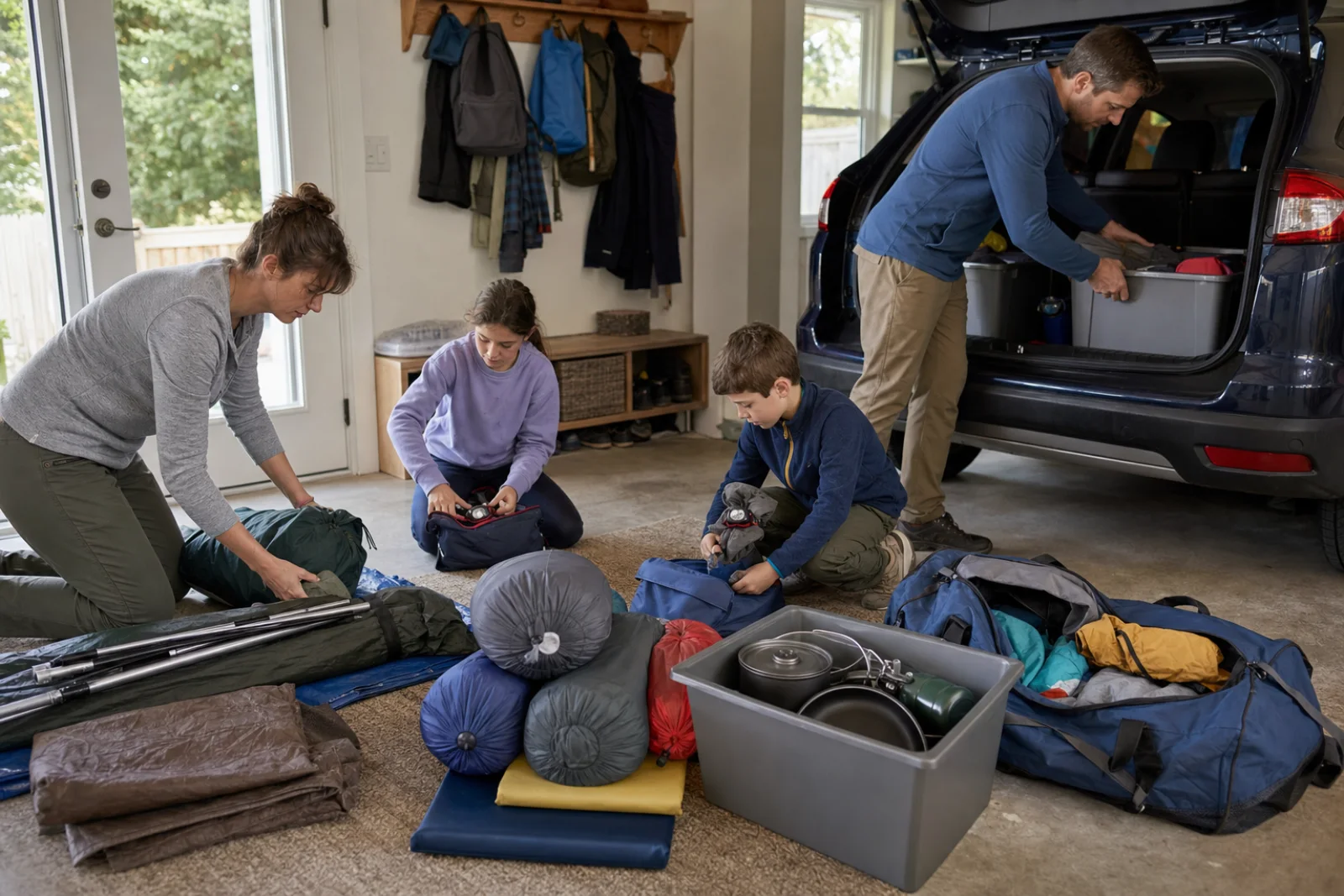
Organize the load around the jobs that must work: shelter, sleep, clothing, food and water, hygiene, lighting and safety. This makes it easier to find an item and easier to identify a missing part. Children can pack a personal bag or select a compact comfort item, while an adult completes the final check.
Keep the items needed during arrival near the door or top of the vehicle:
- Reservation details, drinking water and a simple snack.
- Toilet supplies, weather layers and children’s immediate needs.
- Tent, footprint, poles, stakes and a suitable tool.
- Sleeping pads, sleeping bags and sealed dry sleep clothing.
- Battery lighting and the first meal.
Protect sleep gear from leaks and rain rather than assuming the car or tent will remain dry. Pack fewer optional objects before removing a system the family depends on.
Check the trip again on departure day
Conditions can change after a reservation is made. Before leaving, review the campground’s official alerts, the local forecast, road status, fire restrictions, smoke or wildfire information, drinking-water status and wildlife notices. Use the specific park or campground instructions for food, trash, toiletries and cooking equipment; one storage method does not apply everywhere.
Make a clear change when the essentials no longer work. Severe weather, closures, unsafe smoke, flooding, illness or an inability to keep the group warm and adequately supervised are reasons to postpone, choose different accommodation or leave. A reservation fee is not a reason to continue into conditions the family cannot manage.
Plan backward from useful daylight
Arrival time should include registration, a site check, tent setup, sleeping spaces and dinner before the family is tired. Estimate how long those steps took at home, add time for children and breaks, and work backward from sunset and the campground’s check-in rules.
If an unavoidable delay means arriving after the gate or check-in window, contact the campground instead of assuming the site will remain accessible. Do not improvise a campsite outside the assigned area. A simpler meal or alternative accommodation is safer and calmer than rushing an unfamiliar setup in the dark.
Inspect the assigned site before unloading
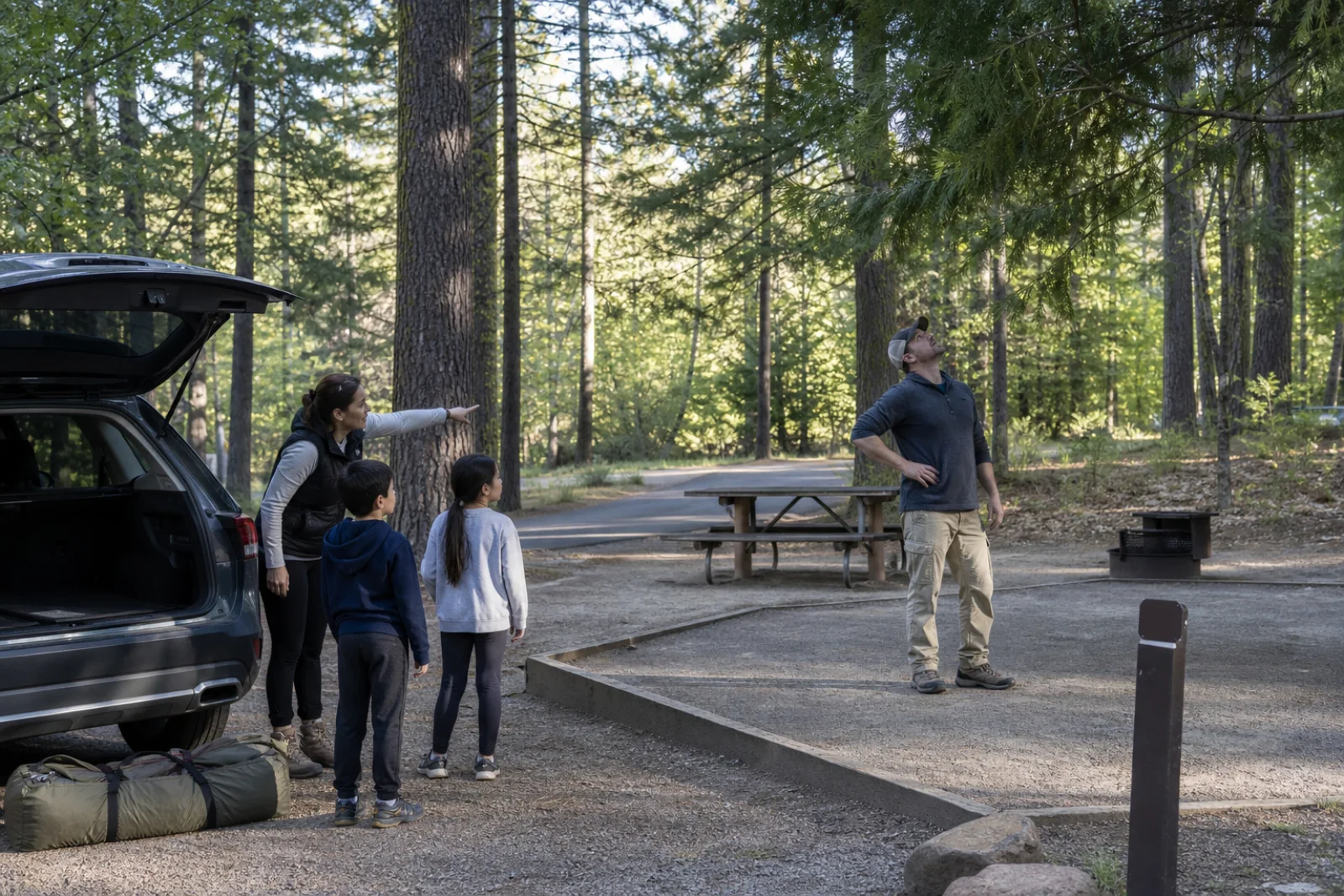
Pause with most gear still in the car. Confirm the assigned tent area and look for standing water, a low spot that may collect runoff, unstable ground and overhead dead branches. Observe the road, neighboring sites, water, slopes, fixed fire ring and any instructions at the site. Stay within the designated area rather than moving onto vegetation or changing drainage.
Choose where the tent entrance and a clear nighttime route will be. Identify the cooking and food-storage location required by campground rules and keep it separate from the sleeping space. When children are present, one adult should be responsible for active supervision while another examines the site or unloads.
Set up in the order the family needs
Begin with shelter, then build the sleep system while everything is still dry. Put water, toilet supplies, rain layers and battery lights where adults can reach them. Show children the road edge, fire area, neighboring boundaries and the route to the toilet before they begin exploring.
A practical first half-hour looks like this:
- Assign child supervision and scan the site.
- Pitch and secure the tent as the manufacturer directs.
- Arrange pads, bags and sealed sleep clothing.
- Establish drinking water, hand cleaning and the toilet route.
- Follow the campground’s exact food-storage and cooking rules.
Furniture and decoration can wait. Do not operate stoves, grills, charcoal or fuel-burning lights inside the tent or another enclosed sleeping space. Adults remain responsible for fire, fuel, knives, hot cookware, vehicles and food-safety decisions.
Make the first evening almost automatic
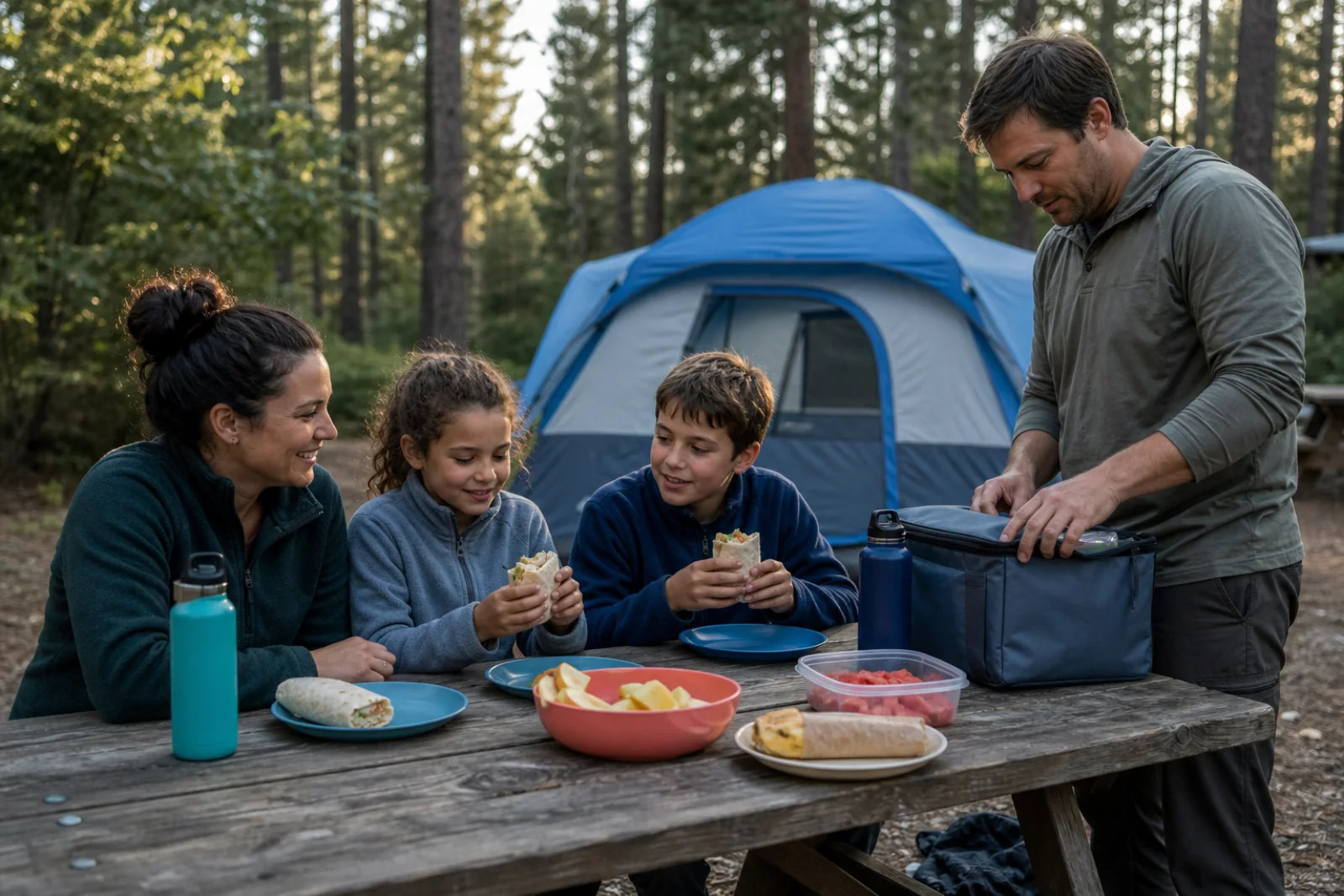
Choose a meal that is already prepared or needs very few steps. Sandwiches, wraps or another familiar option can be more useful than testing a new camp recipe while the tent is unfinished. Keep cold food at a safe temperature and store all food and scented items according to the current campground instructions as soon as the meal ends.
Before dark, walk the toilet route, place shoes and battery lights in predictable locations and change into dry sleep clothing. Repeat the familiar part of the household bedtime routine—a story, comfort item or quiet conversation—without expecting the same timing as home.
Keep the second day intentionally light
After the first night, notice what the group actually needs. Adjust wet clothing, sleep warmth, meals and the day’s pace before adding an activity. Choose an outing that fits the youngest person and the current weather, then retain enough time and energy to return, eat and settle before everyone is exhausted.
Continue active adult supervision near campground roads, water, fire, steep ground and wildlife. Observe animals from a safe distance, never feed them and follow the site’s current instructions. Natural objects and plants should remain where they are unless the local rules explicitly say otherwise.
Leave ready for the next family
Keep the final breakfast and packing order simple. Store food first, consolidate personal items, then take down sleep gear and the tent when conditions allow. Follow the campground’s rules for trash, recycling, wastewater and fire. Any permitted fire must be fully extinguished according to local instructions before departure.
Walk the entire site after the vehicle is packed. Look beneath the picnic table and around the tent area for stakes, food scraps, small trash and children’s items. Do not leave food for wildlife or alter the site to hide damage.
At home, dry and clean equipment before storage. Write down what stayed unused, what was difficult to find and what the family wished it had. That short record—not a generic list—becomes the best starting point for the second trip.