A First Backpacking Night With Kids
Scale distance, pack weight and camp jobs for a positive first overnight.
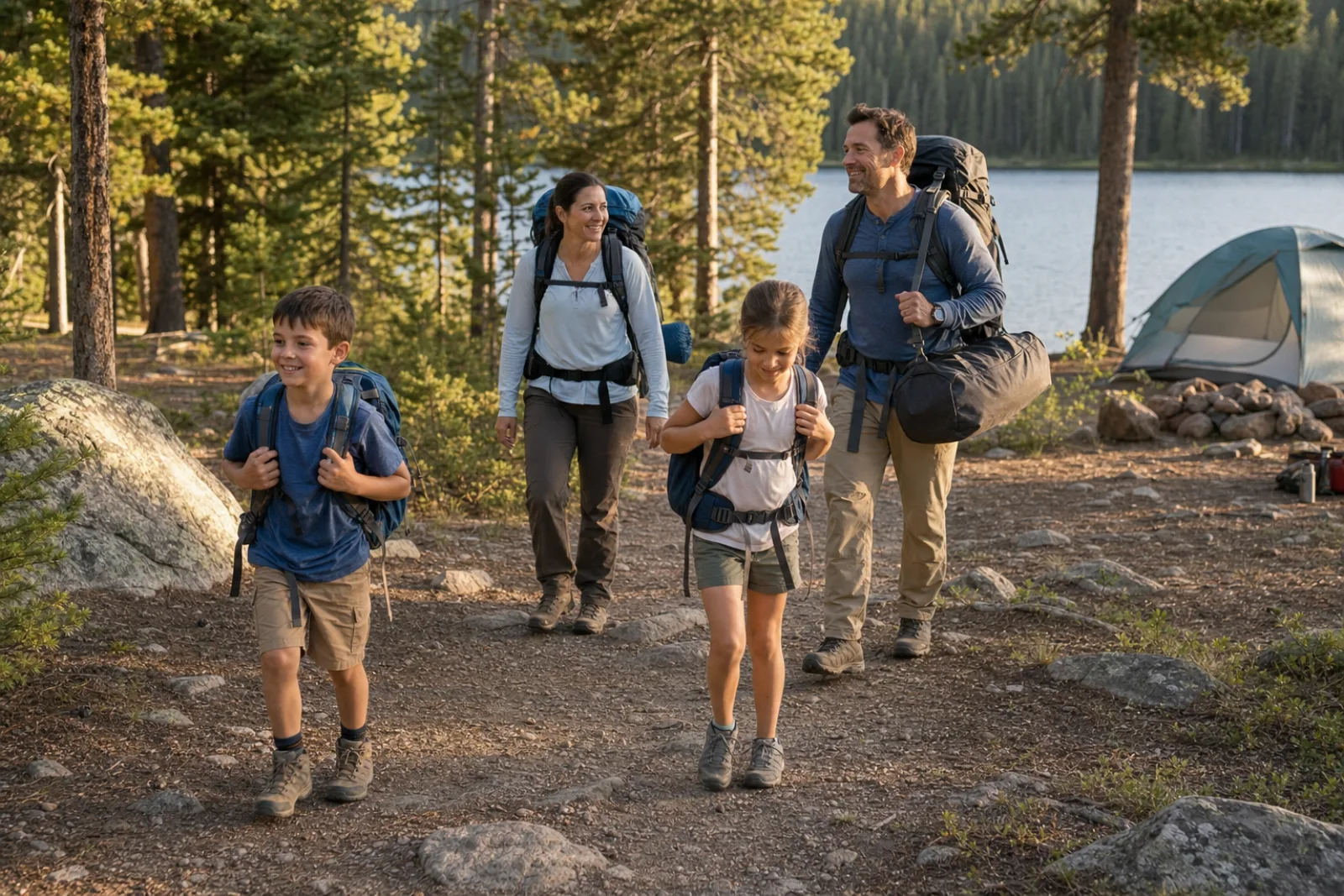
Backpacking asks children to combine a hike, a new bedroom and unfamiliar chores in one experience. The first trip should be a rehearsal for future adventures, not a test of endurance. A small objective gives the family space to learn without being far from help.
Rehearse each part separately
Build up from neighborhood walks to a longer nature trail, then try sleeping in the tent at home. Let children practice using their pack, water bottle, headlamp and sleeping bag. Adults should test the stove, water treatment and shelter. Rehearsal makes the equipment ordinary, which leaves more attention for weather, navigation and the child’s changing energy.
Keep the first campsite close
Choose an established destination a short distance from the trailhead, ideally with a straightforward route and an easy exit. Research permits, food-storage rules, water reliability, fire restrictions and recent trail reports. Avoid ambitious elevation and exposed terrain. A short hike can still feel substantial when every item needed for the night travels on the family’s backs.
Divide weight by capability
Children enjoy carrying personal gear, but their load should not turn the outing into a struggle. Start with light, meaningful items such as a jacket, snacks or a small sleeping component. Adults carry the shared safety equipment and most dense items. Recheck pack fit and watch for rubbing, numbness or a posture that changes as fatigue grows.
Put children inside the team
Offer real jobs with low consequences: checking the map at a junction, gathering everyone’s empty water bottles, unrolling pads or inspecting the site for litter. Keep one adult at the front and one at the back when the group allows. Children should know the family’s separation plan and carry an accessible whistle and light.
Let conditions set the ceiling
At camp, store food exactly as the land manager requires and keep wildlife at a distance. Skip a fire when it is prohibited or when conditions make it unwise. Before leaving home and again at the trailhead, confirm official forecasts, closures and alerts. If a child is cold, exhausted or frightened, use the short route to leave. Ending early protects the confidence that makes another trip possible.