A Family Wildfire Plan Before Departure
Use official alerts, alternate routes and a clear cancellation threshold.
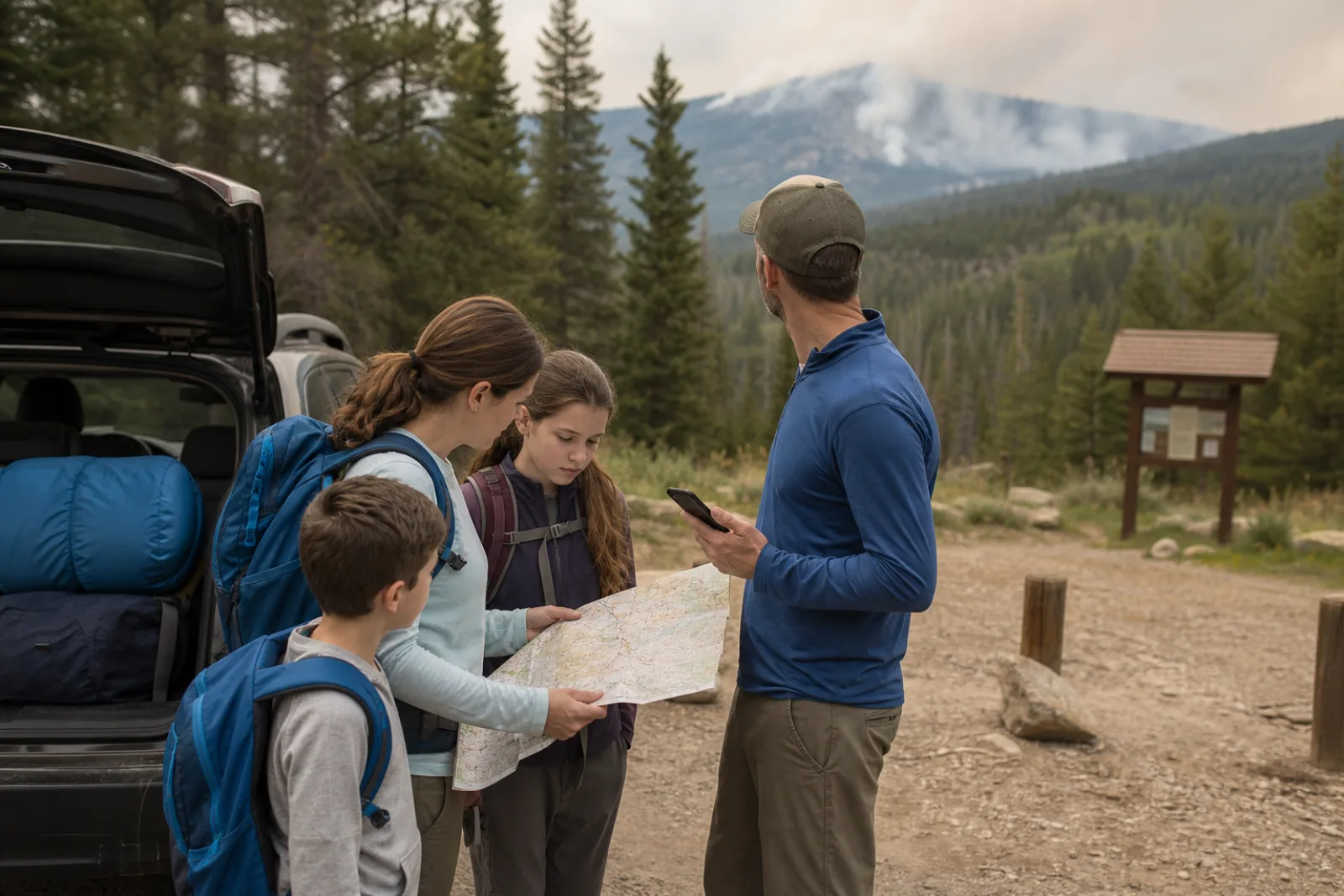
Wildfire planning begins before smoke is visible. A reservation, vacation schedule or long drive should never pressure a family to enter unhealthy air or a closing area. Decide where information will come from, what conditions trigger a change and where the backup trip will be.
Build a real Plan B
Choose an alternate destination in a different fire and weather region, not another campground on the same road. Understand cancellation terms and identify a stay-close-to-home option. A flexible plan is easier to use when children already know that changing location is a normal safety decision rather than a lost vacation.
Check primary information
In the United States, combine National Weather Service forecasts, AirNow air-quality data, incident information and notices from the agency managing the destination. Local ranger or campground staff can explain road, trail and water closures. Check well before travel, the day before departure and again near the destination because wind and containment can change quickly.
Plan routes and communication
Save offline maps that show more than one exit. Share the itinerary, vehicle details and check-in schedule with someone at home. Cell service may fail, so consider whether a satellite communicator or weather-alert radio fits the location. Keep fuel, medications, water, masks used for smoke exposure and essential documents where they can be reached without unpacking camp.
Use conservative family thresholds
Young children and people with heart or lung conditions can be more sensitive to smoke. Discuss personal medical plans with a qualified clinician before travel. Do not rely on the color of the sky or smell alone to judge particulate exposure. If official guidance reports unhealthy conditions, roads are threatened or staff recommend leaving, act early.
Prevent a campfire from adding risk
Check current fire restrictions before lighting anything, including equipment that might be covered by a ban. Use only an allowed existing fire ring, keep water ready and never leave flame unattended. Drown and stir ashes until every ember is cold. If smoke, flames or a growing column appear nearby, contact emergency services when possible and follow official evacuation direction rather than improvising a route from a general article.