Choose Headlamps for Family Camp Tasks
Match beam, controls, batteries and fit to real jobs after sunset.
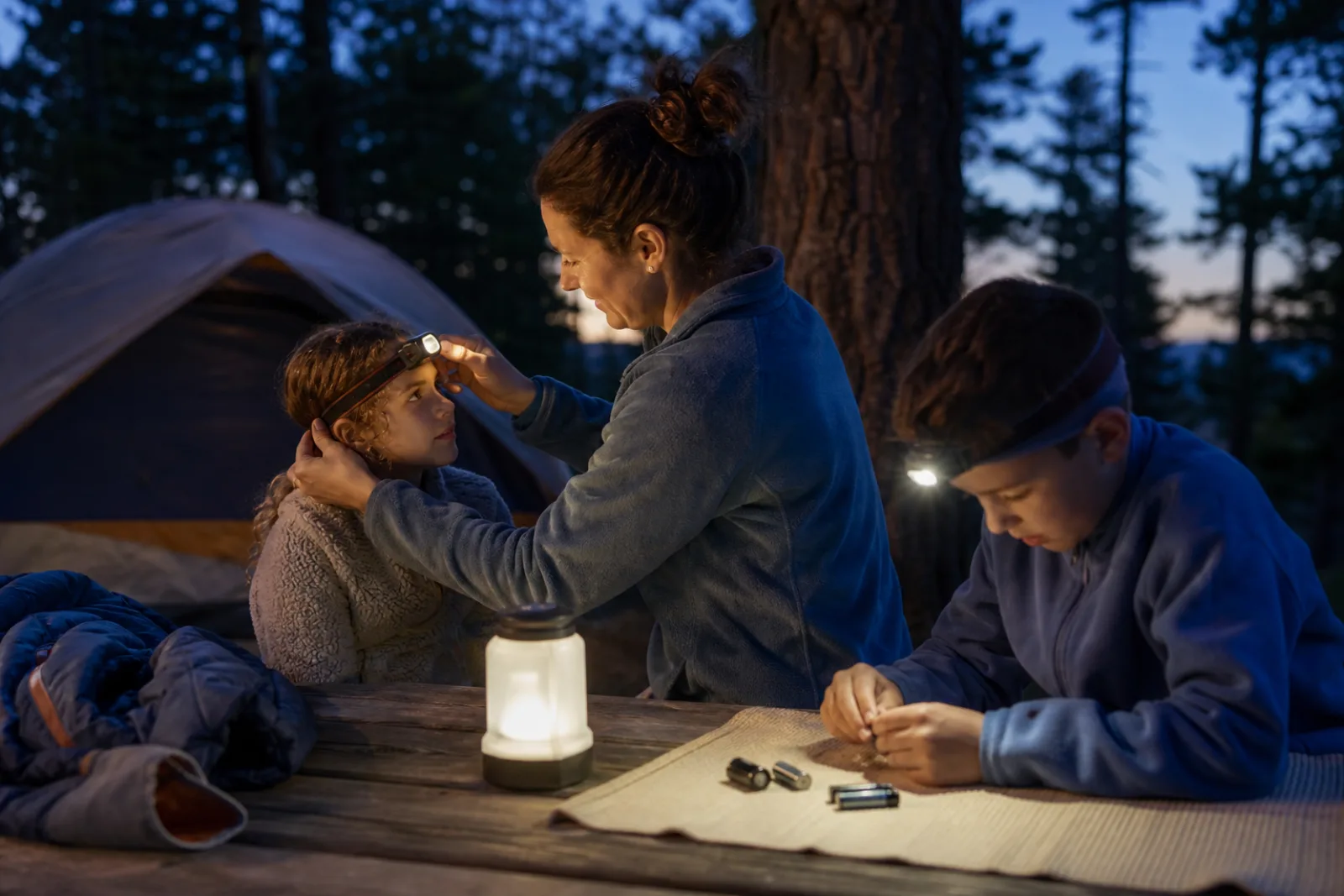
The brightest headlamp is not automatically the most useful. Around camp, a comfortable low setting, simple controls and dependable power often matter more than a large lumen number. Choose lights by the jobs each person will do after dark.
Start with the beam
A broad flood beam illuminates hands, a picnic table and the inside of a tent without creating a narrow bright spot. A focused beam reaches farther and is more useful for route finding. A model that combines both offers flexibility, but extra modes can complicate operation. For most campground tasks, a controllable low flood setting is the everyday choice.
Read more than lumens
Lumens describe total light output, not how effectively the lamp shapes that light or how far the beam reaches. Beam-distance information helps with longer-range use. High output also consumes power quickly, so compare runtime at the settings you will actually use. Manufacturers may use different runtime test standards; treat impressive maximum numbers as context, not promises.
Make controls easy to learn
Try the buttons with cold hands and, if relevant, gloves. A lock prevents a lamp from switching on inside a bag. A tilt mechanism lets a wearer aim down for reading or chores without shining into another person’s eyes. Red light can preserve night vision and reduce glare in shared spaces, though every family member should practice finding the mode before darkness.
Plan power and fit
Rechargeable batteries reduce disposable waste, while replaceable batteries can be reassuring on a longer trip. Carry a compatible backup and follow the manufacturer’s battery guidance, especially in cold weather. Adjust the band to fit without pressure and check that a child cannot wrap a loose strap around the neck. A headlamp is a tool, not a toy for flashing other campsites.
Give every light a home
Store each headlamp in the same reachable pocket and keep one adult light available during daylight setup. Lower beams around tents and paths so people can see without blinding neighbors. Before travel, charge lights, inspect contacts and test backup power. Campground lighting rules and night hazards vary, so ask about current quiet hours, trail closures and areas that should not be entered after dark.