Set Up a Campsite Everyone Can Navigate
Create fixed homes for shelter, light, food and children’s essentials.
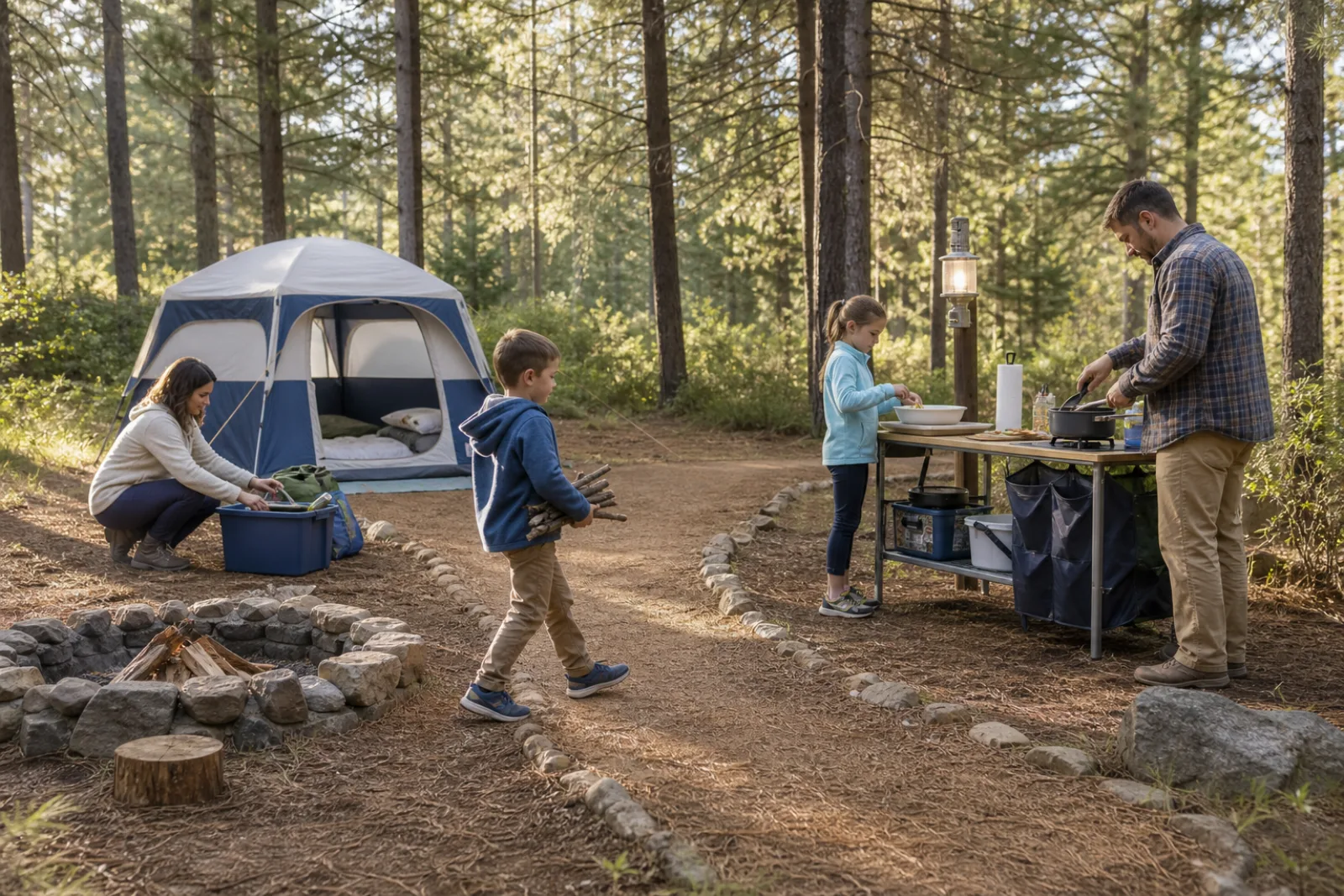
Good campsite organization is less about decoration than reducing searches and unsafe movement. When lights, rain layers, water and children’s personal gear have fixed homes, ordinary tasks remain manageable after dark or during a weather change.
Organize before loading the vehicle
Group shelter, sleep, kitchen and personal equipment in separate labeled containers. Put the items needed first where they can be unloaded first. Each child can use one distinctive bag for clothing and comfort items. Keep emergency supplies accessible rather than buried beneath bedding or a cooler.
Walk the site before unpacking
Identify the assigned boundaries, parking area, tent pad, fire ring, table, food locker and route to facilities. Note roads, water, steep edges, damaged trees and neighboring sites. Explain children’s movement boundaries immediately. Do not spread into unused space or block shared paths, even when the campground appears quiet.
Establish shelter and light first
Pitch the tent while daylight makes hazards visible, then arrange the sleep system and dry bedtime clothing. Put a headlamp in every adult’s known pocket and one shared light in a fixed location. Mark guylines without creating bright, disruptive lighting. Delay optional furniture until shelter and essential routines work.
Separate kitchen from sleep
Use the established table or a stable cooking surface away from the tent and children’s play. Store food and scented items according to local wildlife rules. Create clear locations for clean dishes, dirty dishes, drinking water and trash so they do not mix. A handwashing station should be convenient but handled according to campground water and gray-water requirements.
Keep the system alive
Return tools, rainwear and lights to their assigned homes after every use. Do a quick reset before bedtime and another before leaving the site for an activity. Secure loose objects when wind rises. Keep vehicle keys, first-aid supplies and emergency contact information in locations known to more than one adult. At night, leave footwear and a light beside each sleeper without blocking the tent exit. Campground layouts, food orders, fire rules and weather hazards differ, so confirm current official information and adapt the zones rather than forcing a generic diagram onto the site.