Choose a Camping Bag for Real Family Sleep
Compare fit, warmth, shape and insulation around how each person sleeps.
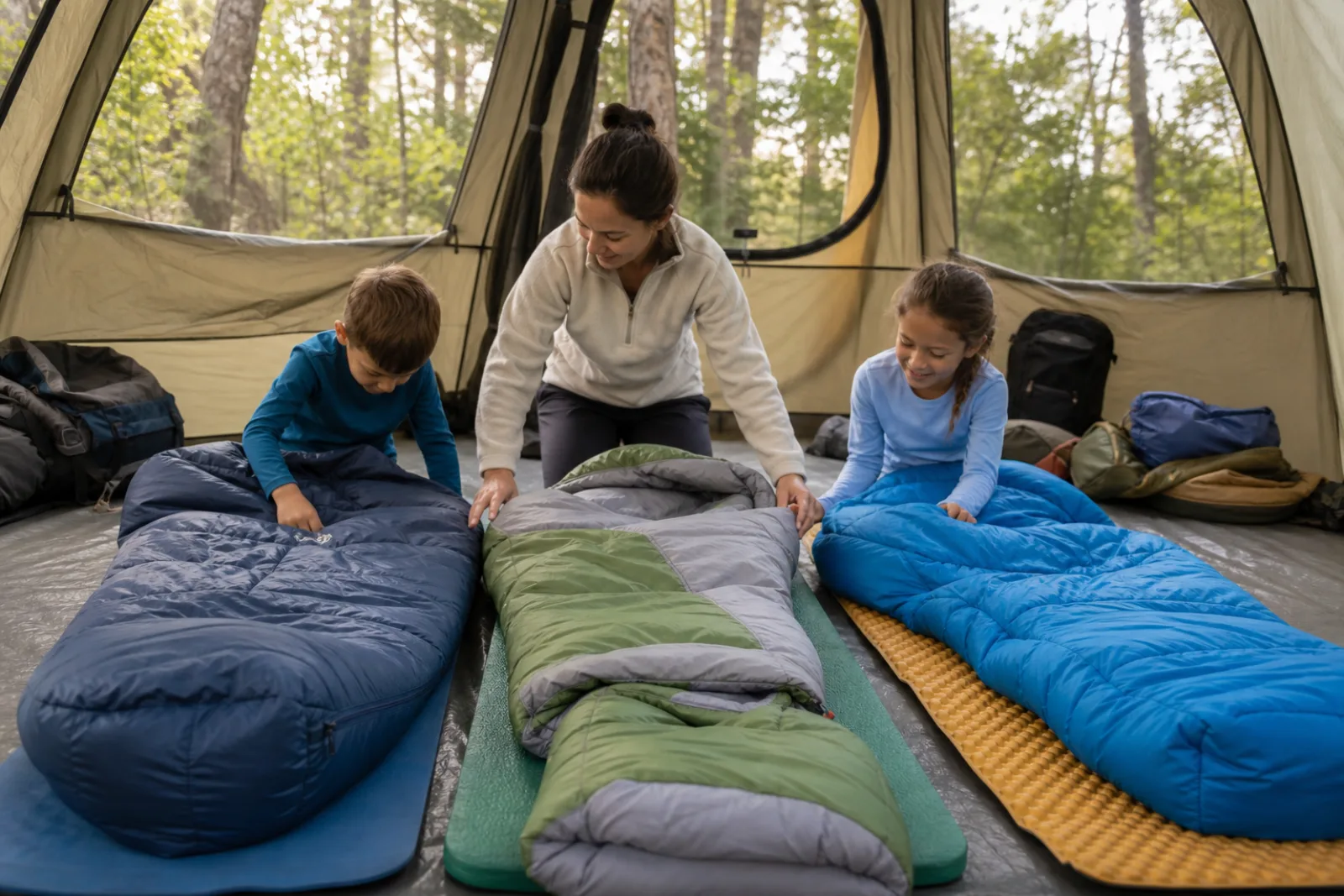
A sleeping bag is not warm by itself. It works as part of a system that includes the sleeper, clothing, a ground-insulating pad and the weather. Start with expected use, then choose enough comfort for each family member without treating one specification as the whole answer.
Separate campground use from backpacking
Car-camping bags can be wider, heavier and less compact because the vehicle carries them. That extra room often helps restless sleepers and children who dislike a close fit. Backpacking bags prioritize low weight and packed size. A crossover model may work, but a family that mainly drives to camp does not need to pay for every saved ounce.
Read temperature labels carefully
Temperature ratings are comparison tools, not guarantees. Metabolism, fatigue, food, clothing, humidity and the sleeping pad all affect comfort. Choose a bag with margin below the forecast low, especially for children or people who sleep cold. Confirm that the pad’s insulation suits the same conditions; compressed insulation underneath a body provides little protection from cold ground.
Match shape and size to the sleeper
Rectangular bags offer space to move and may unzip into a quilt. Mummy shapes reduce unused air space and can retain heat efficiently, while semirectangular designs balance room and warmth. Double bags suit couples who already sleep comfortably together but can be harder to regulate for two different sleepers. Avoid excessive empty space around the feet and shoulders, which the body must warm.
Choose insulation for likely moisture
Down offers excellent warmth for its weight and packs small, while synthetic insulation generally handles damp conditions more forgivingly and often costs less. For car camping, packed volume may matter less than easy care. Whichever type you choose, keep it dry in transit and use clean sleep clothing so body oils and campsite dirt do not reduce performance.
Test the whole bedtime setup
Try the bag and pad together before travel. Check zipper access, hood adjustment and whether a child can exit without assistance. Pack dry base layers, socks and a warm hat separately from daytime clothes. Verify the official overnight forecast before departure and be prepared to add safe insulation or leave if temperatures fall beyond the family’s equipment and experience.