A Safer Cooler and Food Routine at Camp
Protect cold food, prevent cross-contamination and keep wildlife away.
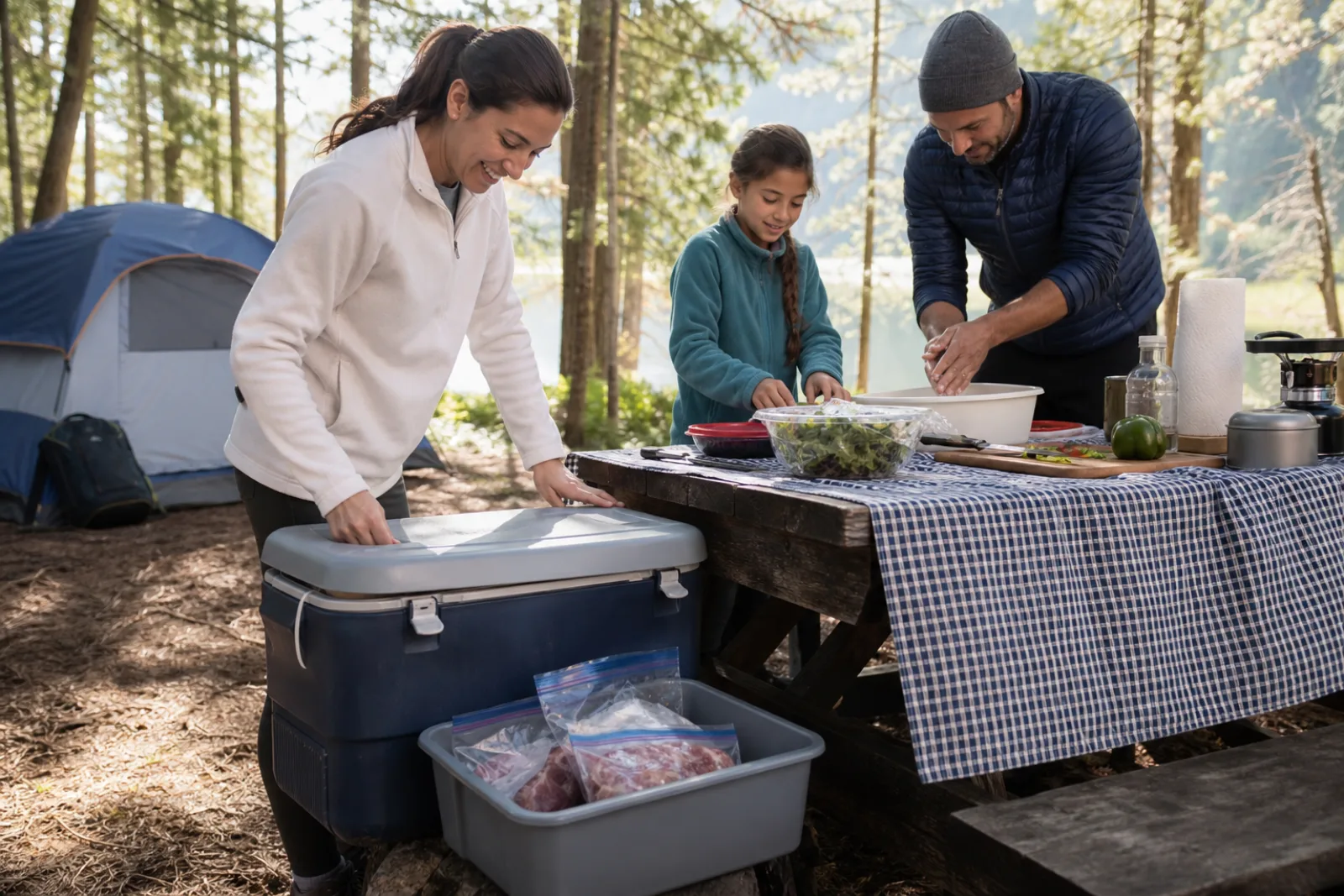
A family camp kitchen has two safety jobs: keep people from getting sick and keep animals from learning that campsites provide food. Both become easier when packing order, handwashing and nighttime storage are decided before leaving home.
Pack the cooler in meal order
Pre-chill the cooler and food, freeze items intended for later days and place raw meat in leakproof double packaging at the bottom. Keep foods needed first near the top to reduce searching. A separate drinks cooler can prevent children from repeatedly warming the perishable-food compartment. Use a thermometer and follow current food-safety temperature guidance rather than judging by remaining ice.
Separate raw and ready-to-eat work
Cut meat at home when possible and seal it in meal-size portions. At camp, use dedicated surfaces or thoroughly wash the knife, board and hands before touching bread, fruit or vegetables. Keep raw-food packaging contained until it can enter an approved trash system. If a cooler has been above a safe temperature for too long, discard uncertain food instead of tasting it.
Make clean hands convenient
Place a handwashing station where cooks and children can use it before meals, but away from natural water. Use soap and safe water, with a separate towel from the one used for dishes. Hand sanitizer is useful when washing is temporarily unavailable, but it does not make visibly dirty hands or contaminated cookware clean.
Lock away every scent
Never store food, trash or scented toiletries in a tent. During the day, close and secure coolers whenever the kitchen is unattended. At night, use the exact method required by the land manager, such as a provided metal locker or approved bear-resistant container. In some places vehicles are allowed; in others animals have learned to break into them, so local rules decide.
Close the kitchen without leaving a meal
Strain scraps from dishwater and add them to secured trash. Handle gray water only as campground rules permit and well away from sleeping areas and water sources. Wipe tables, inspect the ground for dropped snacks and account for children’s pockets. Before travel, confirm current wildlife orders, water status and food-safety recommendations from official agencies because storage rules and public-health guidance can change.