Build a Family Cookware Kit Around the Menu
Select pots, materials and utensils from the meals you will actually make.
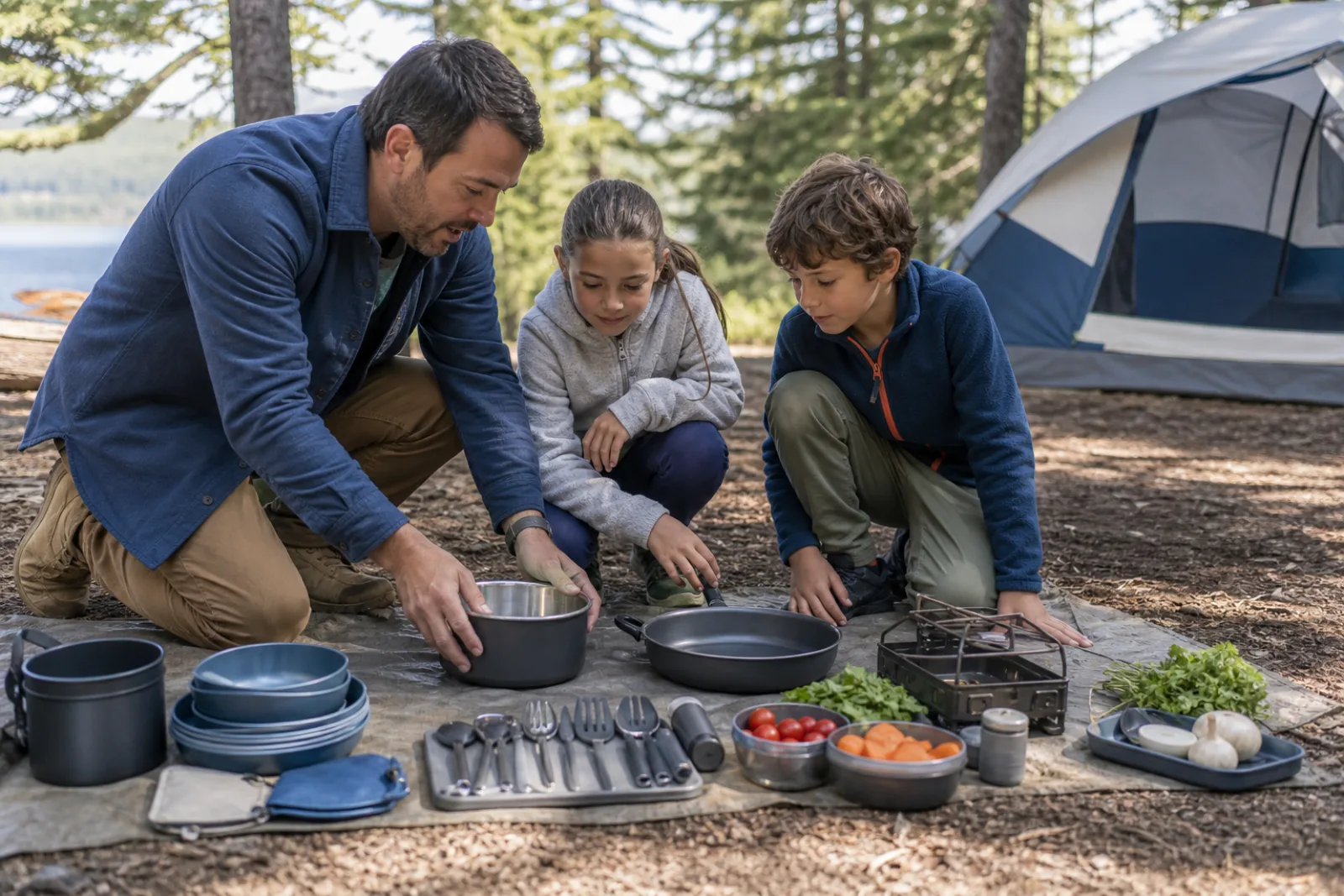
The right camp kitchen is not the one with the most pieces. It is the smallest set that can cook the planned meals safely and serve the actual group. Write the menu first, then identify the pot, pan, lid and tools required for each step.
Choose a set or individual pieces
Nested cooksets save space and offer a coordinated starting point. Individual pots let experienced campers avoid pieces they never use. A family making pasta, soup and oatmeal may need one generous lidded pot, while pancakes and eggs add a skillet. Count portions honestly and leave headroom for stirring rather than filling cookware to the rim.
Match material to cooking style
Aluminum is light and conducts heat well, which helps with simmering, though it can dent. Hard-anodized aluminum improves durability. Stainless steel tolerates rough use but is heavier and can develop hot spots. Cast iron holds heat and suits slow cooking but demands care and is heavy. Titanium saves weight for backcountry travel, where fast boiling may matter more than even heat.
Treat coatings carefully
Nonstick surfaces simplify cleanup but scratch easily and should not be severely overheated. Use compatible utensils and follow the manufacturer’s temperature and care instructions. Inspect older cookware for damaged coatings, loose handles or distorted bases. Whatever the material, pack a reliable pot gripper or insulated handle system and practice using it before a busy dinner.
Let lids and tools earn space
A fitted lid reduces boil time, saves fuel and controls splatter. Some lids double as plates, but only when their handles remain safe after heating. Add a sharp knife with a sheath, a cutting board, tongs or spatula, serving spoon and can opener only when the menu calls for them. Keep raw-food tools separate until washed.
Pack cleanup with the cookware
Bring a wash basin, scraper, sponge, small amount of appropriate soap, towels and a way to strain food particles from wash water. Store everything as one kit so a missing gripper or lighter is obvious. Stove and fire restrictions change with weather, and gray-water rules differ by campground; verify current official requirements and never assume cookware can be placed directly over an open fire.