Decide If a Cold Family Camp Is Realistic
Assess access, shelter, insulation and exit options before committing to a cold night.
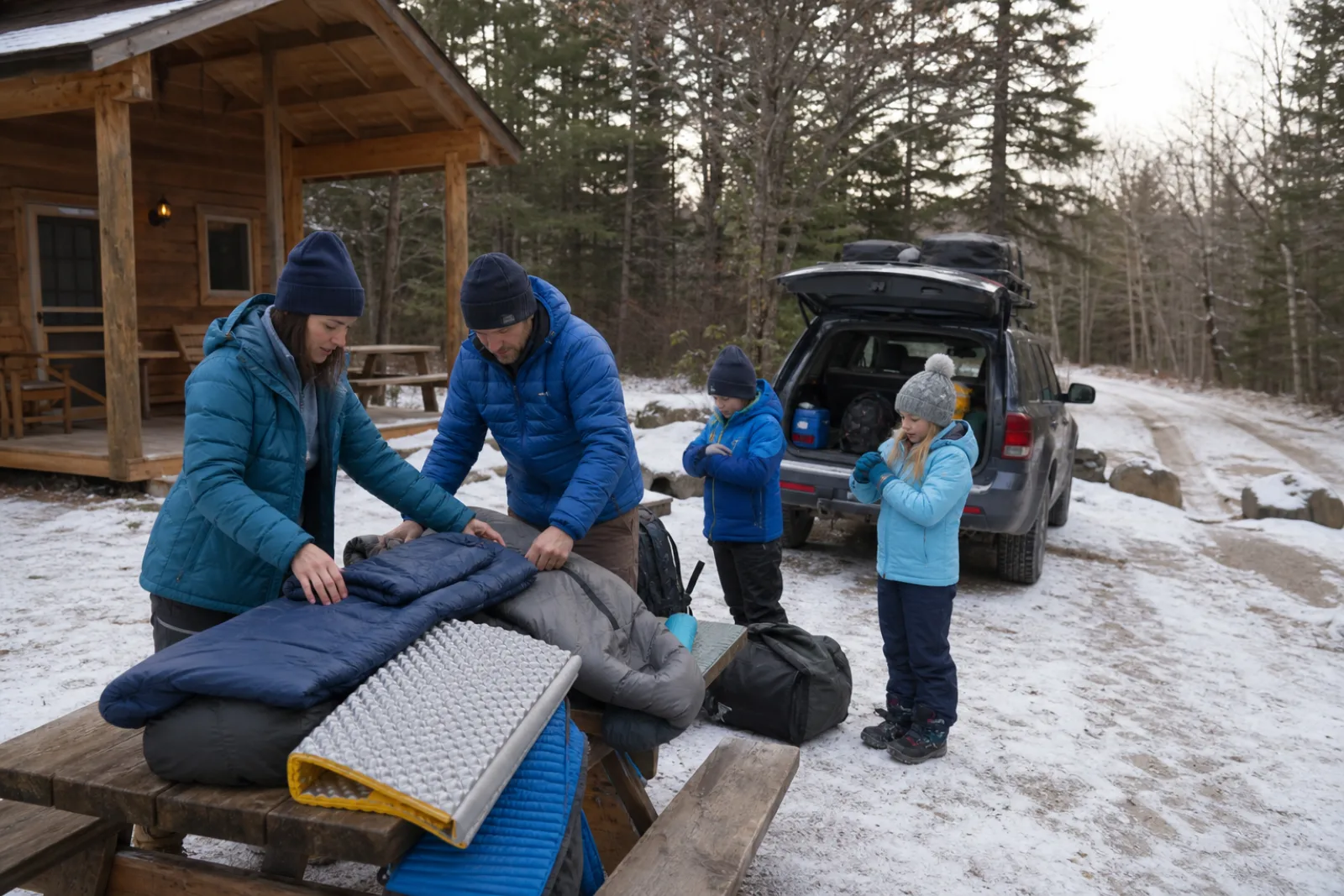
Cold-weather camping magnifies ordinary problems. A late arrival, weak sleeping pad, damp base layer, or difficult road can become more serious after sunset. Families new to cold conditions should begin with a cabin, furnished shelter, or campground close to home rather than treating snow as a simple variation on a summer weekend.
Set a conservative trip limit
Define the lowest temperature, road condition, and weather change the family is prepared to manage. Match those limits to the least experienced person. Choose a short stay with a reliable exit and avoid remote terrain until adults have practiced cold-weather systems. Canceling before departure is easier than solving an equipment gap overnight.
Confirm access and services
Ask whether roads are plowed, chains or traction equipment are required, water is operating, restrooms remain open, and staff are present. A listing from another season may not describe winter service. Keep the vehicle fueled or charged, carry the required road equipment, and store directions offline.
Treat sleep as a system
Ground insulation is as important as the sleeping bag. Use pads with suitable insulation, bags appropriate to expected conditions, and dry layers reserved for sleep. Avoid excessive empty space around a small child. Test the complete arrangement beforehand and follow product temperature guidance as a comparison, not a guarantee of comfort.
Manage moisture early
Dress in adjustable layers and change damp clothing before people cool down. Ventilate the shelter according to its design because breath and wet gear create condensation. Keep boots and critical insulation protected from snow and rain. Eat and drink regularly, while recognizing that individual health needs may require professional guidance.
Keep combustion outside sleeping spaces
Do not use a stove, grill, or unapproved heater inside a tent, vehicle, or enclosed sleeping area. Carbon monoxide cannot be detected by smell. Use appliances only as their manufacturers and the campground permit, with required ventilation and clearances. Prepare meals early enough that cold and darkness do not encourage shortcuts.
Winter forecasts, avalanche conditions, road controls, closures, and campground services can change rapidly. Verify all of them through official agencies immediately before travel and while conditions evolve. This article is not a substitute for cold-weather training, medical guidance, avalanche education, or emergency instructions.