Choose a Family Tent for Real Camp Routines
Compare usable space, weather protection and setup effort instead of capacity alone.
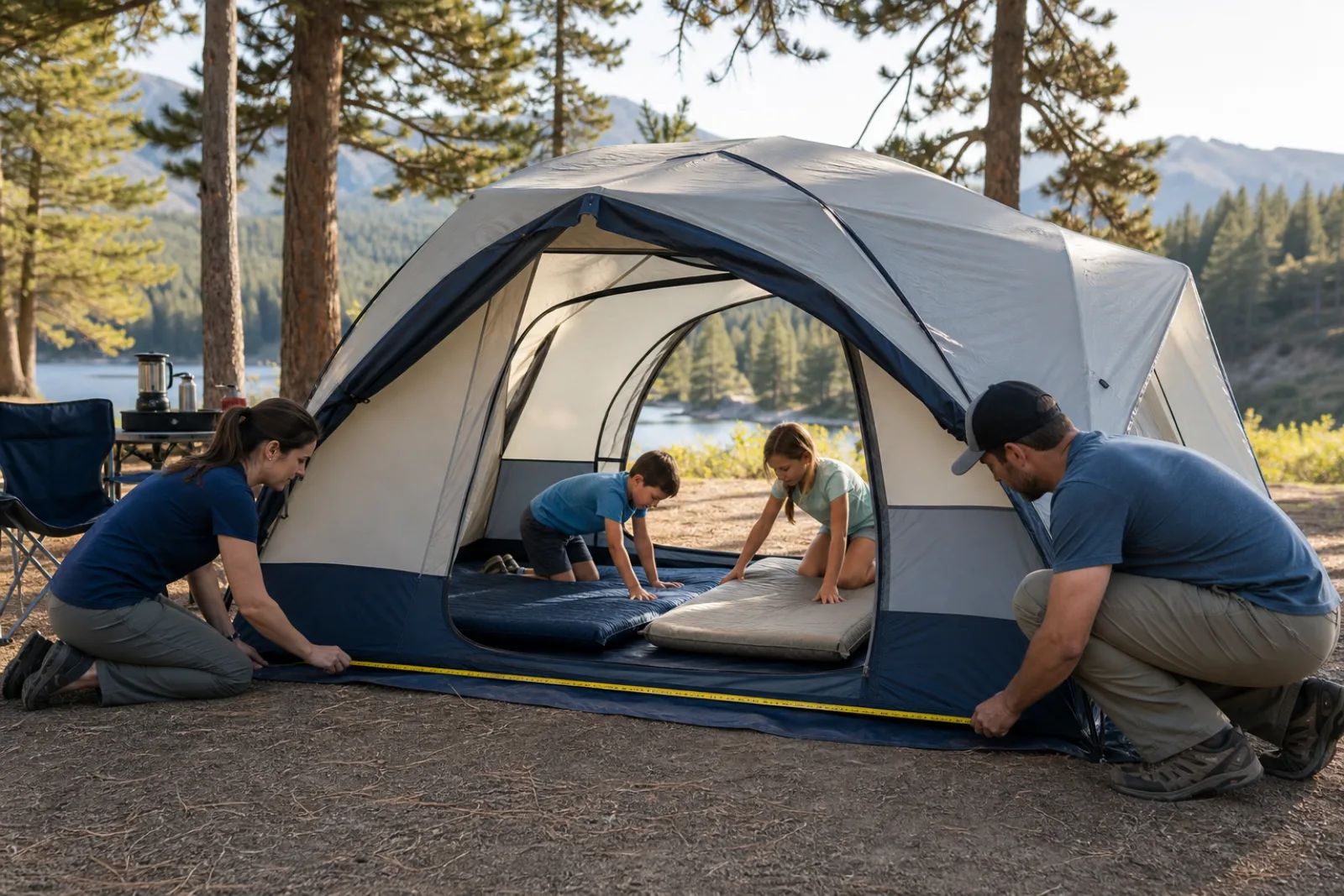
A tent’s person rating tells only part of the story. Families also need room for sleeping pads, nighttime exits, wet shoes, changing clothes, and the occasional hour under cover. Start with the trips you genuinely expect to take, then compare floor dimensions, weather design, packed size, and setup effort with the people who will use it.
Define the main use
A tent carried from the car can prioritize standing room and generous floor space. A hike-in shelter must balance comfort with weight and packed volume. Three-season designs suit many mild-weather trips, while severe winter or alpine conditions require specialized equipment and experience. Do not buy for an imagined expedition that the family does not plan to take.
Measure usable floor space
Map the stated dimensions at home with tape, then place the family’s actual pads inside the outline. Allow room near doors and avoid creating gaps or unstable overlaps. Capacity labels are not standardized, and angled walls reduce headroom. A slightly larger tent may improve bedtime, but it also needs a larger level pitch and can be harder to stabilize.
Study weather features
A full rainfly, raised floor seams, suitable ventilation, and a vestibule help manage rain and condensation. More mesh can improve airflow in warmth, while strong poles and multiple guy points matter in wind. No feature removes the need to choose a safe site, stake correctly, and stay within the manufacturer’s intended conditions.
Count doors and storage
Two doors can reduce midnight climbing over other sleepers. Interior pockets keep glasses and lights reachable, while a vestibule separates wet shoes from bedding. Check whether door zippers are easy to operate without leaving an opening. Storage should support a clear exit path rather than encouraging equipment to pile against the walls.
Practice before committing
Pitch the complete tent at home, ideally more than once and with the adults who will use it. Time the setup without rushing, inspect every component, and learn the pack-down sequence. Rental or borrowed gear can reveal which features matter before a purchase. Confirm warranty, repair options, and replacement-part availability.
Tent specifications and setup sequences differ by model. Follow the manufacturer’s current manual, safety warnings, occupancy guidance, and weather limitations. Check the official forecast and campground pitch dimensions before each trip; a tent that is appropriate for one family weekend may not be suitable for stronger wind, snow, heat, or exposed terrain.