Camping with Toddlers & Young Kids
A calm first-trip plan for familiar routines, safer boundaries and more comfortable nights outdoors.
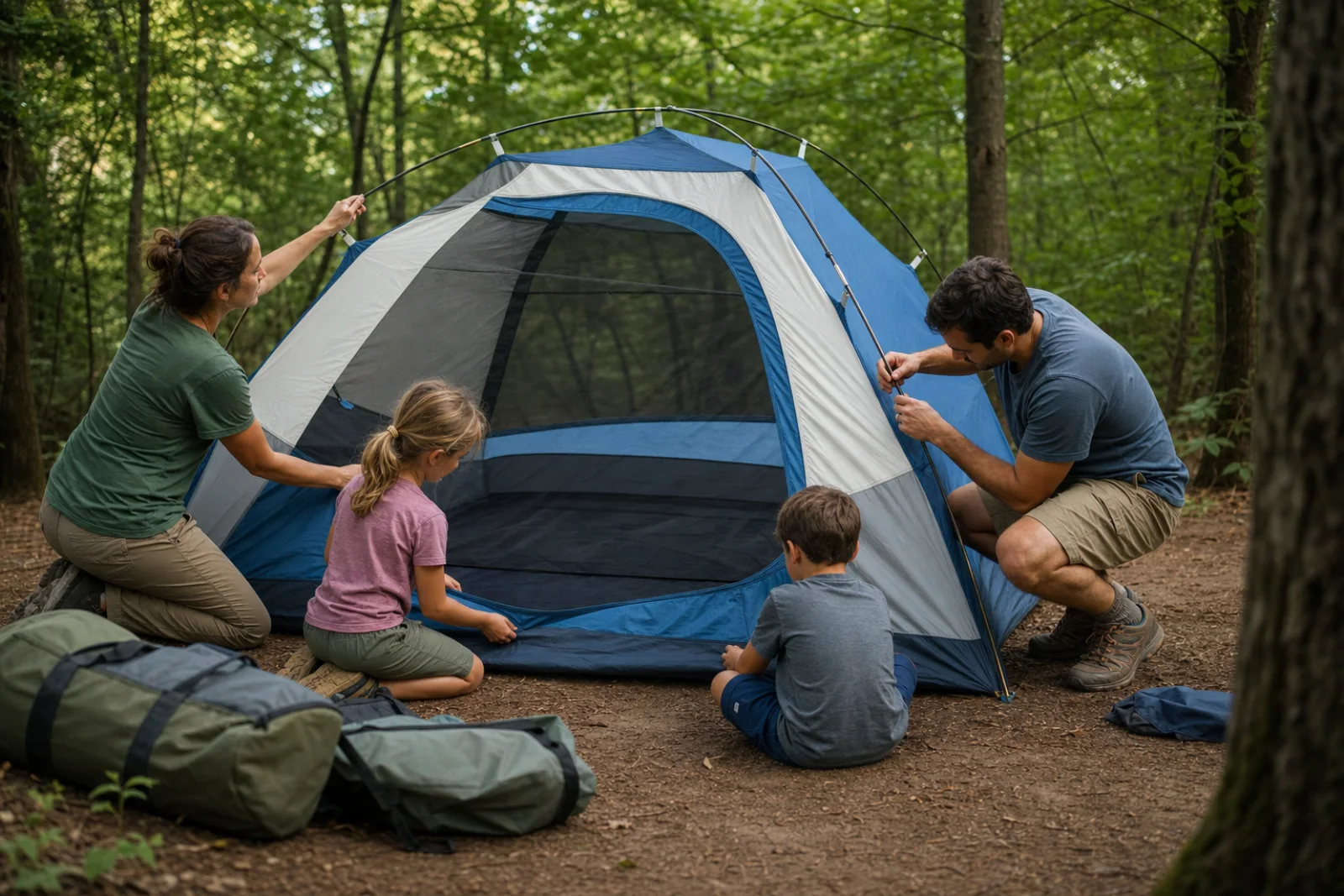
A successful first camp with young children does not need a packed schedule or a remote setting. It needs a campsite that removes unnecessary friction, a few familiar routines and adults who are willing to slow the trip down. The goal is not a perfect weekend. It is a comfortable enough experience that the family wants to try again.
Start smaller than you think
For a first overnight, choose a short drive and one or two nights. A nearby campground makes a late arrival, forgotten item or early departure easier to handle. Keep the first day simple: arrive with daylight, establish shelter and food, then leave time for children to explore without rushing toward another activity.
Match the plan to the youngest child’s normal energy and sleep patterns. A preschooler who still naps or becomes overwhelmed by long transitions may do better with a quiet afternoon at the site than a hike immediately after setup. Build one priority into each part of the day and treat everything else as optional.
Choose a campsite that removes friction
A dramatic view matters less than a campsite your family can use comfortably. Read the official campground description and, when details are unclear, contact the operator before booking.
- Confirm whether water is officially identified as potable.
- Check the type and distance of toilets from the site.
- Look for level tent space, straightforward vehicle access and room to keep children away from the road.
- Review current food-storage, fire, pet and quiet-hour rules.
- Ask whether a host, ranger program or nearby town is available if help or supplies are needed.
Water, steep terrain and busy campground roads require more supervision, not just a wider verbal boundary. A campsite beside a lake or stream is not automatically a better choice for young children.
Practice the unfamiliar part at home
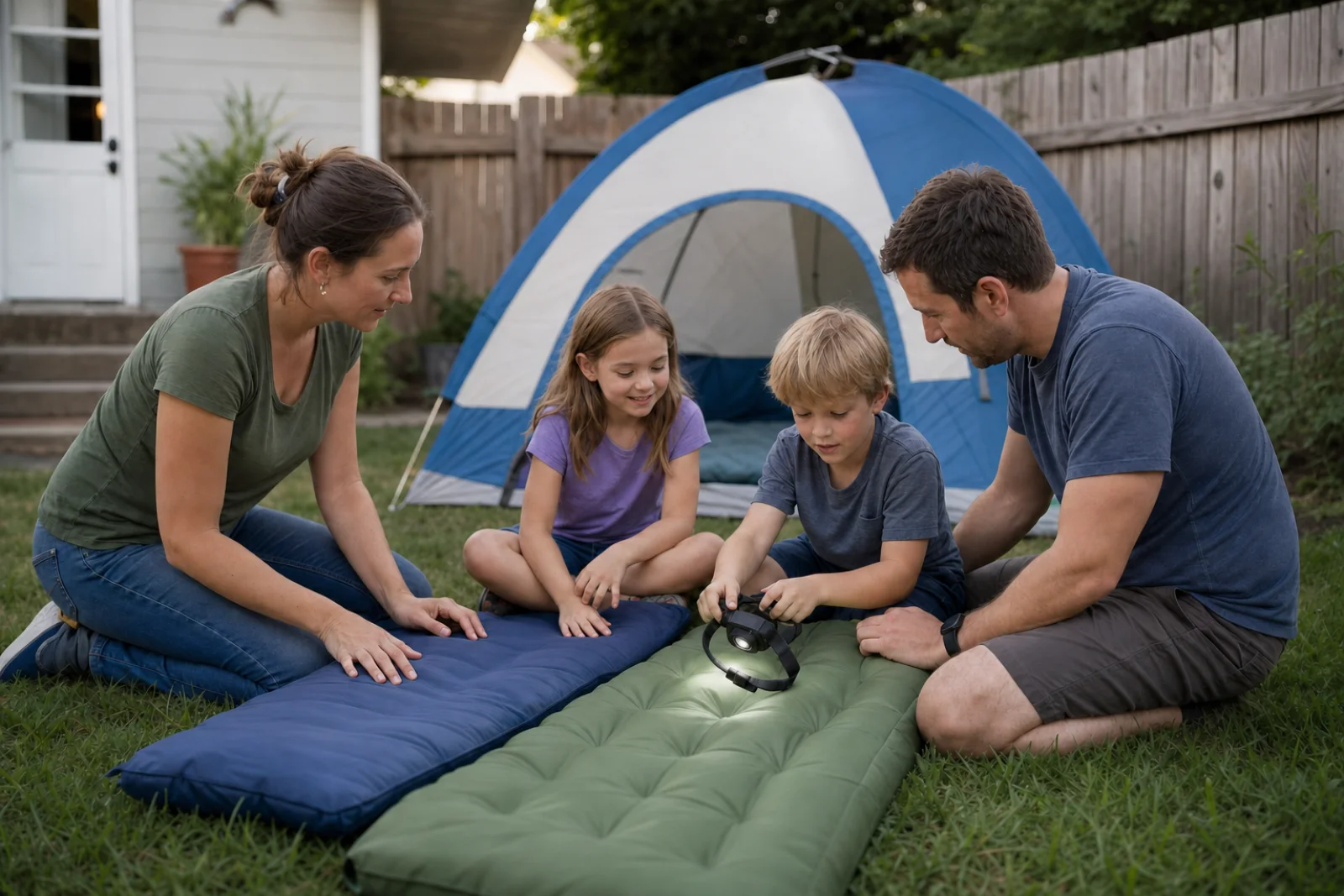
Children settle more easily when the tent and nighttime tools are not completely new. A short backyard practice can reveal both practical gear problems and emotional sticking points while the house is still close.
- Pitch the tent and let everyone find their sleeping place.
- Inflate the pads, open the sleeping bags and test the zippers.
- Practice finding shoes, a headlamp and the route to the bathroom after dark.
Do not test stoves, heaters or any fuel-burning equipment inside a tent, garage or other enclosed space. The useful rehearsal is the sleeping and movement routine, not recreating every part of camp.
Pack around routines, not every possibility
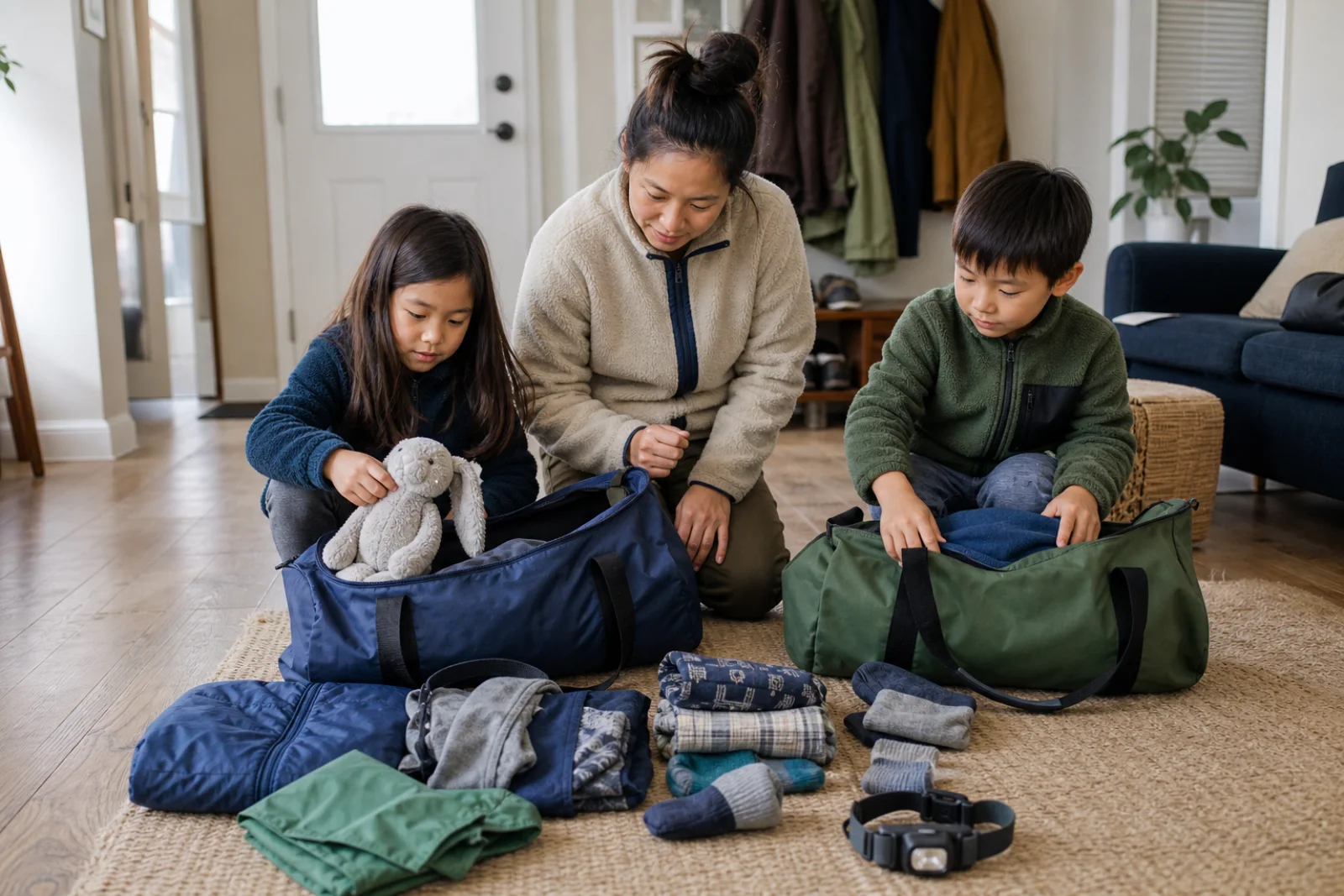
Start with the moments that must work: staying warm and dry, drinking water, using the toilet, eating familiar food and settling to sleep. Pack each child’s personal items in one recognizable bag, then let the child help choose a comfort item and one compact activity.
An adult should still verify every child’s bag. Check for dry sleep clothing, weather layers, suitable footwear, required medications and enough changes for likely mud or rain. Keep the first-night items near the top of the car rather than burying them under optional equipment.
- Sleep: pad, sleeping bag, dry pajamas and comfort item.
- Clothing: base layers, warm layer, rain protection, socks and spare shoes when conditions justify them.
- Hygiene: toothbrush, toilet supplies, hand-cleaning supplies and a bag for wet clothing.
- Comfort: one familiar toy or book and an age-appropriate battery light.
Arrive with daylight and assign supervision first
Before opening the trunk, decide which adult is actively watching the children. The other adult can begin unloading or checking the site. This simple handoff prevents the common moment when every adult assumes someone else is watching while vehicles are moving and equipment is spread across the ground.
Set up shelter before optional camp furniture. Put drinking water, toilet supplies, rain layers and a basic snack where adults can reach them immediately. If the weather changes or a child becomes tired, the essential systems will already be working.
Walk the site together
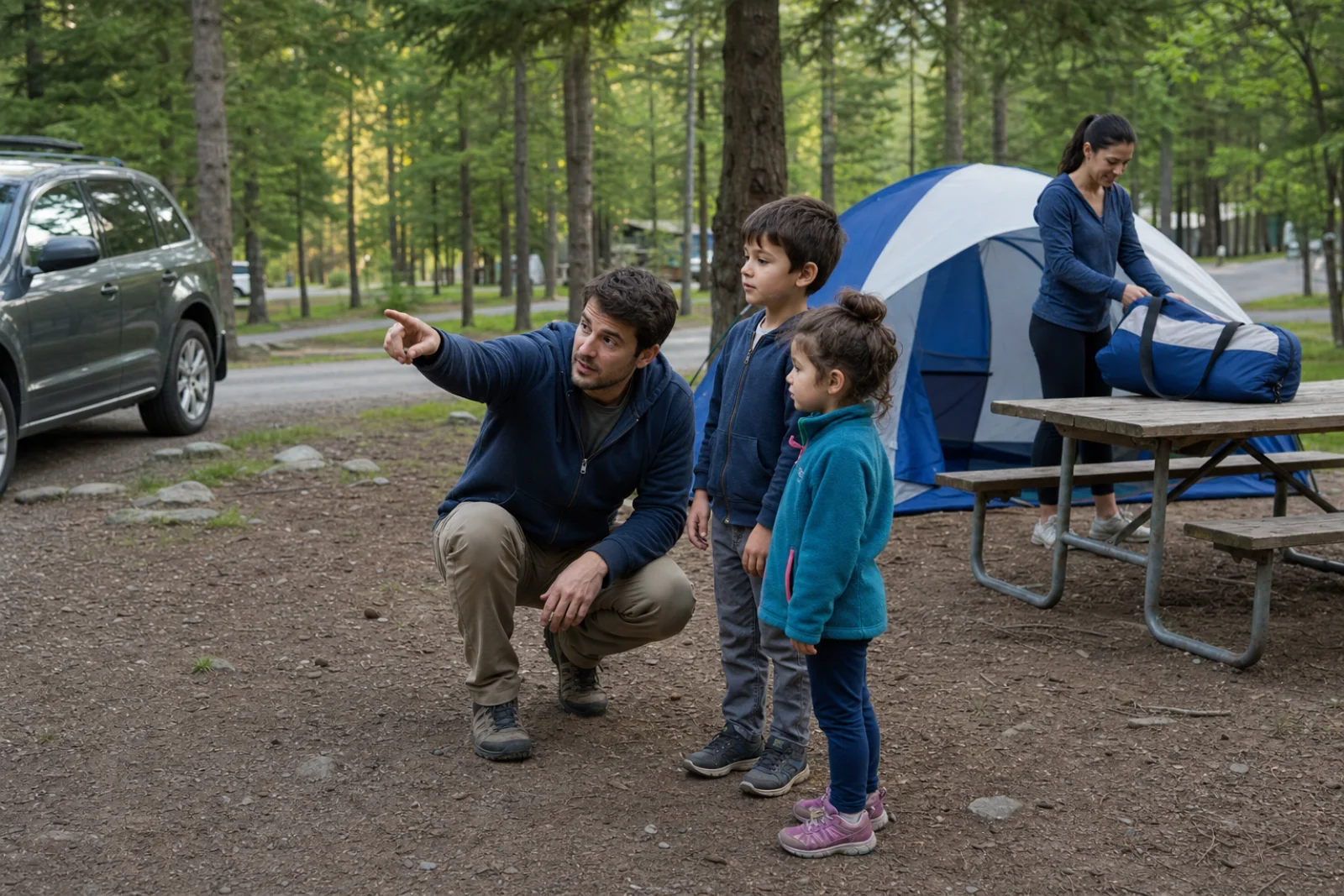
Take the children around the campsite before they begin exploring. Point to real landmarks rather than giving a vague instruction to “stay close.”
- Show the edge of the road and the place where vehicles enter.
- Identify the fire ring, cooking area and any water, steep ground or unstable branches.
- Walk the route to the toilet and decide which children require an adult every time.
- Choose a visible family meeting point inside the site.
Explain what children should do if they cannot see an adult. Agree on a simple family signal and practice it, but confirm local park guidance rather than assuming one whistle code applies everywhere. Young children need an adult nearby even after they can repeat the rule.
Build a warm, familiar sleep routine
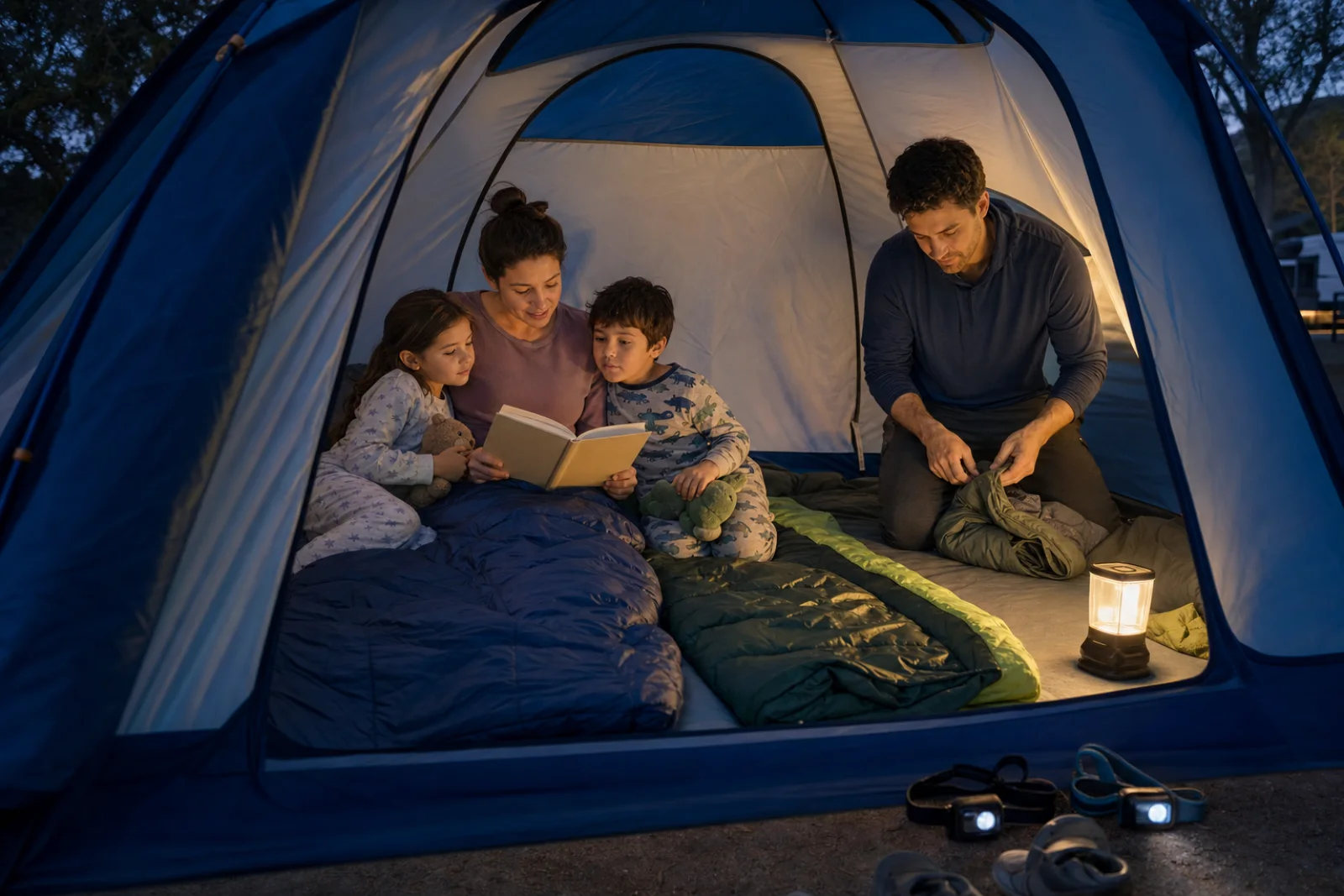
Warmth comes from insulation underneath as well as the sleeping bag above. Use a suitable sleeping pad and check the expected overnight low, not only the daytime forecast. Keep sleep clothing sealed and dry until bedtime, and place tomorrow morning’s warm layer within an adult’s reach.
Repeat the normal bedtime sequence as closely as the campsite allows: toilet, teeth, pajamas, story and comfort item. Before turning out the light, put shoes and battery lighting in the same predictable place by the door. Decide which adult will accompany each child for a nighttime toilet trip.
This guide is intended for toddlers and young children, not infant sleep. Families camping with babies should follow current pediatric safe-sleep guidance and should not substitute adult sleeping bags, loose bedding or improvised sleep surfaces for an approved infant sleep setup.
Keep food familiar and storage strict
Invite children to help choose the menu, then build meals around food they reliably eat. Prepare and portion what you can at home. Keep an accessible snack and water available during the drive and setup so hunger does not become another urgent problem.
Children can place napkins, carry empty cups or wash produce at a stable table away from the cooking area. Adults remain responsible for stoves, fire, knives, hot cookware, cold-food temperatures and cleanup around scented items.
Food-storage rules vary by campground and wildlife conditions. Follow the current instructions for the exact place you are visiting, including how to store food, trash, toiletries and cooking equipment. Do not assume that leaving scented items in a tent—or even in a particular vehicle—is acceptable everywhere.
Give children real jobs without handing over risk
Young children often cooperate better when they have a specific role. Choose tasks that are visible, short and easy to check.
Children can help
- Carry an empty water bottle or a light bag from the car.
- Unroll a sleeping bag and place a comfort item in the tent.
- Put safe personal items back in their own duffel.
- Set out unbreakable cups away from the cooking area.
- Collect their own shoes, book and battery light before bed.
Adults stay responsible
- Vehicle movement and active supervision.
- Fire, stoves, fuel, knives and hot cookware.
- Medication, first aid and food-safety decisions.
- Water access, wildlife rules and changing weather.
- Final checks of shelter, clothing and every child’s packed essentials.
Plan one activity and one backup
Choose one short activity that fits the youngest child: a brief nature trail, a ranger program, looking for bird shapes or photographing different leaf colors. Stop while the activity is still enjoyable. Young children move more slowly, notice small things and may need a snack or rest sooner than adults expect.
Bring one low-energy backup for rain, smoke, heat or a tired afternoon. A small book, drawing materials or a simple observation game can be enough. Leave room for unstructured play, but keep supervision active near roads, water, fire and wildlife. Teach children to observe without feeding animals, damaging plants or removing natural objects.
Prepare for predictable hard moments
Think through the parts of home life that already require support. A child who is toilet training may need a faster, better-lit route and an adult ready to go immediately. An early riser may need a quiet book while neighboring sites are still asleep. A child who dislikes dirty hands may settle more quickly when a simple handwashing station and clean sleep clothes are easy to find.
Rain does not automatically end a trip, but wet sleep gear, cold children or a stressed caregiver can. Protect the items that must stay dry and give the family permission to change the schedule rather than forcing the original plan.
Know when to change the plan
Leaving early is a responsible decision when the family cannot remain warm, dry or adequately supervised. Reconsider the trip when official alerts report closures, severe weather, flooding, wildfire smoke or other hazards; when someone is ill; or when the site no longer matches the group’s abilities.
Before departure and again on the day of travel, check:
- The official forecast, campground alerts and road conditions.
- Current fire restrictions and whether any planned flame is allowed.
- Drinking-water and toilet status.
- Wildlife notices and required food storage.
- The family’s health, required medication and backup transportation plan.
After the trip, write down three things: what the children used, what caused avoidable stress and what the family never touched. That short review will make the next trip more personal and more useful than any generic packing list.