Build a Safer Foil-Packet Dinner at Camp
Prepare even portions, control heat and open steaming packets carefully.
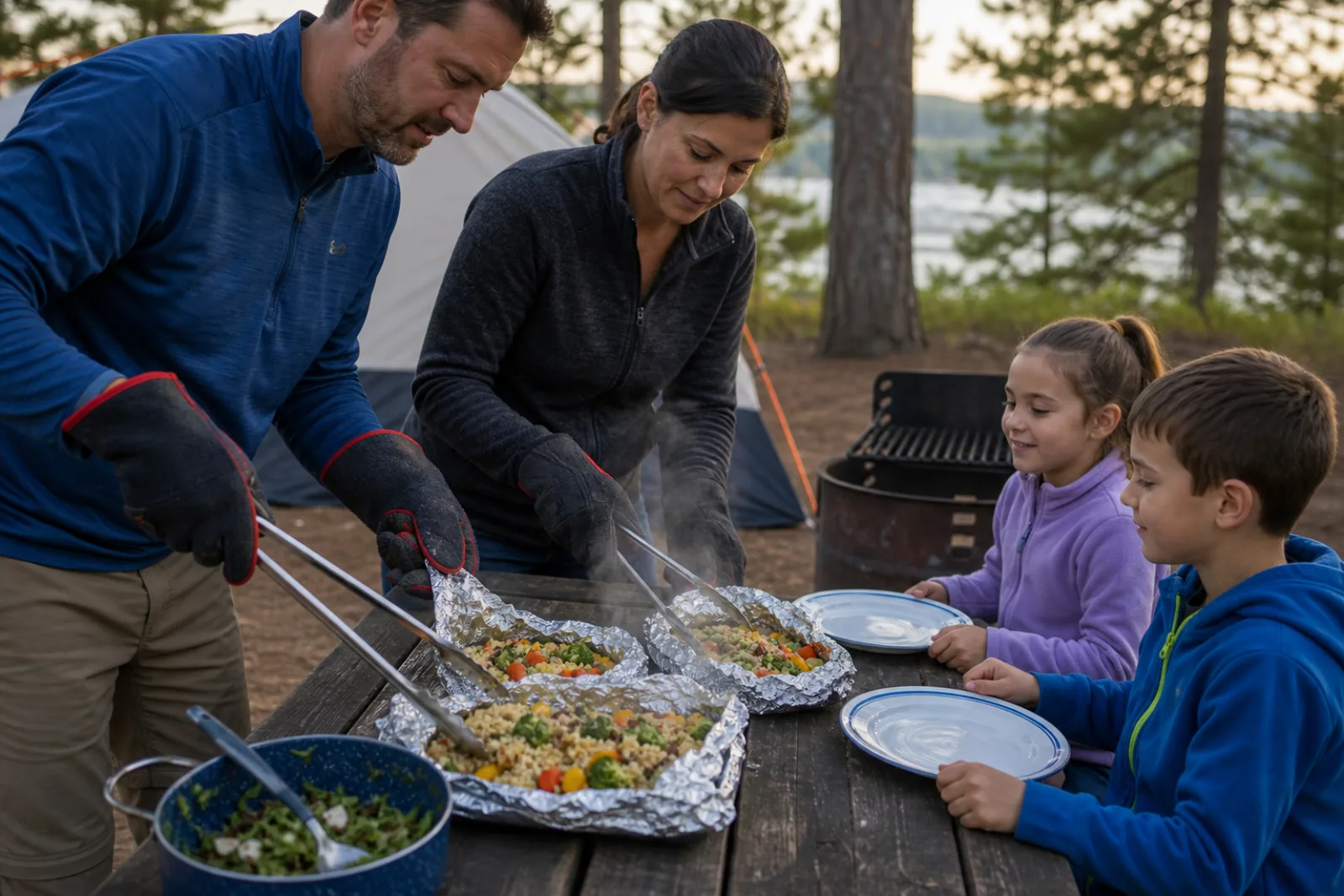
Foil packets can combine vegetables, grains, and protein with few dishes, but the closed package hides uneven cooking and very hot steam. A family-friendly method uses ingredients cut to compatible sizes, clearly labeled packets, controlled heat, tongs, and a thermometer. Prepare a stove or skillet alternative in case open-fire cooking is not allowed.
Choose compatible ingredients
Pair quick-cooking vegetables with precooked grains or ingredients that need similar time. Dense potatoes and large pieces of raw protein may finish at different rates. Cut portions evenly and use separate packets when dietary needs or cooking times differ. Mark the outside so allergens and individual meals do not get confused.
Prepare packets cleanly
Complete cutting and seasoning at home when possible. Keep raw meat or fish separate from produce and ready-to-eat foods, and wash hands and tools after contact. Build a secure seam with room for steam rather than compressing ingredients tightly. Transport uncooked perishable packets under reliable refrigeration.
Create controlled heat
Use a permitted grill, stove, or established fire with a stable cooking area. Flames are difficult to control; a grate, pan, or even bed of heat provides a more predictable result when allowed. An adult uses long tongs and heat-resistant gloves. Children remain outside the cooking boundary.
Check doneness directly
Cooking time from another recipe cannot account for packet size, starting temperature, wind, or heat intensity. Open one edge away from faces, release steam, and test the thickest ingredient with a clean food thermometer. Reseal and continue cooking if needed. Never taste partially cooked food to judge readiness.
Open, serve, and clean safely
Rest packets on a stable heat-safe surface and open them away from skin. Transfer food to plates for children rather than handing over hot foil. Collect every piece of foil after it cools; burned or food-covered foil still belongs in the appropriate waste stream, not in the fire or campsite soil.
Verify current local fire restrictions and campground rules before planning this meal; restrictions may also cover charcoal and some gas devices. Follow current USDA temperatures and refrigeration guidance for the chosen ingredients. If safe heat, cold storage, or waste handling is unavailable, use a fully cooked shelf-stable alternative.