Build a Child-Safe Nature Scavenger Hunt
Turn close observation into a flexible activity without collecting the landscape.
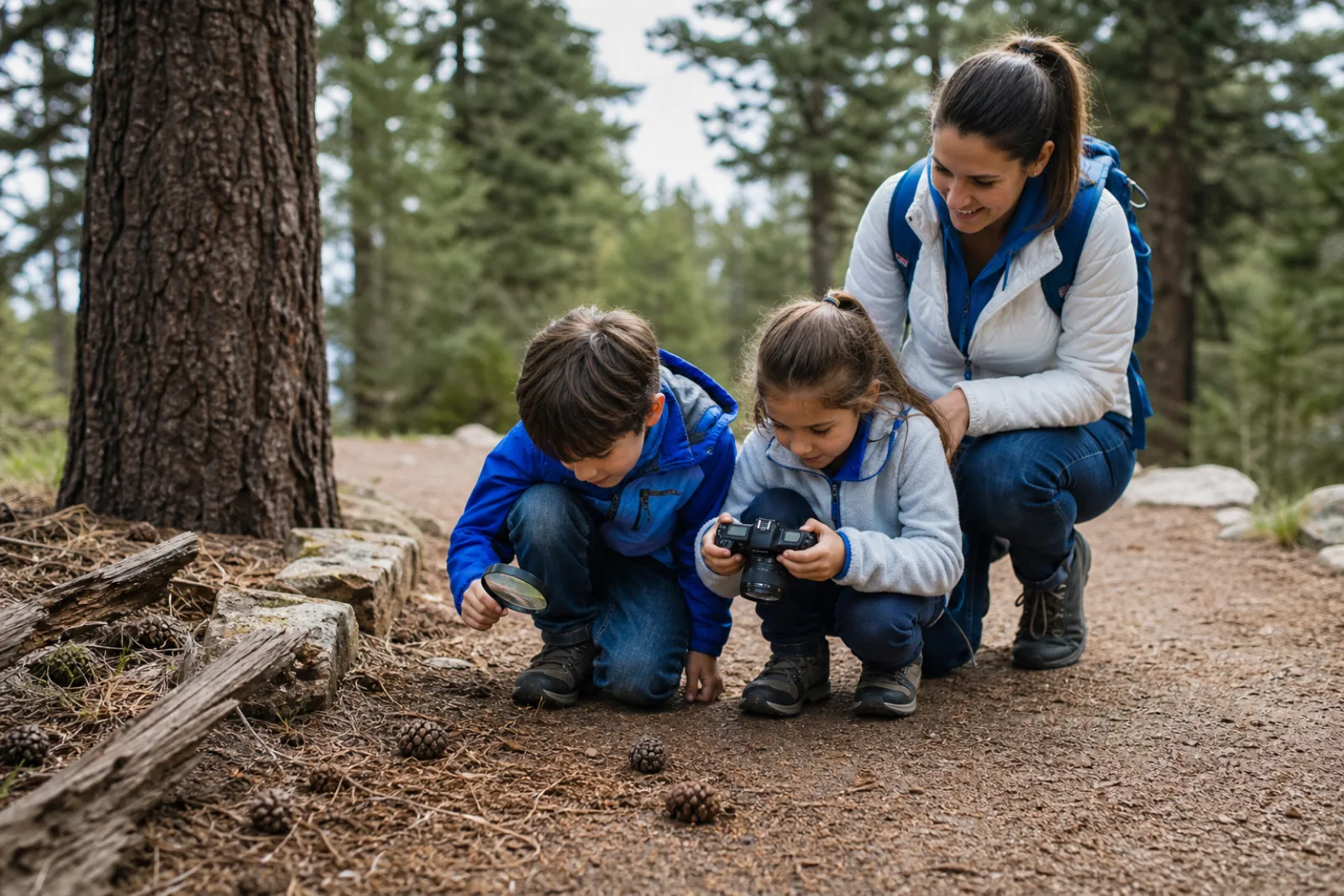
Turn close observation into a flexible activity without collecting the landscape. Build a Child-Safe Nature Scavenger Hunt is easiest to put into practice when the family begins with set boundaries before clues and makes each later choice fit the actual campsite, season, group, and length of stay. Use these ideas as a planning framework rather than a rigid schedule or universal shopping list. The right version is the one that protects comfort and safety without adding work the group does not need.
Set boundaries before clues
Define the play area, adult supervision, meeting point, and places that are off limits. Use a smaller area for young children and keep them within sight. Roads, water, neighboring sites, maintenance areas, and unknown plants require explicit rules.
Search with eyes and cameras
Build prompts around colors, shapes, sounds, tracks, and photographs rather than removing plants, rocks, nests, or animals. A child might spot three leaf shapes or photograph evidence of wildlife. This preserves the site and keeps the activity reusable.
Match clues to ages
Use pictures and simple colors for early readers, while older children can identify patterns, habitats, or several examples of a category. Avoid encouraging anyone to touch fungi, insects, animal waste, or unfamiliar vegetation.
Add calm alternatives
If children lose interest, switch to drawing one discovery, listening quietly for birds, or playing observation-based I Spy. Competition is optional. A cooperative family list can be more inclusive when ages and abilities vary.
Close with care
Review what the family noticed and return any accidentally moved natural item where it was found when appropriate. Wash hands before eating. Follow posted guidance about wildlife, protected areas, and Leave No Trace practices at the specific location.
Make close with care part of the family’s final review, and keep essential information and equipment where the responsible adult can reach them. Before departure, check the specific campground’s official page and the appropriate local authorities for current facilities, closures, fire restrictions, water status, weather, and activity rules. Those current instructions always take priority over the general approach in Build a Child-Safe Nature Scavenger Hunt.