A Beginner’s Plan for a Comfortable Campout
Turn a first campground stay into a small, manageable family adventure.
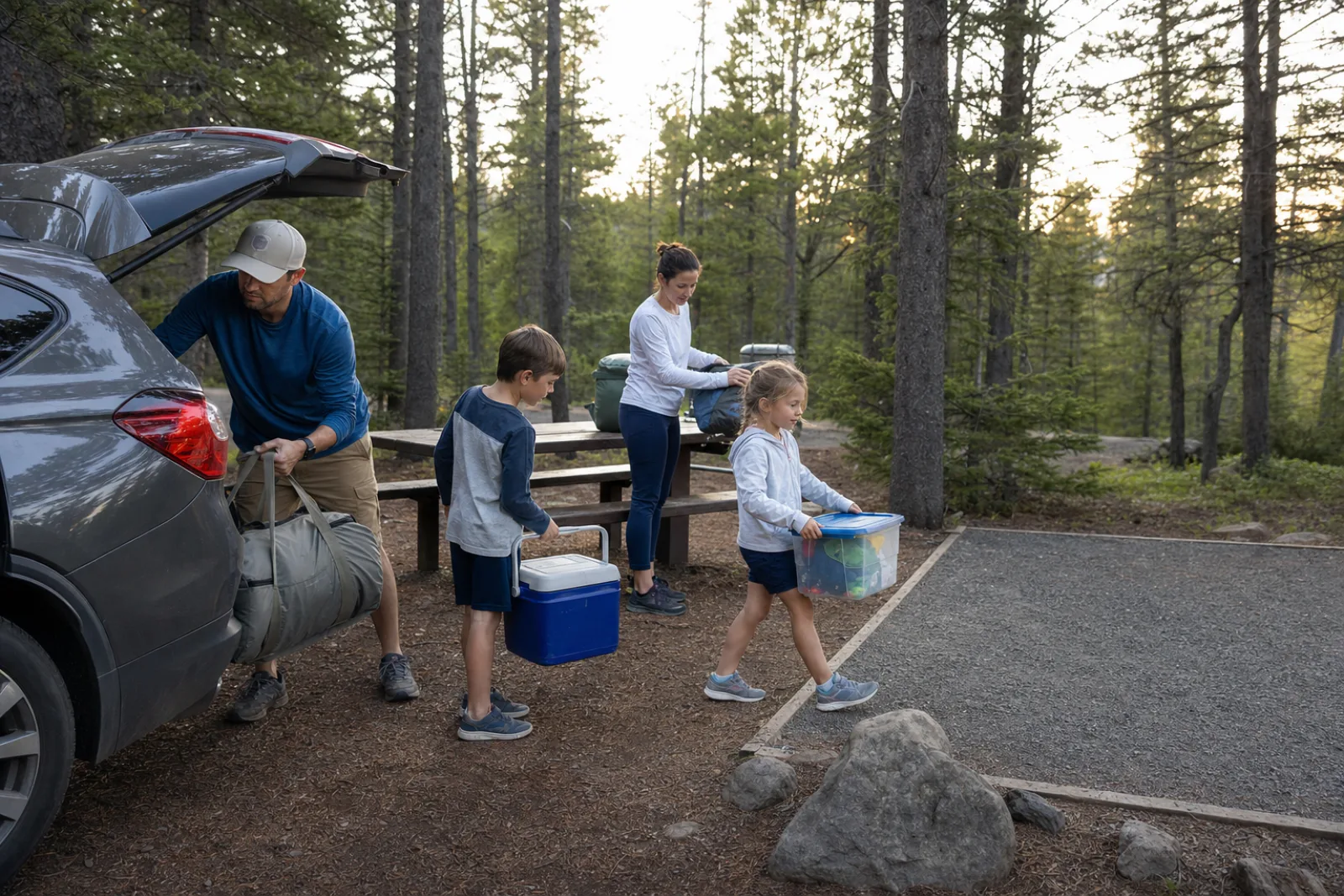
The best first camping trip is not the most remote or impressive. It is the one that lets your family learn how outdoor routines feel without turning every small problem into a crisis. Keep the first outing close, short and deliberately simple.
Choose an easy first destination
Look for a developed campground within a comfortable drive of home. Reliable toilets, potable water, a picnic table and a defined parking space remove many unknowns. Check the site description for tent dimensions, vehicle limits, quiet hours and whether food lockers are provided. A one- or two-night reservation is long enough to learn, but short enough to recover from poor sleep.
Borrow and practice before buying
A tent, sleeping bags, pads, lights and a stove form the core of a car-camping kit. Borrow or rent unfamiliar items before committing to a full collection. Pitch the tent at home, inflate every pad and light the stove outdoors according to its instructions. This rehearsal reveals missing poles, incompatible fuel and confusing valves while stores are still nearby.
Build comfort from the ground up
Warm sleep depends on insulation below as well as above. Pair each sleeping bag with a pad suited to expected overnight temperatures, and pack dry sleep clothing. Bring a headlamp for every adult plus an easy-to-find shared lantern. Clothing should work in layers so people can respond to sun, wind, rain and cooler evenings without changing the whole outfit.
Make food intentionally uncomplicated
Prepare the first dinner at home or choose a meal that only needs reheating. Keep raw ingredients sealed and cold, place scented items away from the tent, and create separate areas for cooking and handwashing. A two-burner stove is convenient for a family, but a simple single-burner setup can work when the menu is designed around one pot.
Leave room to change the plan
Arrive with daylight, set up shelter first and learn the route to the restroom before dark. If wind, heat, smoke or a storm makes the site unsafe, leave early without treating it as failure. Before departure, confirm current forecasts, closures, fire restrictions, water availability and campground rules with official local sources. After the trip, write down what the family used, missed and never touched; that short review is the beginning of a better second campout.