Bird-Watching From the Campsite
Slow down, listen first and help children observe without disturbing birds.
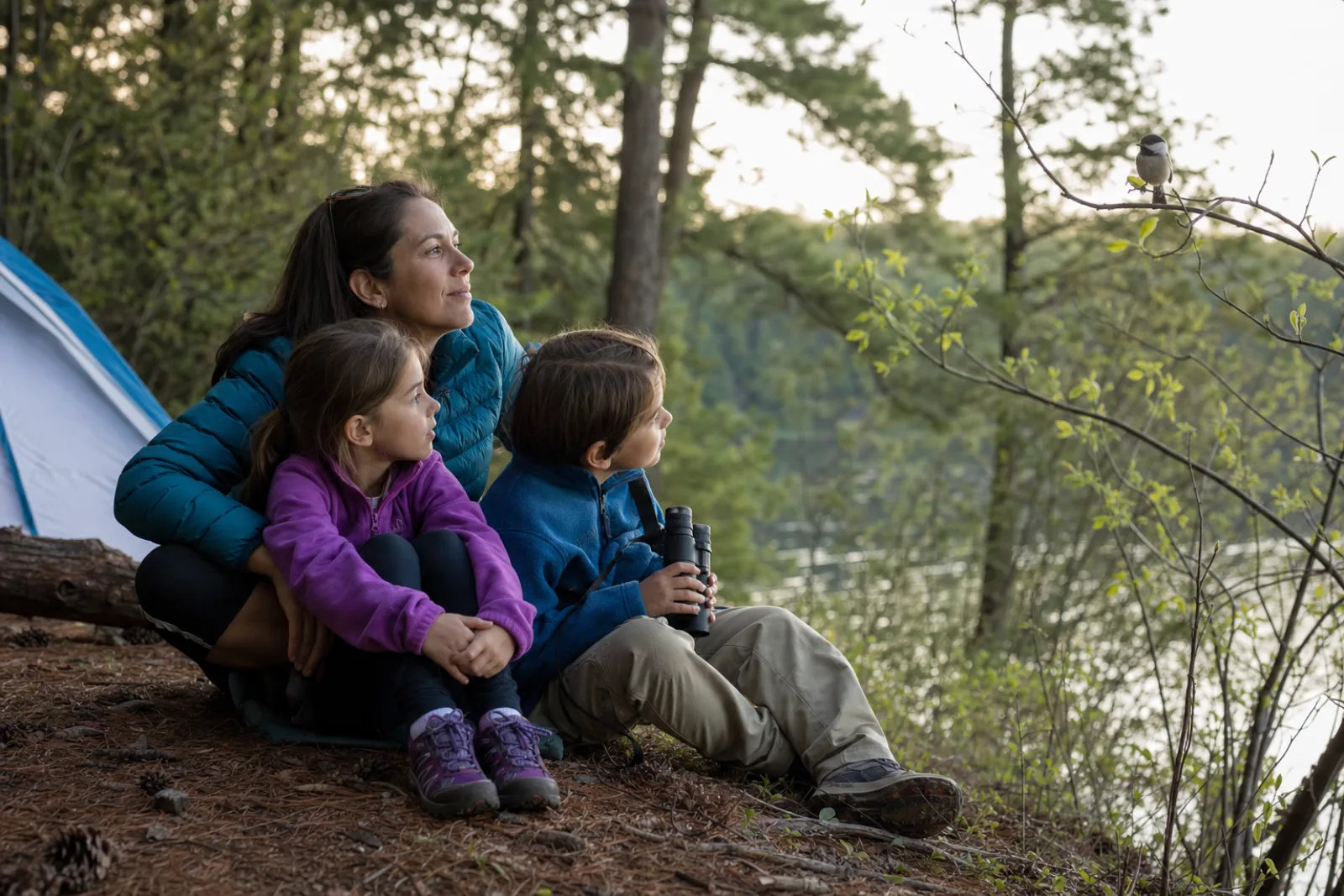
Birding is one of the easiest campground activities to begin because birds arrive without a schedule and observation requires little equipment. The family goal is not a long species list. It is learning to notice sound, movement, habitat and behavior while giving wildlife room.
Start close to the tent
Sit quietly for ten minutes in the morning and listen before searching. Birds are often active from dawn into late morning, but different species appear throughout the day. Notice whether calls come from canopy, brush, water or open ground. A short observation period can fit around breakfast without adding another trip.
Use eyes before binoculars
Find a bird unaided, keep looking at it and then raise binoculars without shifting the gaze. Adjust the eyecups and width for one user at a time. Children need a neck strap or harness fitted so equipment cannot drop or become entangled. Binoculars are optional; shape, flight, color and song can be observed without them.
Record clues, not perfect answers
Carry a regional field guide or an identification app downloaded for offline use. Write the bird’s size, main colors, bill shape, location and behavior before looking it up. A sketch or phonetic version of a call may be more useful than a rushed photograph. Celebrate a thoughtful “not sure” rather than forcing an incorrect name.
Put the bird’s needs first
Stay on open paths, respect closures and keep away from nests and feeding groups. If birds stop feeding, call repeatedly, circle or fly away because of the family, increase distance. Never use food to draw them into camp. Limit playback of recorded calls, which can disrupt territorial or breeding behavior, and control pets.
Check local context
Migration, nesting restrictions, hunting seasons and accessible observation areas vary by location and date. Ask park staff about current conditions and follow official rules, including any requirement for high-visibility clothing on shared land. Weather and smoke also affect both birds and observers. Keep a shared list rather than competing to approach the most species. A responsible family birding session ends with habitat unchanged and a few observations to explore later.