Before Anyone Lights a Match at Camp
Put permission, supervision and a completely cold finish ahead of campfire tradition.
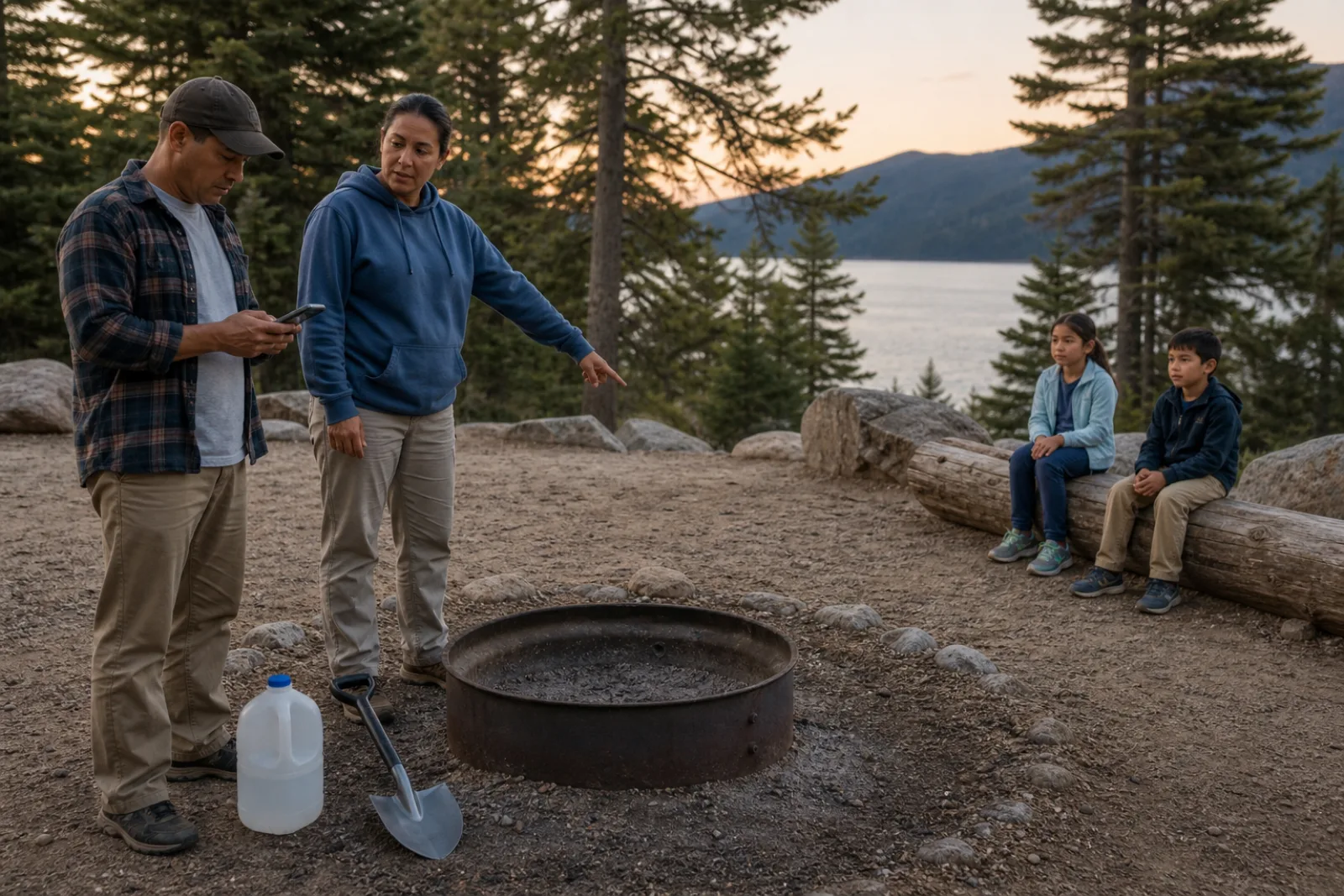
A campfire begins with a decision, not a flame. Conditions that look calm at the campsite can still be subject to regional restrictions, and permitted equipment can change by day. Families should make a fire-free evening the default backup, then proceed only when the land manager, host, and local fire authority currently allow the intended use.
Verify permission every time
Check official restrictions before leaving home and again on arrival. Ask whether rules distinguish wood fires, charcoal, gas stoves, propane fire pits, or other devices. A fire ring does not prove that fires are currently allowed. If instructions conflict or are unclear, do not light anything until the responsible authority provides an answer.
Inspect the immediate area
Use only the designated structure when required. Clear loose combustible belongings from the area without damaging vegetation, and keep fuel containers well away. Look up for branches and around for dry grass or wind channels. Keep water and the site’s approved extinguishing tools ready before ignition rather than fetching them after the fire grows.
Create a child boundary
An attentive adult remains responsible for the fire from ignition through final cooling. Establish a visible no-play zone and keep chairs, toys, loose clothing, and pets outside it. Children may observe or perform a distant age-appropriate job, but they do not tend the flame, carry burning material, or supervise younger children.
Keep the fire modest
Build only the size needed and add fuel gradually. Never use accelerants not designed and approved for the task, and never leave the fire while preparing food, visiting a restroom, or settling children. Wind, flying embers, or a change in official restrictions are reasons to extinguish early.
Finish completely cold
Begin extinguishing well before departure or bedtime. Follow the campground’s method, commonly adding water carefully, stirring the material, and repeating until no heat remains. Ash that looks dark can remain hot, and covering embers with soil may insulate them. An adult confirms the final condition according to local directions.
Fire bans, fuel rules, wind thresholds, and approved extinguishing methods are live local information. Consult the campground or host, the land-management agency, and the relevant fire authority immediately before use. When a restriction, evacuation notice, or uncertain condition exists, choose a fully non-combustion activity instead.