Planning a More Accessible Family Camp
Evaluate real campsite access, personal needs and equipment before arrival.
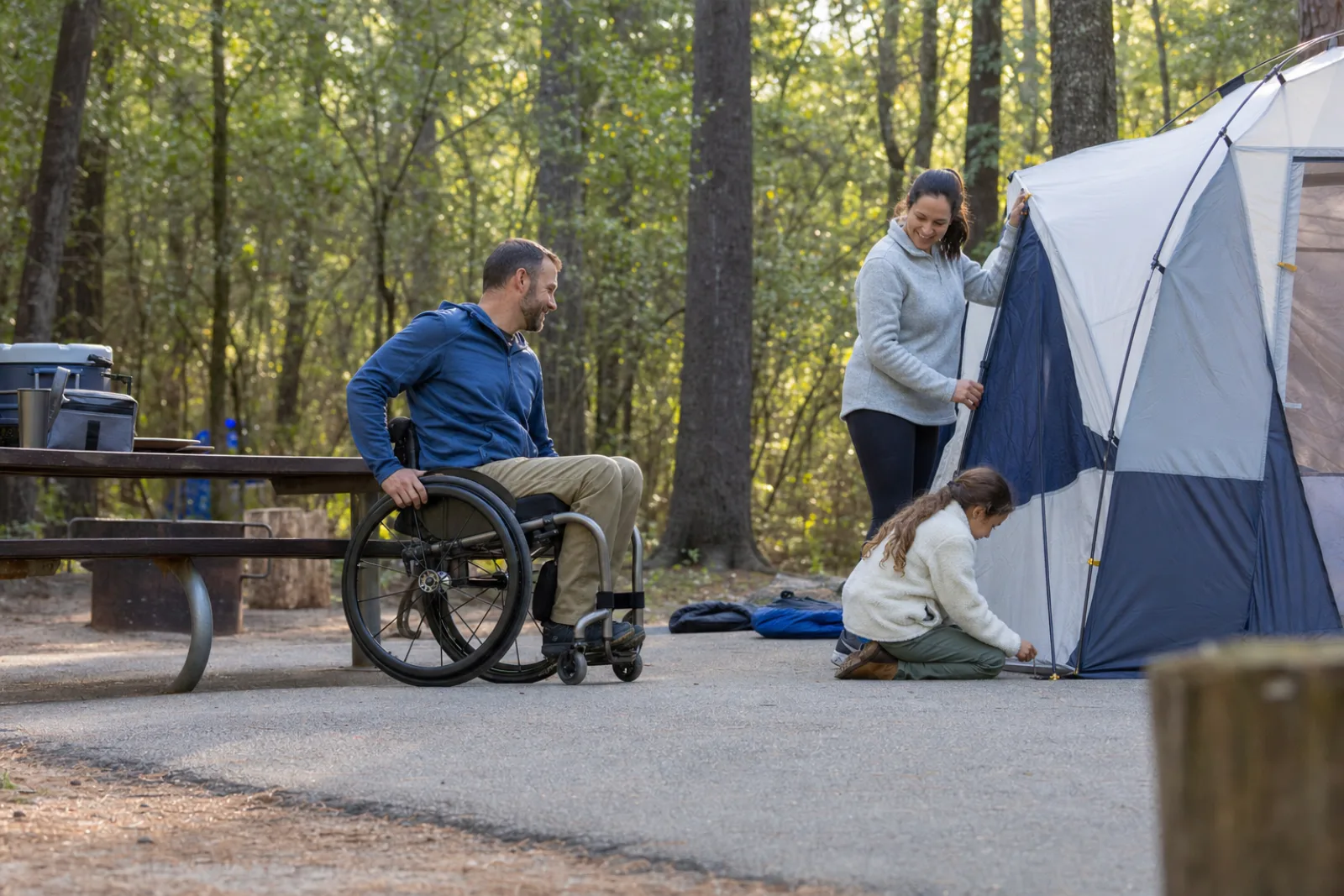
An “accessible” filter is a useful starting point, not a complete description of how a campsite will work for a particular person. Families should translate individual mobility, medical and comfort needs into specific questions, then verify the answers with someone who knows the property.
Define what access means for your family
List the tasks that must work from arrival through bedtime: leaving the vehicle, reaching the tent pad, using the restroom, transferring to a sleep surface, preparing food and charging equipment. Include surface firmness, slope, doorway thresholds, turning space and the distance between facilities. The most important feature may be different for a manual wheelchair user, a power-chair user or someone with limited balance or stamina.
Call instead of trusting a label
Reservation pages can identify accessible sites, but details are sometimes incomplete. Ask the campground for measurements, recent photos and a description of the route from parking to the site and restroom. Confirm whether picnic tables have an open end, paths remain firm after rain and electrical service is continuously available if essential equipment depends on it. Reserve early when a specific site is necessary.
Choose gear around transfers and reach
A cot can create a higher transfer surface than a ground pad. A tent with a low door lip, generous doorway and covered vestibule may make entry and equipment storage easier. Inside, arrange frequently used items at reachable heights and keep routes clear. A quilt can be simpler to position than a close-fitting sleeping bag, while a well-insulated pad still matters for warmth.
Share work with clear consent
Assign setup, cooking and cleanup before the trip so one support person does not absorb every task. Ask before helping rather than assuming assistance is wanted. Simple meals, labeled storage and a practiced tent setup reduce time pressure and make it easier for everyone to contribute according to ability.
Start nearby and review conditions
For early trips, choose a place close enough to leave if equipment, weather or access does not work as expected. Pack personal medical supplies with backups and keep an emergency plan available offline. Accessibility features, trail conditions, charging availability and mobility-equipment programs can change, so confirm them directly with the campground or land manager shortly before travel. Afterward, record exact site numbers and useful measurements for the next family outing.