A Calm Egg Breakfast at Family Camp
Prepare an adaptable skillet breakfast without turning the morning into a kitchen project.
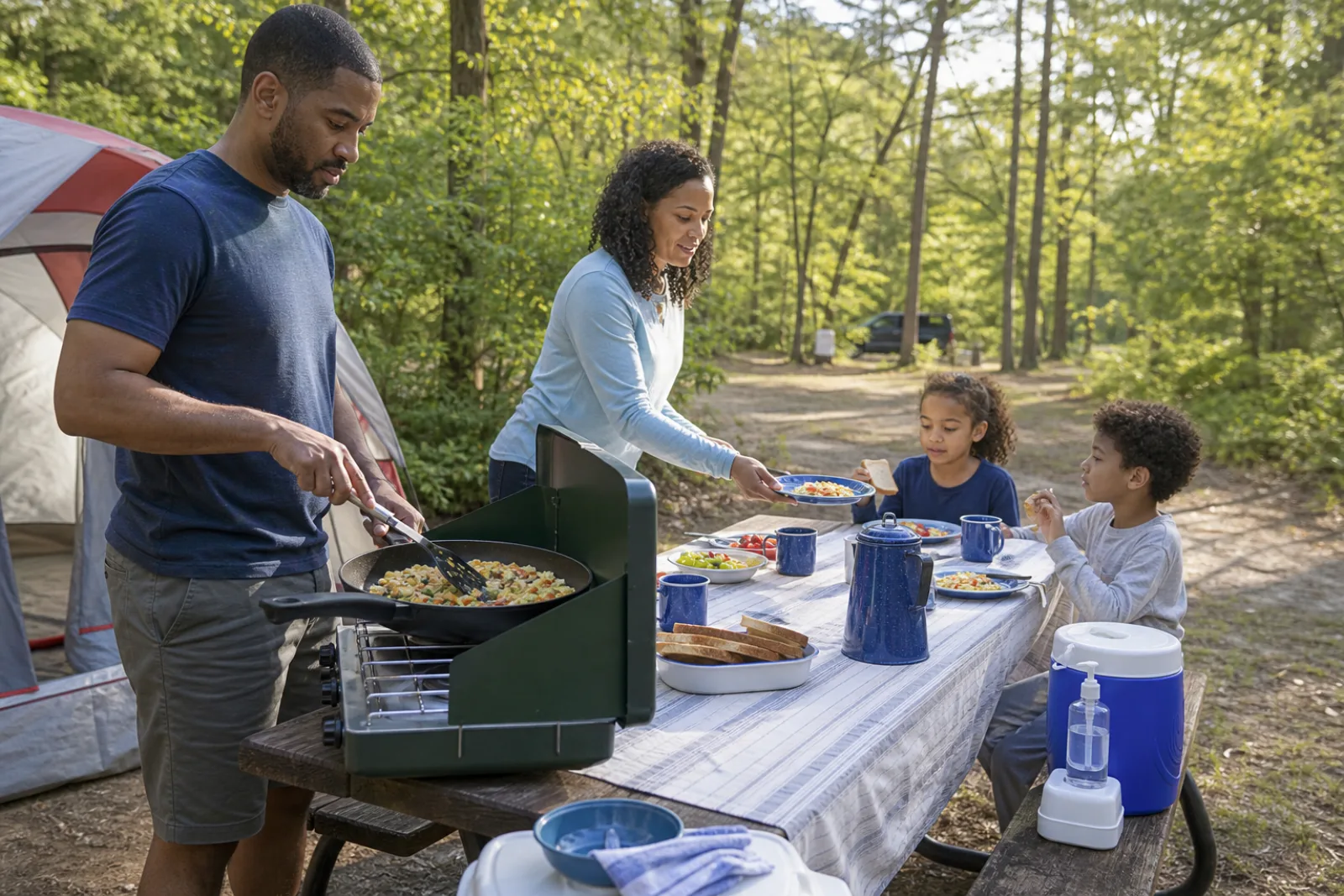
Egg breakfasts can be compact and flexible, but they require reliable cold storage, clean handling, and steady heat. Instead of packing for five separate recipes, build one skillet method with familiar vegetables, a simple starch, and optional toppings. Adults manage the stove while children help with safe tasks away from heat.
Choose the simplest format
Scrambled eggs or a covered vegetable skillet are easier to control than a multi-pan menu. Decide portions before packing and write the order of cooking. Bread, tortillas, or precooked potatoes can turn the eggs into a complete meal. Bring a shelf-stable breakfast backup in case refrigeration or cooking conditions fail.
Do safe preparation at home
Wash and cut vegetables in a clean kitchen, then pack them in sealed containers. Keep raw eggs in their original protected carton inside a properly chilled cooler, or use a commercially prepared alternative according to its label. Never crack raw eggs into a shared bottle unless current food-safety guidance specifically supports the storage plan.
Organize the cooking station
Place the stove outdoors on a stable surface where permitted, clear of tent fabric and children’s movement. Set out the pan, spatula, ingredients, thermometer, and serving dishes before lighting it. Keep raw-egg tools away from finished food, and arrange a handwashing method that does not contaminate the water container.
Cook in a predictable order
Cook firm vegetables or precooked meat first, then add eggs and stir until they reach a safe doneness. Use a food thermometer when required by the recipe and current safety guidance. Remove the pan from heat before adding cheese or delicate toppings. Serve young children from a cooled portion rather than passing a hot skillet.
Clean and chill promptly
Serve only what the family expects to eat, and return unused cold ingredients to the cooler quickly. Scrape food into the rubbish system, wash dishes where and how the campground directs, and filter scraps from wash water if required. Secure every scented item after breakfast rather than leaving cleanup until the group returns.
Check current USDA guidance for egg storage, cross-contamination prevention, cooking temperatures, and time outside refrigeration. Also verify the campground’s live fire and stove rules. If the cooler has warmed, eggs are damaged, or safe cooking equipment is unavailable, discard questionable food and use the backup breakfast.