A Backyard Campout Before the Real Trip
Practice shelter, bedtime and nighttime routines with home only a few steps away.
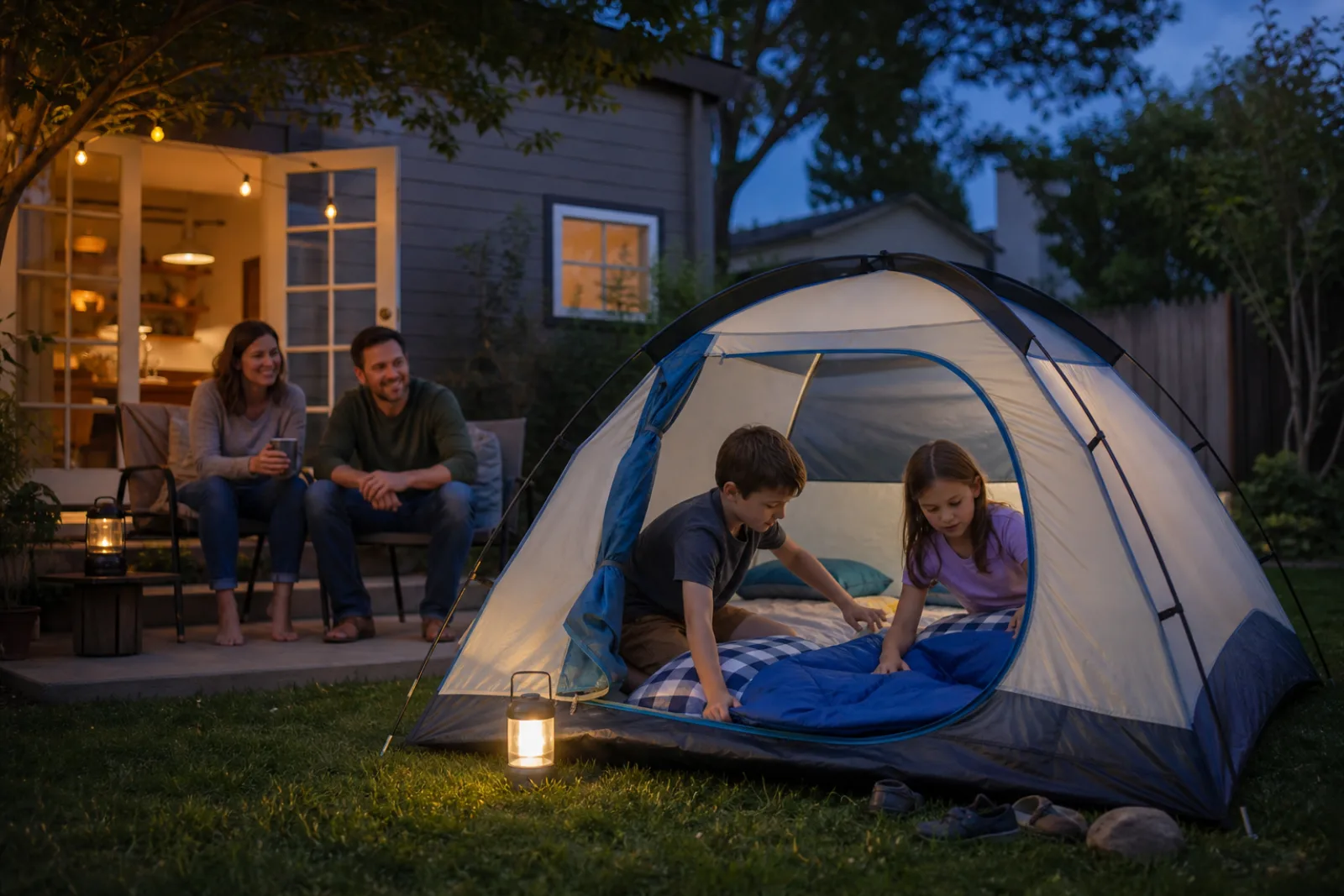
A night in the backyard can answer useful questions without a long drive or a reservation. It lets children meet the tent, outdoor sounds, darker pathways, and a changed bedtime while adults discover missing parts and awkward routines. The house remains nearby, but the practice works best when the family treats it as a small trip.
Choose a safe practice area
Inspect the yard for pools, ponds, tools, unstable branches, cords, gates, toxic plants, and pet hazards. Use a level area where the tent will not block an exit or irrigation system. Keep cooking and flames out of the exercise unless adults have separately confirmed local rules and created a suitable supervised area.
Pitch the complete shelter
Use every pole, clip, stake, and rainfly required by the manufacturer. Let children help with light, low-risk tasks while adults check tension and anchoring. A full practice reveals a missing stake, confusing sleeve, damaged zipper, or footprint that extends beyond the fly. Pack the components together again after the tent is dry.
Rehearse the sleep system
Set up the same pads, bags, pillows, pajamas, and comfort objects planned for camp. Notice whether everyone fits and whether a child can enter and exit safely. Keep dry sleep clothing separate from play clothing. The backyard cannot duplicate mountain temperatures, but it can reveal sliding pads, noisy fabrics, and difficult zippers.
Practice the dark transition
Walk the route between the tent and the house with the lights the family will carry. Decide which children always need an adult escort. Repeat the ordinary sequence of toilet, teeth, pajamas, story, and lights out. Familiar steps give a child something predictable when the real campsite feels new.
Hold a useful morning review
Ask what felt comfortable, surprising, cold, noisy, or fun. Adults should record missing equipment and routines that took longer than expected. If someone chooses to sleep indoors, keep the exercise positive. The purpose is to learn and build trust, not to prove that a child can endure discomfort.
Backyard rules differ by city, lease, neighborhood, and fire district. Confirm restrictions before erecting a tent or using any outdoor cooking device. Weather and air quality still matter close to home; move indoors when storms, smoke, heat, cold, or supervision concerns make the practice night unsuitable.